Blog

Oct 14, 2026

Audi A2 e-tron Production Strategy: Speed, Simplicity and Reuse

Audi's A2 e-tron programme offers a concrete way to examine how a carmaker tries to improve competitiveness: shorten development, simplify production and make better use of existing equipment. Its latest official update brings those industrial decisions back into focus. The interesting question is how these changes could improve the business of building a car, and what evidence would be needed to show that they succeeded.

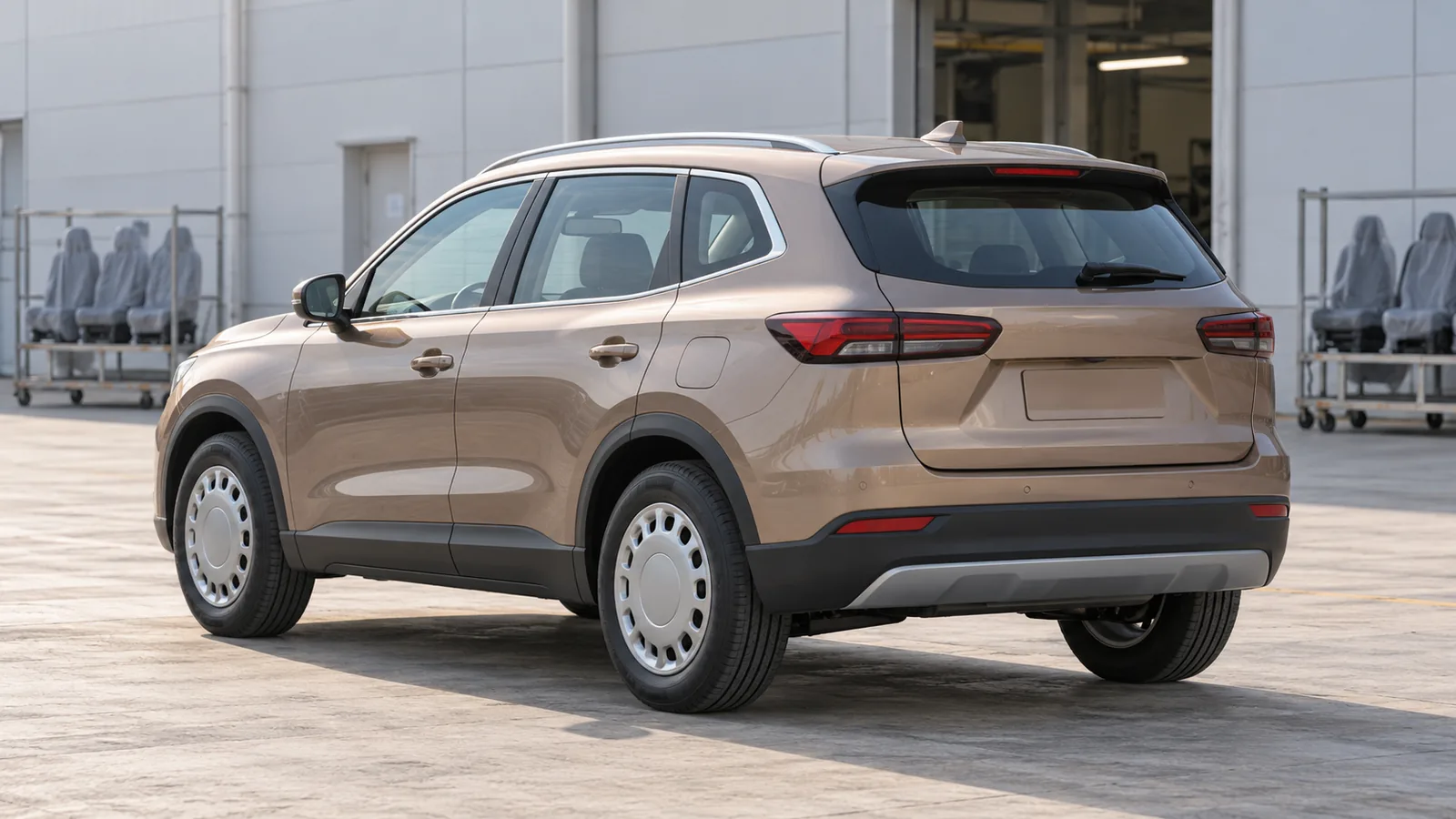
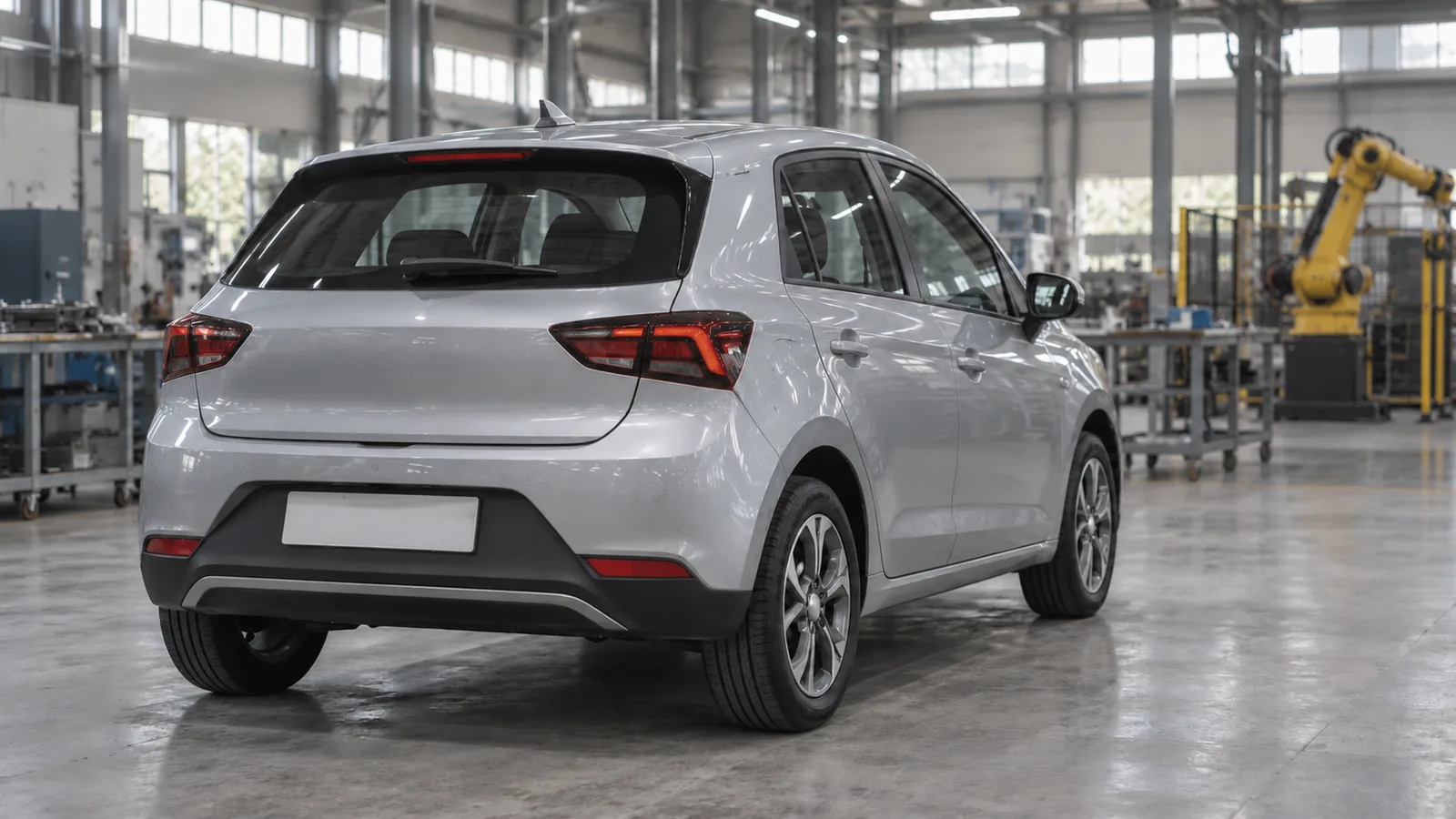
Cover image: AI-generated illustration of an unbranded compact electric car in a generic automotive workshop. It does not depict the Audi A2 e-tron or an Audi factory.

What Audi's latest A2 e-tron update confirms

In its 12 October 2026 Paris Motor Show release, Audi identifies the A2 e-tron as a model developed for Europe and built in Ingolstadt, Germany. It says more efficient development processes and earlier production readiness helped bring the model to the road 21 months earlier than comparable previous models.

AutoCred analysis: shortening the path to production can help a manufacturer respond sooner to a changing market. It can also reduce the time spent coordinating a programme before it generates customer deliveries. Those are potential advantages; the development-time comparison alone does not establish the model's profit margin, customer demand or quality performance.

The comparison also needs to be read accurately. Audi is describing a shorter development period relative to earlier projects. It is not saying the complete vehicle programme took only that amount of time.

Factory reuse is a specific part of the plan

Audi's 11 September production announcement says A2 e-tron bodies are manufactured alongside A3 bodies. More than 1,200 production components, including around 250 robots, are reused or put to further use.

The commercial logic is to extract more value from industrial assets while adapting them to a new product. Reuse is worth assessing through practical questions: is the equipment suitable, can it meet the required tolerances, and can the production process support the intended volumes?

For a manufacturer, a familiar factory footprint can be an advantage if the transition is executed well. For an observer, equipment reuse is evidence of an operational choice. It should not be translated into a retail-price reduction without a separate pricing announcement.

Fewer parts and a planned sequence address logistics complexity

The same production release describes fewer production-relevant part numbers and an order-sequencing process fixed six days before assembly. Audi says this allows suppliers to prepare parts in the correct order and reduces storage and sequencing requirements.

This is a different kind of improvement from simply building more cars. A simpler flow aims to make material handling and coordination easier. It gives the factory and its suppliers a clearer plan to work against, although execution still depends on the right parts reaching the right place.

From a customer's perspective, the questions remain practical: does the manufacturer deliver the ordered specification reliably, communicate changes clearly and maintain quality as production develops? Process announcements explain the intended mechanism; customer outcomes show whether it works.

How to judge the strategy's commercial results

Useful evidence would include sustained deliveries, dependable order fulfilment, quality outcomes and financial reporting that explains any efficiency gains. A production milestone is a starting point for that assessment. Avoid treating an ambitious factory programme as proof of stronger sales or a guaranteed improvement in ownership costs.

The releases discussed here describe a European programme. Indian readers can use it as a case study in manufacturing strategy while evaluating locally available cars using their official India specifications, written dealer quotations and service arrangements.

Plan the car and its finance together. Before shortlisting or visiting a dealer, check your indicative eligible amount and estimated EMI with AutoCred. Results are indicative; final eligibility, rate, tenure and approval depend on the lender. Compare the estimate with the final on-road quotation and the lender's written offer.

Read more
Oct 14, 2026

New Toyota Glanza 2026: V vs V(O), ADAS and Comfort Features

The new Toyota Glanza makes the choice between V and V(O) particularly relevant for buyers who want a well-equipped hatchback. Toyota's current India feature matrix lists ventilated seats, a head-up display and a surround-view camera on both grades, while the Level 2 ADAS package appears on V(O). The useful buying question is whether that additional driver-assistance equipment suits your journeys and the final quoted price difference.

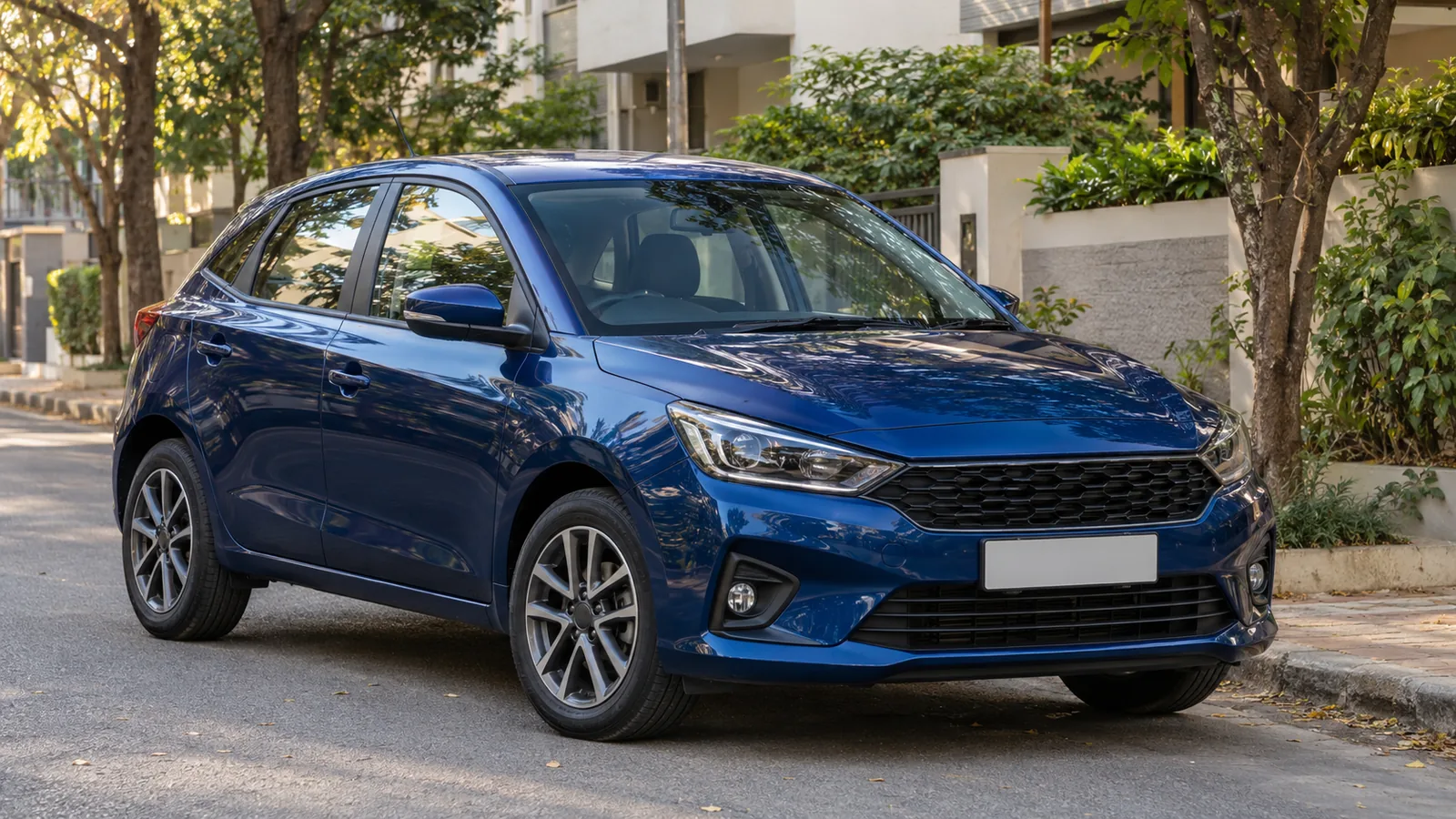
Cover image: AI-generated illustration of a generic unbranded hatchback. It does not depict the Toyota Glanza's official exterior design.

Glanza V vs V(O): the equipment that separates them

The following comparison follows the comfort and driver-support tables in Toyota's official Glanza brochure. Confirm the equipment against the exact vehicle on your quotation.

EquipmentVV(O)
Ventilated seatsListedListed
Head-up displayListedListed
360-degree cameraListedListed
Wireless charging with active coolingListedListed
Cruise controlConventionalAdaptive
Level 2 ADAS packageNot listedListed

AutoCred analysis: a buyer primarily interested in cabin comfort and parking visibility should assess V on its own merits. Choosing the top grade simply because a promotional image shows desirable equipment can obscure which features the lower grade already includes.

What to ask about the V(O) driver-assistance package

Toyota's brochure driver-support table lists adaptive cruise control, lane-departure warning and prevention, lane-keeping assist, high-beam assist and autonomous emergency braking for V(O).

Ask the demonstrator to explain how to activate and cancel each relevant function, how warnings appear and which operating conditions restrict assistance. Keep responsibility for observation, steering and safe control of the vehicle, and follow the owner's manual. A demonstration should help you understand normal operation; do not attempt to provoke emergency braking during a test drive.

Consider where you actually drive. If you regularly travel on suitable open roads, request a supervised demonstration on an appropriate route. If your routine is dominated by tight parking and short urban trips, spend equally serious time checking visibility, manoeuvring and cabin usability before deciding how much extra you value the assistance package.

Do not overlook the lower grades or the engine test drive

Toyota's published specifications identify a 1,197 cc, three-cylinder engine. Its safety matrix lists six airbags, vehicle stability control and hill-hold control across the grades shown. Wireless charging with active cooling is also listed for G and G CNG.

For a budget-conscious shortlist, these details are a reason to compare the full equipment sheet rather than jump directly to the most expensive grade. Start with the functions you will use regularly, then decide which omissions you can comfortably accept.

During the test drive, evaluate how the powertrain feels when moving away, joining traffic and carrying your usual passengers. If considering an automatic, try crawling traffic and parking as well as a clear stretch of road. Brochure equipment cannot answer whether the driving experience suits you.

Get a matched quotation before choosing V or V(O)

Request itemised on-road quotations on the same basis: fuel type, transmission, registration location, insurance and optional accessories. Ask the dealer to separate included equipment from paid additions and identify the exact grade in the booking document.

Then compare the extra amount against the features you personally value. Check the proposed delivery timing and cancellation terms in writing. This approach lets you choose a specification for its usefulness while keeping the financial commitment clear.

Set your finance expectations before the showroom visit. Check your indicative eligible amount and estimated EMI with AutoCred before shortlisting or visiting a dealer. Results are indicative; final eligibility, rate, tenure and approval depend on the lender. Compare that estimate with the final on-road quotation and the lender's written offer.

Read more
Oct 14, 2026

Mercedes-Benz EV Demand: Three-Shift Factories and India Buyer Checks

For a carmaker, a strong order book is only part of the job. Turning those orders into cars that reach customers requires production planning, the right components and a workable delivery schedule. Mercedes-Benz's latest quarterly update offers a useful example of that challenge: its response to European electric-car demand includes three-shift factory operations. For Indian buyers, the practical question is how to assess availability without treating overseas demand as a local delivery forecast.

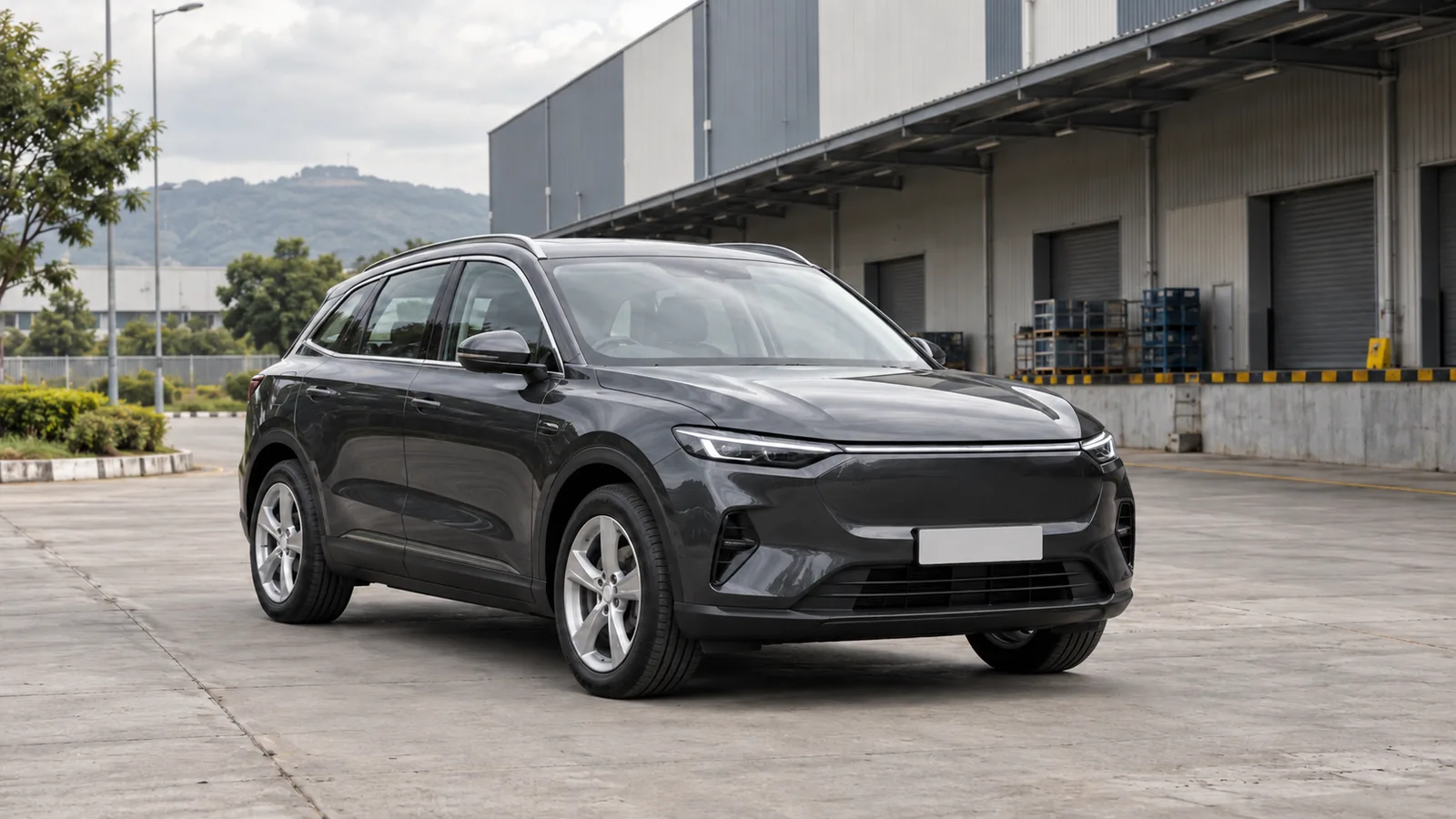
Cover image: AI-generated illustration of an unbranded electric crossover at a generic industrial site. It does not depict a Mercedes-Benz model or an actual company factory.

What Mercedes-Benz says about its production response

In its 7 October 2026 sales release, Mercedes-Benz says its Bremen, Rastatt and Kecskemét plants operate on three-shift schedules to meet demand. It reports that electric GLC, CLA, GLB and GLA variants are sold out in Europe for the rest of 2026, with order books extending into 2027.

AutoCred analysis: the significant point is the connection between customer orders and factory scheduling. A manufacturer can respond to demand by using existing facilities more intensively, alongside decisions about which configurations to build. A shift announcement alone does not tell a buyer how much additional output is available, which country receives it or when a particular car will arrive.

It would therefore be misleading to read “three shifts” as a promise of three times the production capacity. The relevant comparison would require the previous operating schedule, output per shift and any constraints elsewhere in the supply chain.

Keep passenger cars separate from the wider group

The same official quarterly report provides the context:

  • Mercedes-Benz Cars sold 407,200 vehicles globally in Q3 2026, down 8% year on year.
  • Battery-electric car sales reached 68,400, up 61% year on year, representing 16.8% of car sales.
  • The broader Group total, including vans, was 491,700 vehicles, down 6% year on year.

Mercedes-Benz describes its figures as rounded and preliminary. Its European order book does not establish Indian waiting periods. Source: Mercedes-Benz.

These separate measures answer different questions. Total car sales describe overall volume, while the electric share describes the product mix. Factory schedules describe an operational response. None substitutes for confirmation that a dealer can supply the exact car a customer wants.

What Indian buyers should ask about an available allocation

If a salesperson refers to a busy global order book, bring the discussion back to the proposed purchase. Ask for clear answers to these questions:

  • What is being offered? Establish whether the quotation relates to a car already in stock, an identified incoming vehicle or a booking awaiting allocation.
  • Does the specification match? Confirm the model year, variant, colour and included equipment. Do not accept an unwanted configuration solely because it is available sooner.
  • What supports the delivery estimate? Ask which milestones remain and request the expected handover date in writing, with any conditions attached.
  • When do financial commitments begin? Clarify the payment schedule, cancellation terms and proposed loan disbursement timing before proceeding.

Judge the purchase on suitability as well as supply

An overseas production response can help explain a manufacturer's priorities. Your buying decision still needs a test drive, a charging plan and an itemised ownership budget. Consider parking access, the practicality of charging where you live and the support available along your usual routes.

Compare a readily available car against the specification you actually need. A shorter wait has value only if the vehicle suits your use and the written commercial terms work for you. Equally, waiting for a preferred configuration is easier to evaluate when the dealer explains the allocation process clearly.

Plan the finance alongside the car. Before shortlisting or visiting a dealer, check your indicative eligible amount and estimated EMI with AutoCred. Results are indicative; final eligibility, rate, tenure and approval depend on the lender. Use the estimate alongside the final on-road quotation and lender offer.

Read more
Oct 14, 2026

Volvo EX30 India: Compact SUV Space and Parking Buyer Guide

A compact electric SUV should make everyday life easier, but a smaller body does not automatically settle questions about parking, passenger comfort or luggage. Volvo's current Indian EX30 product page and official specification sheet provide a useful basis for a practical assessment. This guide examines the published model information, rather than claiming a fresh launch or a new price announcement today.

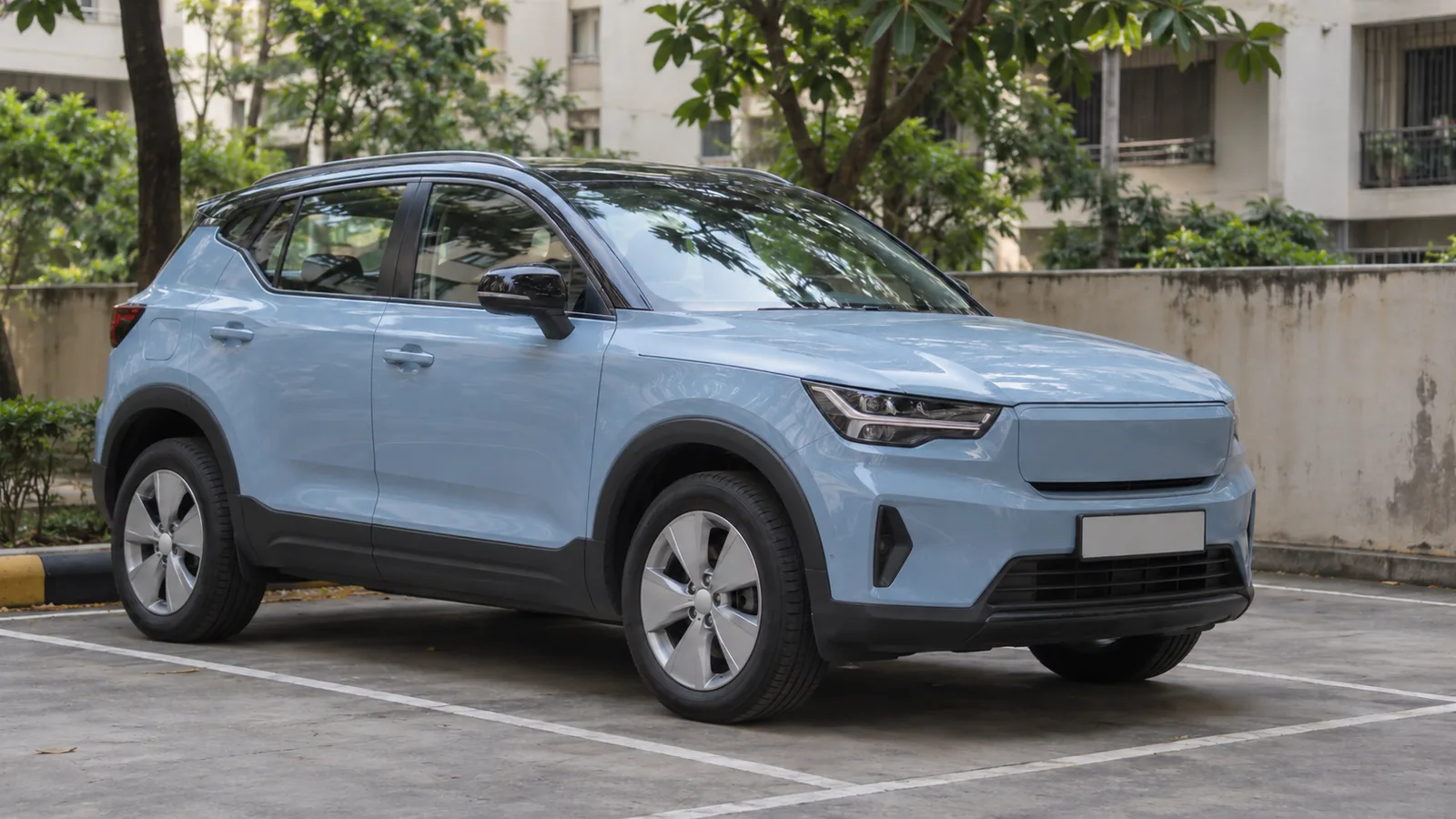
Cover illustration: an AI-generated generic, unbranded compact electric SUV in a Mumbai parking bay. It does not reproduce the official Volvo EX30 design or its actual dimensions.

EX30 dimensions: measure the mirrors, not just the body

Volvo's Indian specification page lists a length of 4,233 mm and body width of 1,838 mm. Width increases to 2,032 mm including the mirrors, or 1,940 mm with them folded. The listed turning circle is 11 metres. Source: official EX30 exterior dimensions.

For an apartment parking space, compare the mirror-inclusive width with the usable gap between walls, columns and neighbouring cars. Then allow room to open the door and get out. A bay that accommodates the body can still be inconvenient if the approach is narrow or a structural column sits beside the driver's door.

Measure the route into the space as well as the final bay. A turning-circle specification is useful context, but it does not recreate the corner angles, ramp transitions or obstacles in your building. Where practical, arrange a supervised parking assessment with the dealer and confirm the demonstration vehicle's specification.

Boot figures describe different loading conditions

The Indian specification sheet lists 318 litres of open luggage capacity with the rear row upright and a maximum of 1,000 litres with seats folded. It separately lists other capacity definitions; these should not be added together. Source: the official storage measurements.

Assess the configuration you actually use. If rear passengers usually travel with you, an expanded figure with their seats folded is not the relevant holiday-luggage measure. Bring your regular suitcases, stroller or work equipment to a showroom visit and check the opening, load height and access to the floor compartments.

Also decide where charging cables will be stored. Useful storage is about retrieving the things you need without unloading the entire boot, not simply maximising a brochure number.

Parking assistance still needs a demonstration

Volvo's Indian overview lists Park Pilot Assist and a 360-degree camera with a 3D view for the EX30 Ultra. The site notes that features can vary by market, equipment and model year. Source: the official equipment overview and disclaimer.

Confirm those features on the actual order and ask the retailer to demonstrate their operating conditions. Check the camera view around a kerb and learn what the system expects the driver to do. Cameras and parking assistance can help, but the driver still needs to observe surroundings and understand the system's limits.

Try the rear seat and everyday controls

Set the front seat for the person who normally drives, then assess the seat behind it. Check knee room, foot space, entry and the ability to fasten a belt comfortably. If a child seat is part of your routine, bring the actual seat for a fit assessment following the vehicle and child-seat instructions.

While safely parked, try the display, ventilation adjustments, navigation and parking controls you will use frequently. Pair your phone if the dealer permits, and confirm which functions require an account or connected service. An interface should feel manageable to its regular driver, not merely impressive during a guided demonstration.

Finish with an ownership plan

Before ordering, confirm your charging installation arrangements, service access, warranty and written delivery terms. Use AutoCred's car loan eligibility checker to check an indicative eligible amount and estimated EMI before shortlisting or your dealer visit. Allow for insurance, charging and other ownership costs. Results are indicative; final eligibility, rate, tenure and approval depend on the lender.

Read more
Oct 14, 2026

Toyota India Jan–September Sales: Domestic Demand Drives 8% Growth

Toyota Kirloskar Motor's latest monthly sales disclosure offers a useful distinction for anyone following its Indian business: domestic growth and export performance are moving differently. Its official release dated 1 October 2026 reports both September sales and a cumulative calendar-year comparison. Reading those periods separately gives a clearer picture than treating the headline growth rate as a monthly result.

Cover illustration: an AI-generated generic, unbranded SUV outside an Indian dealership. It is not an official Toyota vehicle or dealership photograph.

The nine-month sales comparison

The reported January–September figures are:

Reported sales20252026Company-reported change
Domestic247,081269,619+9%
Exports25,74325,295−2%
Total272,824294,914+8%

Source: Toyota Kirloskar Motor's calendar-year comparison; all volumes are vehicles.

AutoCred's calculation from that table shows a domestic increase of 22,538 vehicles and an export decrease of 448, leaving a net gain of 22,090. Domestic sales therefore supplied the increase while exports offset a small part of it. This is a decomposition of the published totals, not a separate company forecast.

Why September's total needs a different reading

For September alone, Toyota reports 28,218 vehicles: 25,027 domestic sales and 3,191 exports. The 8% growth figure above applies to January–September, not September alone. Source: the monthly and cumulative sections of the official release.

This distinction prevents a common interpretation error. A cumulative increase can coexist with different conditions in an individual month. To assess the latest month's momentum, compare like-for-like monthly figures measured on the same basis; do not apply a year-to-date percentage to a monthly volume.

Similarly, a company total that includes exports is not a domestic retail-registration total. It should not be used directly to calculate Indian retail market share. The denominator and reporting basis must match before making that comparison.

What the figures reveal about Toyota's position

The strongest conclusion is about the source of the reported volume growth. It comes from the domestic side of the business on this comparison. That is useful context for assessing the company's Indian commercial momentum, without assuming every vehicle in its range performed identically.

The disclosure does not provide a model-by-model breakdown. It therefore cannot establish which model contributed most to the increase, whether a particular powertrain gained share, or how quickly a chosen vehicle is available in your city. Those questions require more detailed evidence.

What would demonstrate the next stage of progress?

Watch whether subsequent disclosures sustain the domestic trend and whether export volumes recover on a comparable period. Product-level disclosures, when available, would help separate broader demand from shifts in the sales mix. Consistent reporting periods are more informative than selecting whichever single number looks strongest.

For customers, useful supporting evidence includes reliable allocation, clear delivery communication and effective ownership support. Company-level sales momentum is background for those checks; it cannot replace a vehicle-specific commitment from a dealer.

Turn the market picture into a purchase decision

Ask the dealer for the exact variant, allocation status and a written delivery estimate. Compare itemised on-road quotations and discuss servicing arrangements near your home. Avoid inferring either a discount or a waiting period from aggregate sales figures.

Check an indicative eligible amount and estimated EMI with AutoCred's car loan eligibility checker before shortlisting or your dealer visit. Keep room for insurance, servicing and other ownership costs. Results are indicative; final eligibility, rate, tenure and approval depend on the lender.

Read more
Oct 14, 2026

MG Windsor Indulge Edition: Cabin Comfort, Accessories and Buyer Checks

The MG Windsor Indulge Edition now has an official Indian product page describing its cabin treatment and accessories. That moves a buyer's assessment beyond teaser images: the useful decision is whether the edition's comfort and styling additions justify the complete quotation for your needs. This guide uses the published product details without assigning an unannounced launch date or assuming nationwide stock availability.

Cover illustration: an AI-generated generic, unbranded electric crossover in a Pune residential setting. It does not depict the official Windsor Indulge body or its edition-specific interior.

What the Windsor Indulge Edition adds

MG identifies Urban Tan & Black seats, edition-themed pillows and a neck pillow for the Aero-lounge seats, and diamond-cut alloy wheels. The accessory section also shows items such as themed mats, a rear-window sunshade, a leather key cover and exterior trim additions. MG advises checking the complete accessory list with the dealership. Source: the official edition page and FAQs.

Ask for a line-by-line equipment and accessory schedule. Establish which items are included in the vehicle price, which are supplied as a package and which are optional. Check fitment responsibility and the warranty treatment for each addition. A showroom display is useful for evaluating appearance, but the order form should define what you will receive.

Assess the cabin with your regular passengers

Start with your normal driving position, then assess the rear seat with the people who usually travel with you. Check headroom, thigh support, seat-belt access and the ease of getting in and out. Try the pillows in place and removed so that a decorative addition does not distract from the underlying seat fit.

Discuss upholstery care and request the manufacturer's cleaning guidance. If you carry children, a pet or outdoor equipment, think about how the surfaces and accessories suit that routine. Evaluate the cabin in daylight as well as showroom lighting, and use a test drive to judge comfort on familiar roads.

Battery and range: keep the stated conditions attached

The product page specifies a 38 kWh battery and a claimed range of up to 332 km. Its FAQ notes that actual range varies with driving style, traffic, temperature and climate-control use. It confirms fast-charging support but says charging time depends on the charger and battery state of charge. Source: MG's battery description and charging FAQs.

Plan around your regular travel rather than treating the claimed figure as a guaranteed distance. Identify a convenient charging option at home or work, and a backup for longer journeys. Ask the dealer to demonstrate charging procedures and explain the installation requirements at your parking space.

Compare quotations on the same ownership basis

When comparing an Indulge quote with another Windsor configuration, make sure both describe the same battery ownership or rental arrangement. If a quotation uses a battery subscription or BaaS structure, request the applicable agreement and all recurring charges separately. Do not compare a vehicle-only headline with a quotation that includes the battery and conclude that the difference is an edition premium.

Ask for written terms for any battery warranty or buyback programme, including who qualifies and what happens on transfer of ownership. Discuss your expected usage with the dealer and read the actual agreement instead of treating a short marketing description as the full entitlement.

Confirm local availability before paying

MG says availability can vary by city and dealership. Source: the official availability FAQ. Request the allocation status, exact specification and delivery estimate in writing. Judge the edition on its useful comfort additions and complete ownership cost, alongside the charging arrangements that work for you.

Check an indicative eligible amount and estimated EMI with AutoCred's car loan eligibility checker before shortlisting or your dealer visit. Allow separately for insurance, charging and other ownership costs. Results are indicative; final eligibility, rate, tenure and approval depend on the lender.

Read more
Oct 14, 2026

Hyundai Motor Group's $15.5 Billion India Plan: What Buyers Can Infer

Hyundai Motor Group's new India investment announcement is a substantial industrial commitment whose significance extends beyond the next showroom launch. The official announcement dated 13 October 2026 commits USD 15.5 billion across 2026–2032. For car buyers, the useful question is how spending on manufacturing, engineering and suppliers could improve the ownership proposition over time, while keeping announced plans separate from benefits already available.

Cover illustration: an AI-generated generic, unbranded SUV at an Indian engineering campus. It does not depict an actual Hyundai or Kia vehicle, factory or investment project.

What the India investment plan covers

The Group identifies manufacturing expansion across Hyundai Motor India and Kia India, R&D infrastructure, parts localisation and future mobility as priorities. It also plans a dedicated Indian investment entity to coordinate execution and partnerships. Around USD 700 million is planned for the Indian R&D centre, including its vehicle testing track. Source: Hyundai Motor Group's investment and R&D plans.

AutoCred's interpretation is that this is an ecosystem strategy, rather than simply a larger assembly footprint. Manufacturing can address the ability to build vehicles; engineering and supplier development concern how products are developed and supported. Progress should be assessed through specific project milestones and operating results, rather than the headline amount alone.

Existing capacity is different from future expansion

The release lists annual capacity of 824,000 vehicles at HMIL's Chennai facilities, 170,000 at Pune and 431,000 at Kia's Anantapur plant, with Pune expansion planned in phases. These describe the existing footprint cited in the announcement, not an equivalent amount of newly added capacity. Source: the Group's India manufacturing overview.

A capacity figure cannot establish how many vehicles will actually be produced, sold domestically or exported in a particular period. Model mix, production scheduling and allocation also matter. Buyers should therefore resist turning a factory investment headline into an assumed reduction in waiting time for their chosen variant.

Why local engineering and suppliers deserve attention

For a buyer, useful evidence of an engineering investment would be a clearly documented product improvement or a locally relevant development programme. Useful evidence of a stronger supply chain would be dependable parts availability and effective support in the places customers use their cars. These are outcomes to look for; the investment announcement itself does not measure them.

Ask the service centre how it handles routine maintenance, diagnostics and parts that are not held locally. For an electric model, discuss authorised battery-related support and the charging installation process. Those conversations provide information for an immediate purchase while longer-term projects are still being implemented.

Charging and finance exploration is not a customer offer

The Group also identifies areas to explore, including specialised automotive financing, EV charging infrastructure and end-of-life vehicle recycling. Source: the release's future mobility section. These are strategic opportunities, rather than published loan terms or a list of operational public chargers.

An Indian customer should still check the actual lender quotation, charging locations and applicable vehicle warranty. The announcement does not justify assuming lower loan rates, immediate infrastructure access or a discount on a vehicle already in a showroom.

What to watch next

Look for project-specific commissioning updates, clearly defined capacity additions, local product announcements and measurable supplier or service developments. For a car needed now, assess the available model on its equipment, suitability, written delivery terms and complete ownership cost. An investment plan can strengthen the long-term context without settling those purchase decisions.

Use AutoCred's car loan eligibility checker to check an indicative eligible amount and estimated EMI before shortlisting or your dealer visit. Keep room for insurance, maintenance and other ownership costs. Results are indicative; final eligibility, rate, tenure and approval depend on the lender.

Read more
Oct 14, 2026

BMW M2 xDrive Turbo Edition India: Pre-Orders and Buyer Guide

BMW has opened Indian pre-orders for the M2 xDrive Turbo Edition, a heritage-themed performance model announced on 13 October 2026. The official BMW India release confirms the car's design and performance details. For an interested buyer, the next step is to establish the exact specification, allocation and complete purchase cost before treating a pre-order as a confirmed delivery.

Cover illustration: an AI-generated generic, unbranded sports coupe at a Bengaluru showroom. It does not depict the official BMW M2 xDrive Turbo Edition design or its edition-specific graphics.

BMW M2 Turbo Edition pre-orders: what is confirmed?

BMW says orders can be placed through its authorised Indian dealer network, with limited availability on a first-come, first-served basis. The announcement does not state an Indian unit allocation, price or delivery schedule. Source: BMW India pre-order announcement.

Ask the dealer what a reservation actually secures. Request an order acknowledgement identifying the edition, selected options, deposit terms and the process for confirming allocation. Clarify cancellation and refund conditions, and whether the quoted delivery date is provisional. A place in a booking queue should not be confused with a vehicle already assigned to your order.

What makes the Turbo Edition different?

The edition references the 1973 BMW 2002 turbo. Confirmed details include Alpine White paint, hand-painted Motorsport stripes, a black bonnet power dome, carbon-fibre roof and tailgate, and a rear spoiler. Gold Bronze M Performance forged wheels are optional. The cabin includes M Carbon bucket seats and an M Alcantara steering wheel. Source: the official design and equipment description.

Separate the features that attract you to this edition from the equipment you need in everyday use. Request the Indian specification sheet and a written list of included equipment and paid options. Check that the car on the order form matches the configuration discussed, especially when presentation images show optional wheels or other additions.

Performance figures need practical context

BMW quotes a 3.0-litre inline-six engine producing 353 kW (480 hp), with acceleration from 0–100 km/h in 3.7 seconds. These are manufacturer-stated figures, rather than AutoCred test results. Source: BMW's technical summary.

The more useful showroom assessment is whether the car suits the roads and journeys you actually drive. Arrange a supervised test drive in a suitable demonstrator, obey local limits and assess visibility, low-speed control, ride comfort and parking access. Do not use an acceleration claim as a substitute for a careful ownership assessment.

Try the bucket seats and check your parking access

Spend time getting into and out of the seat, setting the driving position and checking comfort with your usual footwear and clothing. Assess rear-seat access with the people who may travel with you. Bring the bags you regularly carry so that luggage practicality is part of the decision.

Discuss your garage ramp, speed breakers and parking dimensions with the dealer. Ask which demonstrator is most representative of the ordered suspension and wheel specification. If the demonstration vehicle differs, record those differences rather than assuming the experience will be identical.

Compare the complete quotation and ownership costs

Request an itemised on-road quotation showing the vehicle, optional equipment, registration, insurance and any separately charged packages. Confirm the warranty, servicing arrangements, tyre replacement options and assistance available near your home. Ask how any price revision before invoicing would affect the order.

For a special edition, visual appeal and personal preference can be valid reasons to buy. However, limited availability alone should not replace a clear budget, usable configuration and written delivery terms.

Match the car to a manageable repayment plan

Before shortlisting or your dealer visit, check an indicative eligible amount and estimated EMI with AutoCred's car loan eligibility checker. Use it alongside the final dealer quotation and allow separately for insurance, maintenance and other ownership costs. Results are indicative; final eligibility, rate, tenure and approval depend on the lender.

Read more
Oct 13, 2026

Maruti Hansalpur Capacity: What the e VITARA Production Push Means

Factory investment is useful context when assessing a carmaker's ability to supply its products. Maruti Suzuki's Hansalpur expansion offers a concrete example: an additional production line with an electric-vehicle role. Read alongside the company's latest September production disclosure, it explains the industrial strategy more clearly than a capacity headline alone. The practical buyer question is how to distinguish manufacturing capability from the availability of the exact car you want.

Cover illustration: an AI-generated generic, unbranded electric crossover outside an industrial building in Gujarat. It is not the official e VITARA design or a photograph of Maruti Suzuki's Hansalpur facility.

What changed at the Hansalpur factory

Maruti Suzuki announced commercial production at Hansalpur's Plant D on 30 July 2026. Its 250,000-unit annual capacity increased the facility's total from 750,000 to one million vehicles a year. The company said the new plant would initially produce the e VITARA and estimated Plant D investment at ₹3,900 crore. Source: Maruti Suzuki's Hansalpur expansion announcement.

This is an analysis of that announced expansion in the context of newer production data, rather than a claim that another factory opened today. The distinction matters because commissioning a line and measuring its subsequent output are different pieces of evidence.

The e VITARA role is part of a wider production footprint

The July facility overview lists Baleno at Plant A, FRONX and Swift at Plant B, FRONX and e VITARA at Plant C, and e VITARA at Plant D. It also says Hansalpur accounted for nearly 47% of company overseas shipments in FY 2025-26. Source: the official facility and export overview.

The strategic implication is that the expansion should be read at both plant and model level. The site's headline capacity spans multiple products; it is not a promise to build that many electric vehicles. Likewise, an export role does not reveal the allocation split between Indian customers and overseas markets for a particular month.

AutoCred's view is that a dedicated additional line gives the e VITARA an identifiable place in the manufacturing plan. Turning that capability into consistent supply still needs execution, model demand and allocation decisions. The announcement does not provide a guaranteed waiting period for an Indian booking.

What September production adds to the picture

Maruti Suzuki's September 2026 table records total passenger-vehicle production of 238,091 units, compared with 198,316 in September 2025. These are company production totals, not Hansalpur-only output. The table groups models by segment and does not isolate e VITARA volume. Source: official September production disclosure.

That newer disclosure shows higher overall passenger-vehicle output on the reported comparison, but it cannot prove how much came from Plant D. Attributing the full increase to a single factory or electric model would go beyond the data.

Annual capacity measures manufacturing capability over a year; monthly production reports what was built in a particular period. Neither, by itself, tells a buyer whether a selected colour and variant has reached a local dealer. A useful supply assessment keeps these measures separate instead of turning one into a substitute for the others.

What buyers should ask before committing

Request written confirmation of the exact variant, allocation status and expected delivery date. Ask whether the dealer has a specific vehicle assigned to your order and what happens if the proposed date changes. Review booking and cancellation terms before making a payment.

For an electric-car shortlist, also confirm charging installation requirements, the ordered equipment, warranty conditions and your nearest authorised service arrangements. A factory expansion is valuable background, but the purchase decision still needs a complete quotation and an ownership plan that works where you live.

Combine supply checks with a realistic repayment plan

Check an indicative eligible amount and estimated EMI with AutoCred's car loan eligibility checker before shortlisting or your dealer visit. Use the estimate alongside the written on-road quotation and keep room for insurance, charging and other ownership costs. Results are indicative; final eligibility, rate, tenure and approval depend on the lender.

Read more
Oct 13, 2026

Mercedes-Benz CLA Electric India: Range and Charging Buyer Guide

The Mercedes-Benz CLA Electric deserves a purchase decision built around your actual driving and parking routine. The official Indian product page highlights the CLA 200's electric range and useful front storage. This guide examines those details alongside charging and ownership questions; it is an assessment of the published product information, rather than a claim that a fresh launch or price announcement occurred today.

Cover illustration: an AI-generated generic, unbranded electric sedan at a Mumbai waterfront residence. It does not represent the official Mercedes-Benz CLA design.

CLA 200 range: use the WLTP figure as a reference

Mercedes-Benz lists a WLTP-certified range of up to 542 km for the CLA 200 on its Indian page. That is the specified test-cycle figure, rather than a guaranteed distance for every trip. Source: Mercedes-Benz India CLA Electric highlights.

Start with the journeys you need the car to complete. Map your weekday commute, regular motorway trips and the longest drive you make without a convenient stop. Then discuss those routes with the dealer, including typical cruising speed, passengers, luggage and use of climate control. Ask for relevant local consumption information rather than converting the headline range into a promised real-world distance.

Plan a comfortable arrival reserve and a backup charging stop. A practical travel plan should allow for a busy or unavailable charger without turning an ordinary family trip into a stressful search. Treat any dealer range estimate as an estimate with stated assumptions.

Charging compatibility matters as much as charger power

The charging equipment section of the official page describes fast charging at compatible stations and explicitly refers to voltage compatibility. The site also directs Indian customers to the product brochure or a franchise partner for detailed local specifications. Source: official charging descriptions and India specification disclaimer.

Ask the franchise partner to confirm the supported AC and DC charging specifications for the exact Indian variant on your order. Check these against the chargers you expect to use, including their connector, voltage support and operating condition. A large power number displayed on a charging station is not sufficient evidence that the car will charge at that rate.

Request a charging demonstration where practical. Understand how to start and stop a session, which accounts or payment methods are required and what assistance is available if a session fails. Obtain the manufacturer's guidance on compatible chargers and charging preparation rather than relying on a salesperson's informal assurance.

Home charging: confirm the installation before ordering

Check whether your parking space can accommodate a charger and whether you have the permissions needed from the property owner or housing society. Request a site assessment and an itemised installation quotation covering the proposed equipment, electrical work and responsibility for maintenance.

Ask what is included with the car, what must be purchased separately and how installation timing fits the proposed delivery date. Have the authorised installer assess your electrical supply. Avoid assuming that a charger shown on a website is included in every Indian order or can be fitted immediately in every apartment.

Front storage and cabin comfort need a physical check

The Indian page advertises a 101-litre front trunk. Source: Mercedes-Benz India storage highlight. Bring the bags you normally carry and assess the opening, shape and accessibility. Decide where charging cables will go so that everyday storage remains convenient.

During a test drive, adjust the front seat for your normal position and then sit behind it. Check headroom, entry, visibility and ride comfort over the roads you use. Confirm the ordered equipment and any paid digital services in writing; a feature-rich demonstration car may not match your selected specification.

Make the final decision with a complete ownership budget

Pair the dealer's itemised on-road and charging quotations with AutoCred's car loan eligibility checker. Check an indicative eligible amount and estimated EMI before shortlisting or your dealer visit, and allow separately for insurance and ownership costs. Results are indicative; final eligibility, rate, tenure and approval depend on the lender.

Read more