New Toyota Glanza 2026: V vs V(O), ADAS and Comfort Features
The new Toyota Glanza makes the choice between V and V(O) particularly relevant for buyers who want a well-equipped hatchback. Toyota's current India feature matrix lists ventilated seats, a head-up display and a surround-view camera on both grades, while the Level 2 ADAS package appears on V(O). The useful buying question is whether that additional driver-assistance equipment suits your journeys and the final quoted price difference.
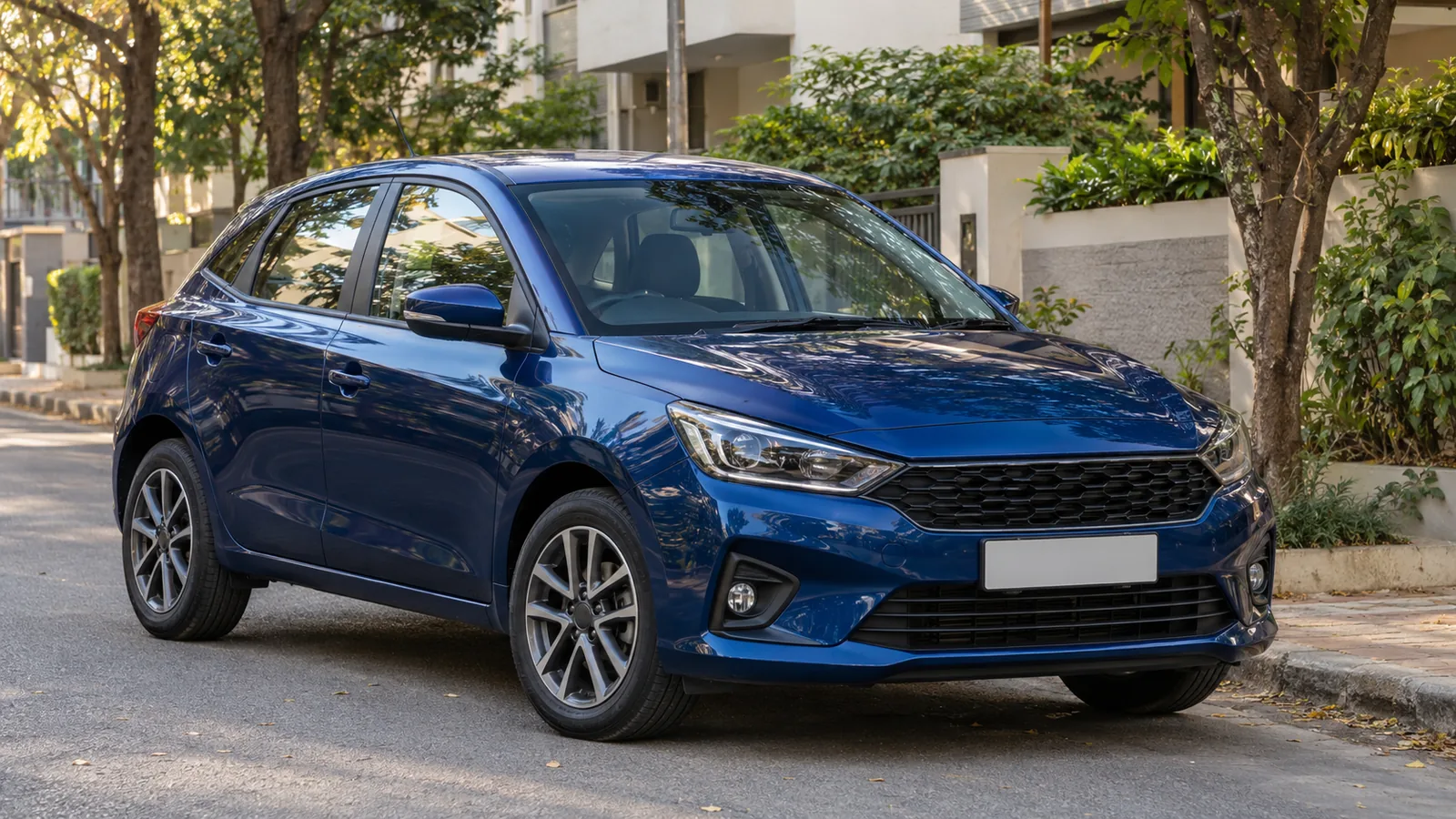
Cover image: AI-generated illustration of a generic unbranded hatchback. It does not depict the Toyota Glanza's official exterior design.
Glanza V vs V(O): the equipment that separates them
The following comparison follows the comfort and driver-support tables in Toyota's official Glanza brochure. Confirm the equipment against the exact vehicle on your quotation.
| Equipment | V | V(O) |
|---|---|---|
| Ventilated seats | Listed | Listed |
| Head-up display | Listed | Listed |
| 360-degree camera | Listed | Listed |
| Wireless charging with active cooling | Listed | Listed |
| Cruise control | Conventional | Adaptive |
| Level 2 ADAS package | Not listed | Listed |
AutoCred analysis: a buyer primarily interested in cabin comfort and parking visibility should assess V on its own merits. Choosing the top grade simply because a promotional image shows desirable equipment can obscure which features the lower grade already includes.
What to ask about the V(O) driver-assistance package
Toyota's brochure driver-support table lists adaptive cruise control, lane-departure warning and prevention, lane-keeping assist, high-beam assist and autonomous emergency braking for V(O).
Ask the demonstrator to explain how to activate and cancel each relevant function, how warnings appear and which operating conditions restrict assistance. Keep responsibility for observation, steering and safe control of the vehicle, and follow the owner's manual. A demonstration should help you understand normal operation; do not attempt to provoke emergency braking during a test drive.
Consider where you actually drive. If you regularly travel on suitable open roads, request a supervised demonstration on an appropriate route. If your routine is dominated by tight parking and short urban trips, spend equally serious time checking visibility, manoeuvring and cabin usability before deciding how much extra you value the assistance package.
Do not overlook the lower grades or the engine test drive
Toyota's published specifications identify a 1,197 cc, three-cylinder engine. Its safety matrix lists six airbags, vehicle stability control and hill-hold control across the grades shown. Wireless charging with active cooling is also listed for G and G CNG.
For a budget-conscious shortlist, these details are a reason to compare the full equipment sheet rather than jump directly to the most expensive grade. Start with the functions you will use regularly, then decide which omissions you can comfortably accept.
During the test drive, evaluate how the powertrain feels when moving away, joining traffic and carrying your usual passengers. If considering an automatic, try crawling traffic and parking as well as a clear stretch of road. Brochure equipment cannot answer whether the driving experience suits you.
Get a matched quotation before choosing V or V(O)
Request itemised on-road quotations on the same basis: fuel type, transmission, registration location, insurance and optional accessories. Ask the dealer to separate included equipment from paid additions and identify the exact grade in the booking document.
Then compare the extra amount against the features you personally value. Check the proposed delivery timing and cancellation terms in writing. This approach lets you choose a specification for its usefulness while keeping the financial commitment clear.
Set your finance expectations before the showroom visit. Check your indicative eligible amount and estimated EMI with AutoCred before shortlisting or visiting a dealer. Results are indicative; final eligibility, rate, tenure and approval depend on the lender. Compare that estimate with the final on-road quotation and the lender's written offer.