Audi A2 e-tron Production Strategy: Speed, Simplicity and Reuse
Audi's A2 e-tron programme offers a concrete way to examine how a carmaker tries to improve competitiveness: shorten development, simplify production and make better use of existing equipment. Its latest official update brings those industrial decisions back into focus. The interesting question is how these changes could improve the business of building a car, and what evidence would be needed to show that they succeeded.
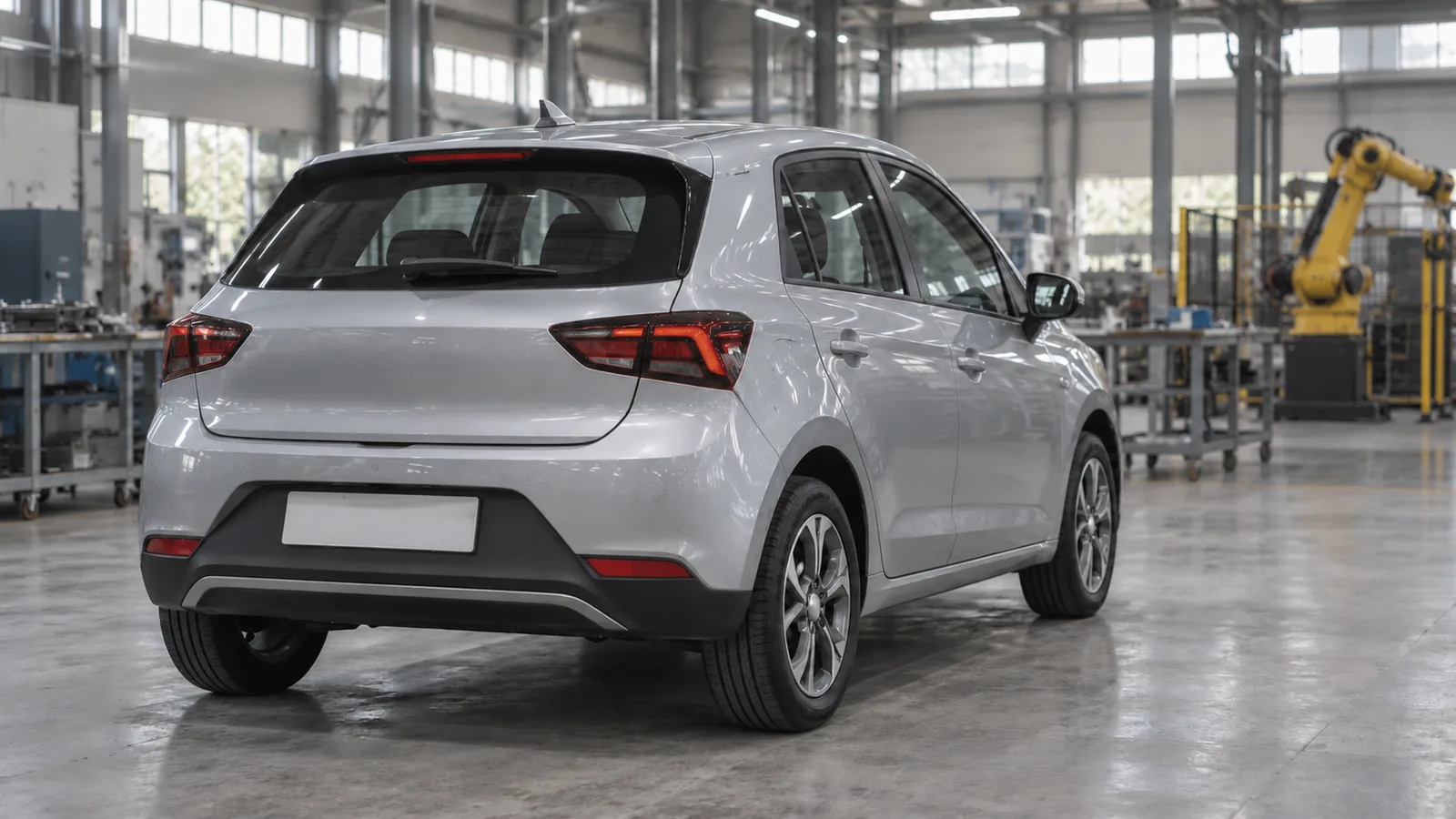
Cover image: AI-generated illustration of an unbranded compact electric car in a generic automotive workshop. It does not depict the Audi A2 e-tron or an Audi factory.
What Audi's latest A2 e-tron update confirms
In its 12 October 2026 Paris Motor Show release, Audi identifies the A2 e-tron as a model developed for Europe and built in Ingolstadt, Germany. It says more efficient development processes and earlier production readiness helped bring the model to the road 21 months earlier than comparable previous models.
AutoCred analysis: shortening the path to production can help a manufacturer respond sooner to a changing market. It can also reduce the time spent coordinating a programme before it generates customer deliveries. Those are potential advantages; the development-time comparison alone does not establish the model's profit margin, customer demand or quality performance.
The comparison also needs to be read accurately. Audi is describing a shorter development period relative to earlier projects. It is not saying the complete vehicle programme took only that amount of time.
Factory reuse is a specific part of the plan
Audi's 11 September production announcement says A2 e-tron bodies are manufactured alongside A3 bodies. More than 1,200 production components, including around 250 robots, are reused or put to further use.
The commercial logic is to extract more value from industrial assets while adapting them to a new product. Reuse is worth assessing through practical questions: is the equipment suitable, can it meet the required tolerances, and can the production process support the intended volumes?
For a manufacturer, a familiar factory footprint can be an advantage if the transition is executed well. For an observer, equipment reuse is evidence of an operational choice. It should not be translated into a retail-price reduction without a separate pricing announcement.
Fewer parts and a planned sequence address logistics complexity
The same production release describes fewer production-relevant part numbers and an order-sequencing process fixed six days before assembly. Audi says this allows suppliers to prepare parts in the correct order and reduces storage and sequencing requirements.
This is a different kind of improvement from simply building more cars. A simpler flow aims to make material handling and coordination easier. It gives the factory and its suppliers a clearer plan to work against, although execution still depends on the right parts reaching the right place.
From a customer's perspective, the questions remain practical: does the manufacturer deliver the ordered specification reliably, communicate changes clearly and maintain quality as production develops? Process announcements explain the intended mechanism; customer outcomes show whether it works.
How to judge the strategy's commercial results
Useful evidence would include sustained deliveries, dependable order fulfilment, quality outcomes and financial reporting that explains any efficiency gains. A production milestone is a starting point for that assessment. Avoid treating an ambitious factory programme as proof of stronger sales or a guaranteed improvement in ownership costs.
The releases discussed here describe a European programme. Indian readers can use it as a case study in manufacturing strategy while evaluating locally available cars using their official India specifications, written dealer quotations and service arrangements.
Plan the car and its finance together. Before shortlisting or visiting a dealer, check your indicative eligible amount and estimated EMI with AutoCred. Results are indicative; final eligibility, rate, tenure and approval depend on the lender. Compare the estimate with the final on-road quotation and the lender's written offer.