New & Upcoming Cars

Oct 04, 2026

Porsche Cayenne Electric India Launch: Price, Specs and Buyer Guide

Porsche India has launched the Cayenne Electric in two variants, adding a battery-electric option to one of its best-known SUV lines. The standard Cayenne Electric starts at ₹1,77,27,000, while the Cayenne Turbo Electric starts at ₹2,27,51,000. Porsche's official launch note says customer deliveries began on 30 September 2026, the same day as the Mumbai launch.

The electric variants expand the Cayenne range rather than replace it. Porsche India says petrol versions will continue to be sold into the next decade, giving buyers a direct choice between combustion and electric power within the same model family. The launch timing, two-variant lineup, published starting prices and delivery status come from the official Porsche India newsroom release.

Porsche Cayenne Electric India price and key specifications

Specification Cayenne Electric Cayenne Turbo Electric
Published starting price ₹1,77,27,000 ₹2,27,51,000
Overboost output with Launch Control 325 kW / 442 PS 850 kW / 1,156 PS
0–100 km/h with Launch Control 4.8 seconds 2.5 seconds
Top speed 230 km/h 260 km/h
Drive and transmission Electric all-wheel drive, automatic Electric all-wheel drive, automatic

Porsche publishes the variant performance data on its official India Cayenne Electric product page. The price is a starting point; a buyer's final on-road amount will depend on the configured vehicle, options, registration, insurance and other applicable charges. Obtain an itemised written quotation for the exact Porsche code before paying a booking amount.

Cayenne Electric charging: the 16-minute claim needs context

Porsche states that the Cayenne can charge from 10% to 80% in 16 minutes under optimal conditions. That result requires a CCS fast charger capable of more than 390 kW, more than 850 V and more than 520 A, with the battery at 15°C and the initial state of charge at 9%. The same India product page describes an 800-volt charging architecture with up to 390 kW, and up to 400 kW under specific conditions.

This is a technical maximum rather than a promise for every public-charging stop. Real charging speed varies with charger capability, battery temperature, state of charge, vehicle configuration, charging-curve behaviour and site conditions. Buyers should map the chargers on their actual intercity routes and verify whether those sites can deliver the required power reliably.

For home charging, Porsche's India page says the vehicle can use a wallbox with up to 11 kW, with up to 22 kW listed as optional. Before finalising the car, ask for a site survey that records the sanctioned electrical load, earthing, cable route, parking access, equipment cost, installation responsibility and expected charging time at the power available to your property.

Official India range figure: ask for the final local document

At the time of access on 4 October 2026, the main Porsche India product page displayed the combined ECE range as “TBA”. Buyers should therefore avoid relying on an international range figure or an unofficial advertisement as the final India-market number. Ask the Porsche Centre for the current local technical sheet, homologation information and the range figure attached to the exact configuration.

Even after a certified figure is published, real-world distance per charge will vary with speed, temperature, elevation, traffic, wheel-and-tyre choice, cabin cooling, driving style and payload. A practical test drive should include the buyer's typical urban route and, where possible, a representative highway section.

Cayenne Electric battery warranty explained

Porsche's India product page states that the high-voltage battery warranty covers material and manufacturing defects for eight years or 160,000 km, whichever comes first. It also states that at least 80% of original net battery capacity is guaranteed for up to three years or 60,000 km, followed by at least 70% remaining capacity until the end of the high-voltage battery warranty.

Read the complete warranty document before purchase. Ask what diagnostic threshold, testing method, exclusions and repair process apply; whether a capacity claim requires repeated workshop measurements; and whether the warranty transfers to a subsequent owner. Also confirm the separate warranties for the vehicle, charging equipment and installation work.

Space, towing and everyday usability

Porsche lists 781 litres of luggage capacity, expandable to 1,588 litres with the rear seats folded. The vehicle can tow up to 3,000 kg, rising to 3,500 kg with the optional Off-Road package, subject to the stated equipment conditions. Those figures make the electric model relevant beyond straight-line performance, but buyers should check how their chosen options affect payload, spare-wheel provision and usable cargo space.

For urban use, the vehicle's size and wheel choice deserve attention. Test parking ramps, basement clearances and the turning space at home. Large performance tyres can also have meaningful replacement cost and availability implications, so record the exact tyre specification and ask for a current replacement quotation.

Cayenne Electric vs Turbo Electric: which buyer fits each?

The standard Cayenne Electric already offers 442 PS of overboost output and a manufacturer-stated 4.8-second 0–100 km/h time with Launch Control. It is the more logical starting point for buyers who want the electric Cayenne's packaging, all-wheel drive and fast-charging system without prioritising the highest performance figure.

The Turbo Electric raises overboost output to 1,156 PS and cuts the stated 0–100 km/h time to 2.5 seconds with Launch Control. That capability should be evaluated alongside the higher purchase price, tyre and insurance costs, intended driving environment and the buyer's real use of the performance. Confirm which chassis, brake, wheel and comfort equipment is standard or optional on the exact Indian configuration.

Petrol Cayenne buyers still have a choice

Porsche India's launch release says petrol Cayenne variants will continue into the next decade. The new electric versions therefore create a parallel powertrain choice rather than an immediate all-electric replacement. Buyers should compare the complete ownership pattern: daily distance, ability to install home charging, highway routes, fuel or electricity cost, service requirements, expected holding period and resale assumptions.

A buyer with dependable home charging and predictable daily use may value the convenience of starting with a charged battery. A buyer who regularly travels through areas with limited fast-charging options may prefer the operational simplicity of petrol. Neither decision should be based on a single headline figure.

What to confirm in the Porsche quotation

  • The exact model year, variant, Porsche code and manufacturing month.
  • The starting price, optional equipment, registration, insurance and all other charges as separate lines.
  • The confirmed delivery date and the price applicable if delivery is delayed.
  • The local certified range and energy-consumption figures for the configured vehicle.
  • The home-charger specification, installation cost, electrical work and warranty.
  • The high-voltage battery warranty and capacity-retention terms in writing.
  • The wheel and tyre size, replacement availability and spare-wheel or mobility-kit provision.
  • The service package, roadside assistance and nearest high-voltage repair facility.
  • The booking cancellation and refund conditions.

Porsche Cayenne Electric India launch: buyer takeaway

The Cayenne Electric gives Porsche India a high-performance electric SUV in two sharply differentiated variants. The official information confirms starting prices of ₹1.77 crore and ₹2.28 crore when rounded to two decimal places, deliveries from 30 September, very high overboost outputs and an advanced fast-charging system. It also confirms that petrol Cayennes will continue, so customers can choose the powertrain that suits their use rather than treating the EV as the only route forward.

The final decision should be based on the configured on-road cost, charging at home and on regular routes, warranty documents, local range certification and after-sales support. Before committing to a Porsche or another premium EV, check an indicative eligible loan amount and estimated EMI with AutoCred. Results are indicative; final eligibility, interest rate, tenure, documentation and approval depend on the lender's verification and policy.

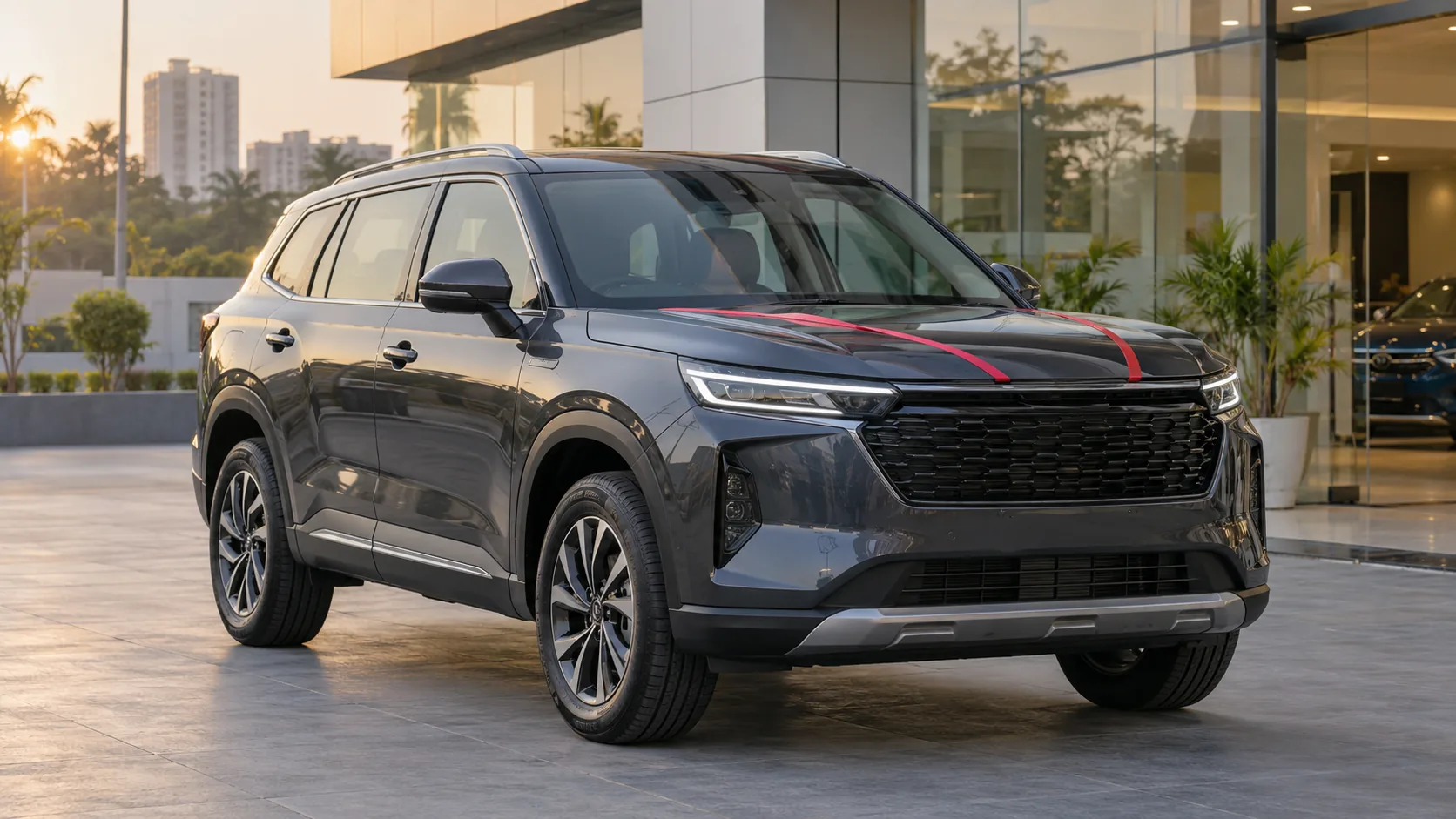
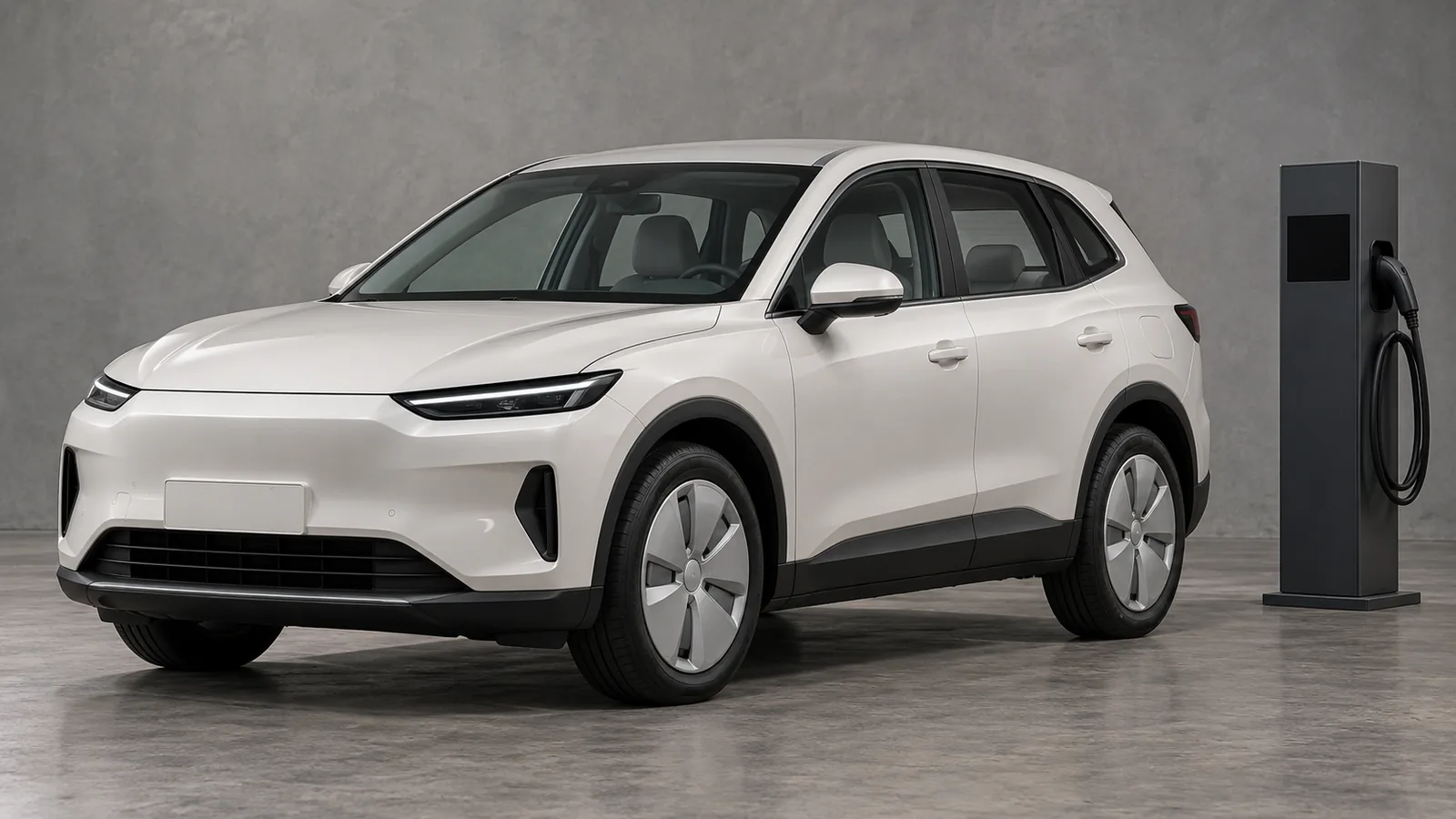
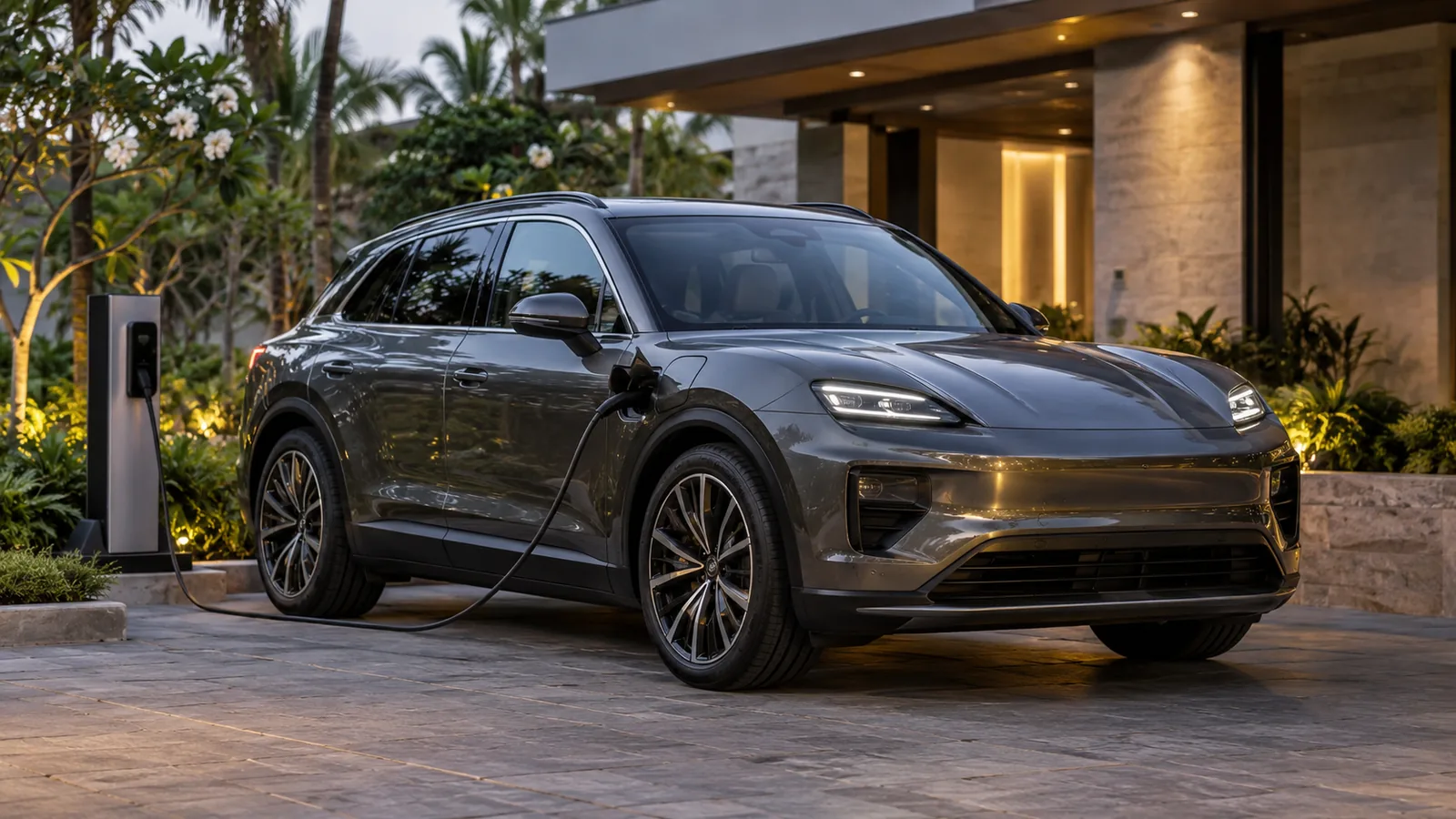
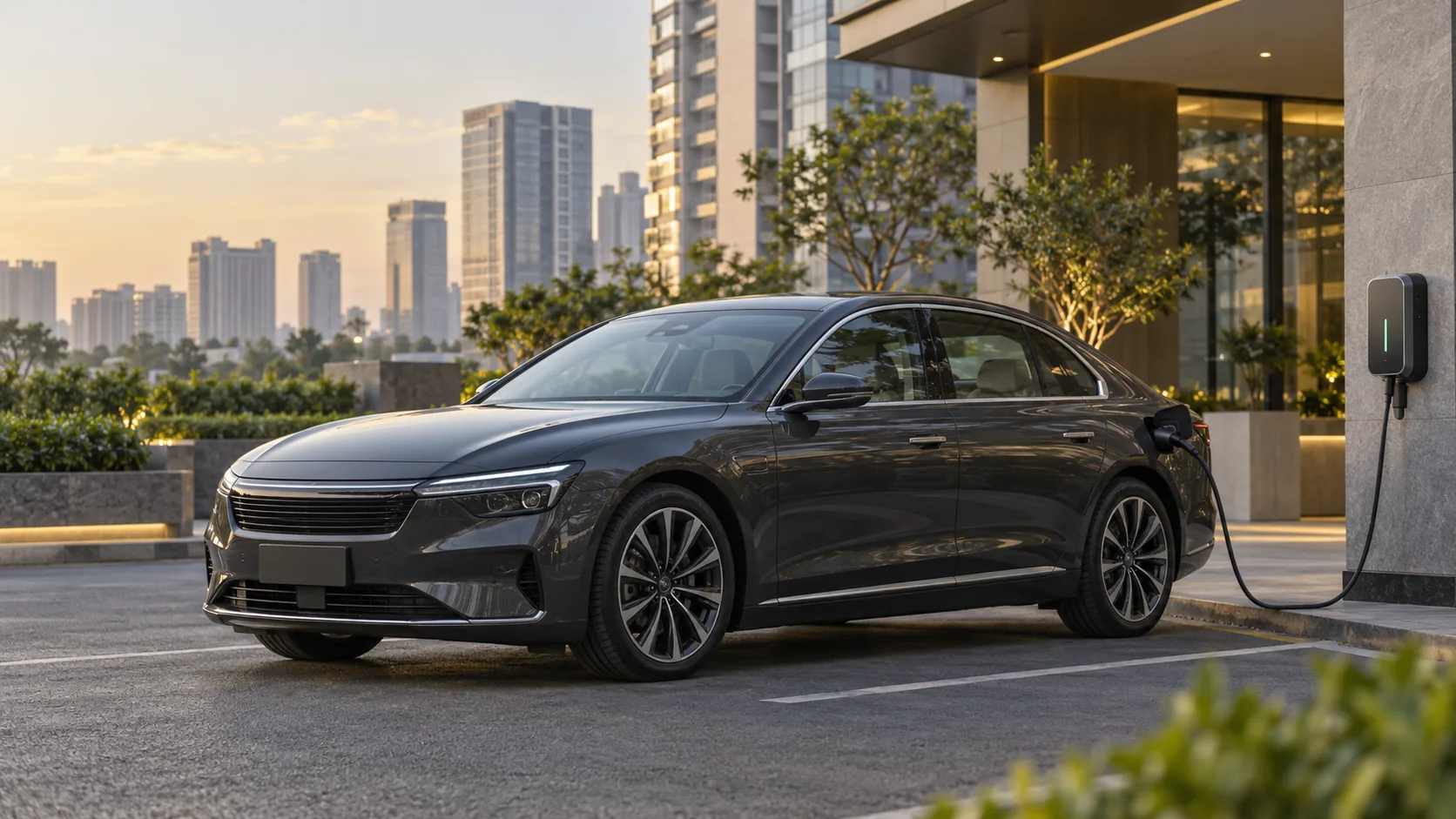
Primary sources: Porsche India Cayenne Electric launch release, published 30 September 2026, and the official Porsche India Cayenne Electric product page, both accessed 4 October 2026. Specifications, prices and availability can change; confirm the current local brochure and written dealer quotation. The cover is an illustrative image of a generic unbranded luxury electric SUV and does not depict an official Porsche model.

Read more
Oct 04, 2026

Mercedes-Benz Paris Motor Show 2026: GLA, GLE and VLE Preview

Mercedes-Benz has set out a broad product programme for the 2026 Paris Motor Show, led by the all-new GLA, the new GLE and the all-electric VLE. The official announcement gives Indian luxury-car shoppers an early view of the models and technologies that will shape the brand's next product cycle, but it does not confirm India launch dates, variants or prices for the Paris vehicles.

According to the Mercedes-Benz media release published on 29 September 2026, the Paris Motor Show will run from 12 to 18 October. Mercedes-Benz lists the all-new GLA, new Mercedes-AMG CLA 45, new GLE, new Mercedes-AMG GT 4-Door Coupé and all-electric VLE among the show premieres, alongside the new S-Class.

Mercedes-Benz Paris Motor Show 2026: confirmed lineup

Model named by Mercedes-Benz What is officially confirmed India buyer relevance
All-new GLA Listed as a Paris show premiere Worth tracking because the current GLA is already part of the official India range
New GLE Listed as a Paris show premiere Relevant to buyers comparing the current luxury SUV with a future update
All-electric VLE Passenger-car show premiere; up to eight seats and a manufacturer-stated range above 700 km A future premium electric MPV to watch; India availability is not confirmed in the release
AMG CLA 45 and AMG GT 4-Door Coupé Both are named among the show premieres Performance-car interest is high, but India specifications and timing remain unannounced here
New S-Class Included in the Paris product highlights Shows how Mercedes-Benz is updating several price bands during the same product cycle

The lineup and event dates in the table come from the official Mercedes-Benz Paris Motor Show announcement. The release does not provide India-specific launch dates, booking amounts, ex-showroom prices or locally offered powertrains for these new models.

What is confirmed and what remains open for India

The word “premiere” confirms that Mercedes-Benz will present the vehicles in Paris; it does not by itself mean that every model will be sold in India. Market launches depend on local certification, product planning, allocation, homologation and commercial decisions. Buyers should therefore treat social-media launch dates or unofficial price estimates as speculation unless Mercedes-Benz India publishes them.

As of 4 October 2026, Mercedes-Benz India's official pages continue to display the current GLA model information and the current GLE model information. That makes the Paris debut relevant, but shoppers should compare against the vehicle actually listed and quoted in India rather than assume global equipment will carry over unchanged.

All-new GLA: what compact luxury SUV buyers should watch

The GLA is the most directly relevant Paris premiere for buyers considering an entry point into the Mercedes-Benz SUV range. The official media note identifies it as all-new but does not publish its dimensions, India engines, feature list or market timetable. Those details should be assessed only after the reveal and a separate Indian product announcement.

For a useful comparison, focus on packaging rather than the styling headline. Check rear-seat space, boot usability, visibility, ride comfort, ground clearance for regular routes, spare-wheel provision, tyre size and the availability of driver-assistance features in the exact Indian variant. A global launch car can carry equipment that is optional or unavailable in another market.

A buyer who needs a car now should compare the written deal on the current model with the value of waiting. Record the current car's manufacturing month, variant, warranty, service package and final on-road price. A discount is useful only when it compensates for the buyer's priorities and does not hide an older inventory unit or missing equipment.

New GLE: wait for specifications, not just a new face

The official Paris announcement names a new GLE but gives no technical specifications. Indian shoppers should wait for clarity on powertrain choices, standard equipment, seating configuration, suspension, wheel-and-tyre packages and the driver-assistance suite. These can materially affect comfort, running cost and real-world suitability even when the exterior change appears modest.

The current official India page lists the GLE in diesel mild-hybrid configurations and describes features available on the locally marketed range. Treat those details as applying to the currently listed model only. The new global GLE may have different combinations, and India specifications should be taken from the final local brochure and price list.

If the current GLE already meets your needs, ask the dealer to state the production month, delivery date and price protection in writing. If you prefer the new model, wait for three separate confirmations: an India launch announcement, the local variant specification and a firm on-road quotation. A global reveal alone does not establish any of those.

Electric VLE: the most different vehicle in the lineup

Mercedes-Benz describes the VLE as an all-electric passenger vehicle with space for up to eight people and a stated range of more than 700 km. The company also cautions that actual range varies with driving style, environmental conditions, battery age, air-conditioning use, equipment, tyres, payload and route. These figures and caveats come from the official 29 September release.

For India, the VLE could be relevant to large families, hotels, executive transport and premium shuttle operators if it is formally introduced. That remains a scenario rather than a confirmed Indian launch. Prospective fleet or family buyers should wait for local seating layouts, payload, charging specifications, warranty terms, service coverage and certified range information before building a purchase case.

For any electric MPV, test the vehicle with the intended passenger and luggage load. Examine access to the third row, air-conditioning performance across all rows, charging time at the available home or depot connection, highway charger compatibility and the effect of repeated airport or intercity duty on the operating plan.

AMG and S-Class premieres broaden the update cycle

The new Mercedes-AMG CLA 45 and Mercedes-AMG GT 4-Door Coupé add a performance dimension to the Paris programme, while the new S-Class represents the flagship luxury segment. Mercedes-Benz also says its stand will include the electric CLA Shooting Brake, electric C-Class and electric GLC. These are global product highlights; the announcement does not map them to an Indian launch calendar.

Performance-car buyers should avoid assuming international power outputs, tyre choices, suspension settings or option packs will match an Indian car. The same applies to charging hardware and claimed range for electric models. Always use the Indian homologation data, local brochure and vehicle identification details attached to the final order.

Should you buy the current GLA or GLE now?

There is no universal answer. Buying the current model can make sense when it is available, the specification is known, the deal is transparent and the car fits the ownership plan. Waiting can make sense when the new design, cabin technology, powertrain or resale cycle matters more than immediate delivery.

Compare both paths using a written decision sheet. Include the net on-road price, down payment, total interest, insurance, service package, warranty, expected delivery, manufacturing date and likely ownership period. Avoid comparing only a dealer's monthly EMI because a longer tenure can lower the instalment while increasing total repayment.

Questions to ask after the Paris reveal

  • Has Mercedes-Benz India officially confirmed this model and launch window?
  • Which engines or electric powertrains will be offered locally?
  • Which safety and driver-assistance features are standard on the quoted variant?
  • What is the manufacturing month and country of origin of the allocated car?
  • Is the booking amount refundable if the price, specification or delivery date changes?
  • Does the quotation include insurance, registration, service package, extended warranty and accessories separately?
  • For an EV, what home-charging installation, public-charging access and battery warranty are included?
  • Which authorised workshop will handle mechanical, software, high-voltage and body repairs?

Mercedes-Benz Paris Motor Show 2026: buyer takeaway

The Paris programme confirms that Mercedes-Benz is preparing updates across compact SUVs, larger luxury SUVs, performance cars, flagship sedans and electric people movers. The GLA and GLE are the most immediately relevant names for Indian SUV shoppers because both nameplates are already represented on the official India site. The VLE is the most significant new format, but the global announcement does not confirm an Indian launch.

Use the 12 October presentation to learn what Mercedes-Benz has actually changed, then wait for a local announcement before treating any specification, price or delivery date as applicable to India. When the right vehicle and variant are clear, check an indicative eligible loan amount and estimated EMI with AutoCred before visiting the dealer. Results are indicative; final eligibility, interest rate, tenure, documentation and approval depend on the lender's verification and policy.

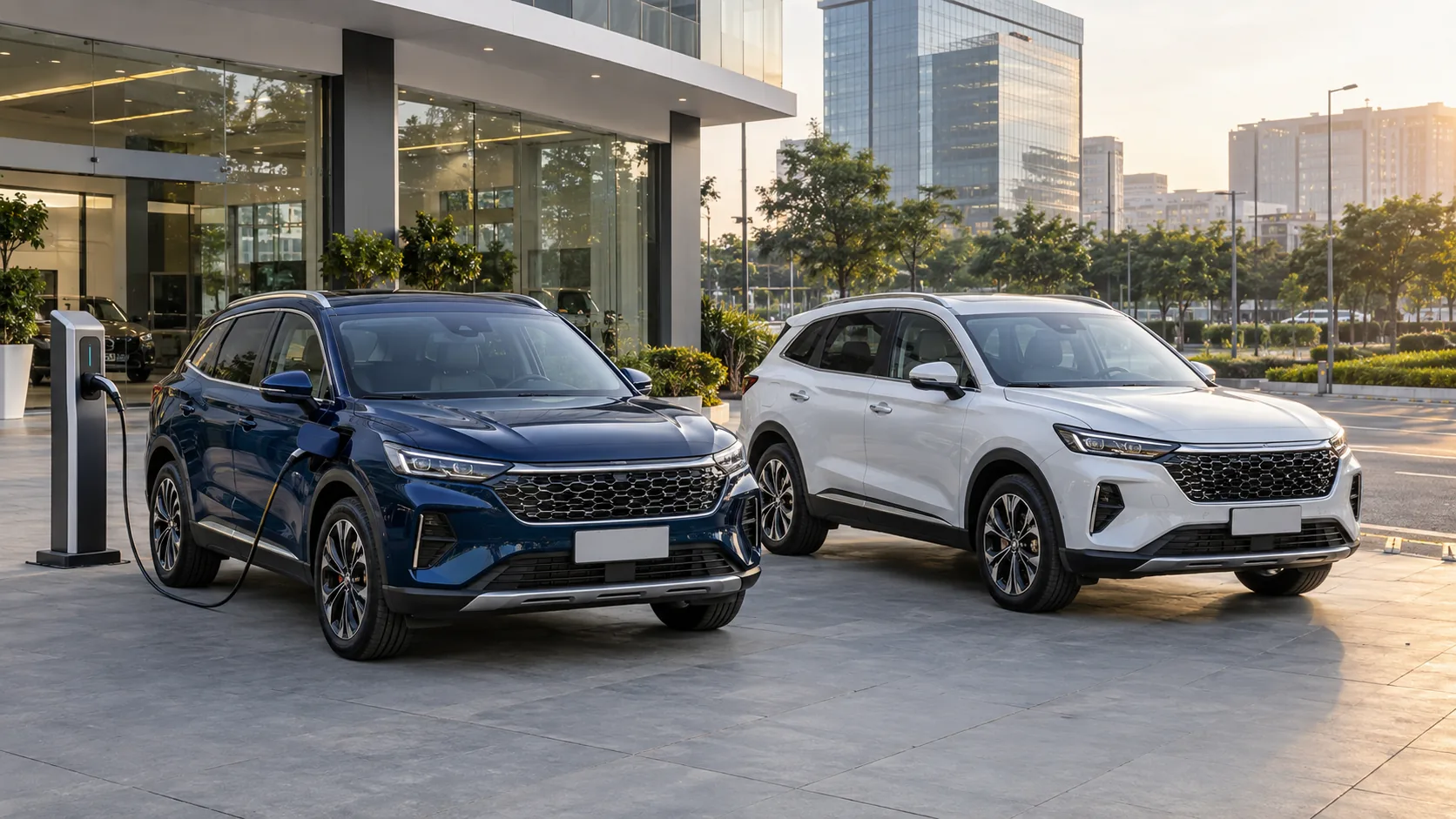
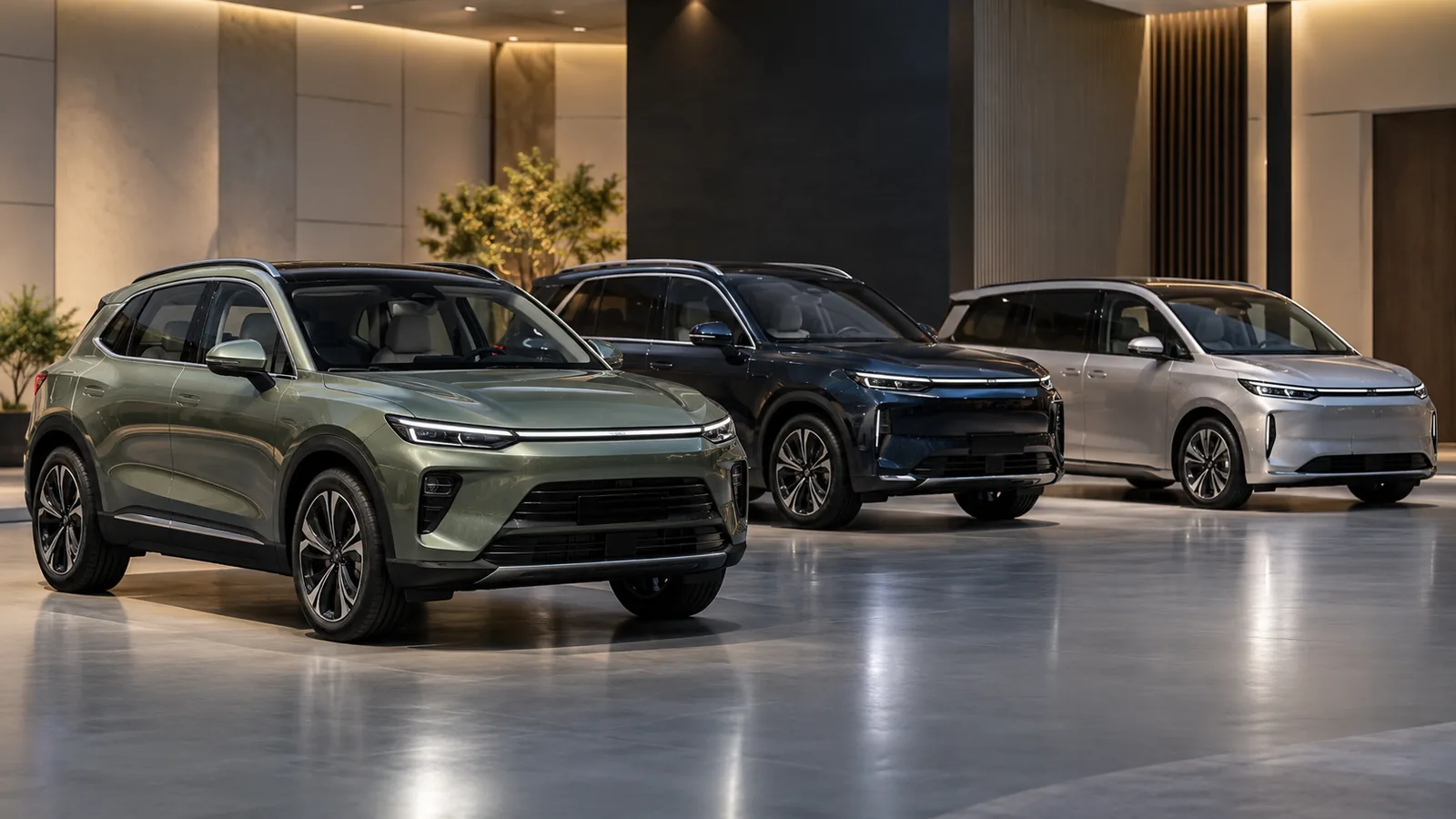
Primary source: Mercedes-Benz at the Paris Motor Show 2026, published 29 September 2026 and accessed 4 October 2026. Current India references: official Mercedes-Benz India pages for the GLA and GLE, accessed 4 October 2026. The cover is an illustrative image of generic unbranded vehicles and does not depict an official Mercedes-Benz model.

Read more
Oct 03, 2026

BMW i5 Long Wheelbase India: ₹79.60 Lakh, 669 km Range

The BMW i5 Long Wheelbase has launched in India at an introductory ex-showroom price of ₹79.60 lakh. BMW's first locally produced electric sedan is built at the company's Chennai plant, offers a claimed MIDC range of up to 669 km, and can be booked through BMW dealerships and the brand's India website.

The India-spec BMW i5 eDrive35L M Sport uses an 81.6 kWh gross-capacity battery and a rear-mounted electric drive system producing 268 hp and 410 Nm. BMW announced the model on 7 September 2026 and said deliveries would begin immediately. The launch places a long-wheelbase, rear-seat-focused electric sedan below the flagship i7 in BMW India's range.

BMW i5 Long Wheelbase India: key details

Item Official India specification
VariantBMW i5 eDrive35L M Sport
Introductory ex-showroom price₹79.60 lakh
Battery capacity81.6 kWh gross
Claimed rangeUp to 669 km, MIDC
Output and torque268 hp and 410 Nm
0-100 km/h6.7 seconds
DC charging supportUp to 160 kW
Length and wheelbase5,175 mm and 3,105 mm

Every figure in the table comes from BMW Group India's official i5 Long Wheelbase launch release. The price applied at launch and BMW says the price prevailing at invoicing will apply. It includes applicable GST but excludes road tax, TCS, registration charges, local levies, insurance and optional equipment.

What the ₹79.60 lakh price includes

BMW launched the regular i5 eDrive35L M Sport and a 99-unit First Edition at the same introductory ex-showroom price of ₹79,60,000. The First Edition was already sold out before the official launch, according to BMW, so current shoppers should confirm availability and specification of the regular production version rather than expect the limited-edition equipment.

The final on-road figure will vary by state, insurance selection, accessories and finance structure. Buyers should request a written quotation that separates the vehicle price, registration, TCS, insurance, extended warranty, service packages, charger work beyond standard installation, and any dealer-fitted items. This is especially important when comparing the i5 with a petrol luxury sedan or another premium EV.

Battery, range and real-world planning

The high-voltage battery has a gross energy content of 81.6 kWh. BMW quotes an MIDC-certified range of up to 669 km. MIDC is a laboratory test result, so actual distance per charge will vary with speed, ambient temperature, traffic, air-conditioning use, elevation, driving style, tyre pressure and passenger load.

A useful buying exercise is to map a normal week rather than focus only on the maximum claim. Calculate the daily office journey, airport runs, family use and regular intercity routes. Then check charging options at home, work and along the highways you use. A large claimed range can reduce charging frequency, but the ownership experience still depends on where the car is parked and how reliably it can be charged.

How quickly can the BMW i5 LWB charge?

BMW says the i5 eDrive35L supports up to 160 kW DC fast charging. Under the manufacturer's stated conditions, a 10% to 80% charge can take 33 minutes. Actual charging time depends on charger output, battery temperature, the charging curve, starting state of charge and whether the station can continuously provide the required power.

The car includes a complimentary BMW Wallbox with installation and supports home charging at up to 11 kW. Before booking, ask for a site survey covering sanctioned electrical load, cable routing, earthing, parking access, installation scope and any apartment-society permission. Also clarify which civil or electrical work is outside the complimentary package.

Performance is strong without being the only priority

The rear-wheel-drive i5 eDrive35L produces 268 hp and 410 Nm. BMW claims 0-100 km/h in 6.7 seconds and a top speed of 195 km/h. Those numbers place it firmly in luxury-performance territory, although the long-wheelbase layout also puts considerable emphasis on rear-seat comfort.

An adaptive rear-axle air suspension and increased ground clearance are part of the India package. A test drive should still cover the buyer's usual roads, basement ramps and speed breakers. Wheel size, tyre profile and suspension tuning can affect low-speed ride quality, so rear-seat passengers should evaluate the car as carefully as the driver.

Long-wheelbase dimensions favour rear-seat space

The i5 LWB measures 5,175 mm long, 2,156 mm wide and 1,520 mm high, with a 3,105 mm wheelbase. BMW describes it as the largest car in its segment and positions the extended wheelbase around a more spacious rear cabin.

The size should be considered alongside parking reality. Buyers should measure the home bay, office parking space and ramp width, and check whether the turning area is comfortable. A chauffeur-driven owner may value the rear legroom, while a self-driving owner should also assess outward visibility and ease of manoeuvring in tight urban spaces.

Cabin technology and comfort features

The dashboard combines a 12.3-inch information display and a 14.9-inch control display. BMW Operating System 8.5 supports touch and voice interaction, while wireless Apple CarPlay and Android Auto are included. Digital Key Plus can use a compatible smartphone or smartwatch as a key and can be shared with up to 18 users.

Comfort equipment highlighted by BMW includes ventilated front seats, four-zone climate control, a Sky Lounge panoramic glass roof, vegan upholstery and a Bowers & Wilkins surround-sound system. The regular car's exact standard and optional equipment should be confirmed on the current order form, particularly because the sold-out First Edition had additional rear-seat entertainment and unique trim.

Four colours and a fully vegan interior

BMW announced four metallic exterior colours: Mineral White, Phytonic Blue, Carbon Black and Oxide Grey. The standard interior uses perforated Veganza upholstery in a Copper Brown and Atlas Grey dual-tone combination.

Colour availability can change by allocation, and a display car may carry optional trim. Ask the dealer to record the chosen exterior, upholstery, wheel and equipment configuration on the booking document. The manufacturing month and vehicle identification details should also be checked before registration.

Who should consider the BMW i5 Long Wheelbase?

The i5 LWB is aimed at buyers who want an electric executive sedan with substantial rear-seat room, local production and the convenience of home charging. It may suit a chauffeur-driven owner who also wants strong performance when taking the wheel. The 669 km MIDC claim gives it a sizeable official range figure, while the 160 kW DC capability supports faster charging on compatible infrastructure.

It deserves a closer cost comparison if your usage includes frequent long-distance trips without dependable fast chargers, your parking does not support a private wallbox, or you prefer a smaller car for dense city areas. The best alternative will depend on on-road price, charging access, driving pattern, rear-seat priorities and expected ownership period.

BMW i5 LWB India buyer checklist

  • Get a written, itemised on-road quotation for the exact configuration.
  • Complete a home-charging survey before paying a large non-refundable amount.
  • Confirm what the complimentary wallbox installation includes and excludes.
  • Check the regular variant's equipment rather than relying on First Edition publicity.
  • Test rear-seat comfort over the roads used for daily travel.
  • Measure the parking bay, ramp and turning space for the car's dimensions.
  • Review battery, vehicle and charger warranty terms in writing.
  • Compare total repayment, down payment and insurance rather than only the EMI.

BMW i5 Long Wheelbase India: the takeaway

The BMW i5 LWB brings a distinct combination to India's luxury-EV market: local Chennai production, a long-wheelbase cabin, an 81.6 kWh battery, a claimed 669 km MIDC range and an introductory ₹79.60 lakh ex-showroom price. Its strongest case is for buyers who can charge at home and place high value on rear-seat space without giving up brisk electric performance.

Before finalising the i5 LWB or another premium car, check an indicative eligible loan amount and estimated EMI with AutoCred. Results are indicative; final eligibility, interest rate, tenure, documentation and approval remain subject to the lender's verification and policy.

Primary source: BMW Group India — BMW i5 Long Wheelbase launch release, dated 7 September 2026 and accessed 3 October 2026. All prices, specifications, range and charging figures are manufacturer-stated. The cover image is an illustrative photograph of a generic unbranded electric sedan and does not depict the official BMW i5.

Read more
Oct 02, 2026

New Honda Elevate Bookings Open at ₹21,000 Ahead of 6 October Launch

Honda Cars India has opened pre-launch bookings for the New Honda Elevate before its scheduled Indian launch on 6 October 2026. Customers can place a booking at an authorised Honda dealership with an amount of ₹21,000, according to the manufacturer's announcement issued on 1 October.

India will be the first market to launch the updated SUV. Honda has confirmed a bolder design, a more premium cabin and “several strongly desired features and enhancements,” but it has not yet published the complete new variant list, prices or detailed equipment table in the official pre-launch booking release. Buyers should separate those confirmed facts from expectations based on the current model.

New Honda Elevate booking and launch timeline

Item Officially confirmed Buyer action
Pre-launch bookings Open from 1 October 2026 Use an authorised Honda dealership
Booking amount ₹21,000 Get a receipt and written refund terms
India launch Scheduled for 6 October 2026 Wait for final prices and variant details

Honda has not announced a customer-delivery date in this release. A launch date is when the company is expected to present the new vehicle commercially; it does not guarantee that every variant and colour will be delivered immediately. Ask the dealership for a written delivery estimate after the final allocation is known.

What Honda has confirmed about the updated SUV

The pre-launch statement describes three areas of change: a bolder exterior design, a more premium cabin experience and additional features requested by customers. Honda has not named those features or explained which variants will receive them. Claims circulating without an official variant sheet should therefore be treated as speculation until the 6 October presentation.

The company also describes India as the lead market for the Elevate and says the updated version will be introduced here first. That gives Indian buyers early access to the refresh, but it also means the final local brochure is the correct reference. Specifications from another country or an earlier Elevate cannot be assumed to apply to the 2026 India model.

Current Elevate specifications are a reference, not a promise

Honda's current official Elevate product page lists a 1,498 cc petrol engine producing 89 kW (121 PS) and 145 Nm, paired with a six-speed manual or CVT. It also lists certified fuel-efficiency figures of 15.31 km/l for the manual and 16.92 km/l for the CVT, along with 220 mm ground clearance and 458 litres of boot capacity.

These details describe the model shown on Honda's live page at the time of writing. The pre-launch release does not explicitly confirm that every engine, transmission, efficiency, dimension or luggage figure will remain unchanged for the refreshed vehicle. Buyers should verify the final 2026 brochure before making a decision based on those numbers.

New Honda Elevate price has not been announced in the booking release

The current Honda Elevate page displays a starting price of ₹11,80,700, while the new pre-launch announcement does not give a refreshed-model price list. Buyers should not assume that the displayed starting figure applies to every new 2026 variant or that equipment additions will be available at the same price.

Wait for Honda to publish the variant-wise ex-showroom prices on 6 October. Then request a written on-road quotation that separately shows ex-showroom price, registration, insurance, accessories, extended warranty, service plans and any dealer charges. Compare equivalent variants rather than only the lowest advertised starting price.

How to place a safer pre-launch booking

A pre-launch booking reserves a place in the dealer process, but the final purchase decision should remain conditional on the price, equipment and delivery terms. Before paying ₹21,000, ask the authorised dealership to record:

  • The booking amount and payment method on an official receipt.
  • Whether the amount is fully refundable and the expected refund timeline.
  • The provisional variant, transmission and colour preference.
  • Whether a preference can be changed after the price announcement.
  • The method used to determine allocation and booking priority.
  • Any cancellation deduction or administrative charge.
  • Whether the booking protects the announced price or only records interest.

Do not rely on an oral promise about price, delivery or a feature that is absent from official material. Save the payment receipt, booking form and dealership correspondence.

Safety and ADAS details need variant-level confirmation

The current model page lists six airbags, Vehicle Stability Assist, hill-start assist, ABS with electronic brake-force distribution, ISOFIX child-seat anchors and Honda SENSING driver-assistance functions on applicable versions. The listed Honda SENSING features include collision-mitigation braking, adaptive cruise control, lane-keeping assistance, road-departure mitigation, auto high beam and lead-car-departure notification.

Honda's 1 October announcement does not provide the refreshed variant distribution for these systems. After launch, confirm which safety features are standard across the range and which require a higher trim. Driver-assistance features support an attentive driver; they do not make the vehicle autonomous, and their operation can be limited by road markings, visibility and other conditions.

Should you buy the current Elevate or wait for the update?

Waiting until 6 October is the clearer option for most undecided buyers because the scheduled launch is only days away. The final price and feature table will show whether the refresh offers enough value for your needs. It will also make a current-versus-new comparison possible using actual equipment rather than rumours.

A current-stock Elevate may still be worth considering if a dealer gives a transparent quotation, identifies the manufacturing month and offers a meaningful commercial benefit. Compare warranty start date, resale implications, installed accessories and the exact differences from the new version. A discount is useful only if the older configuration already meets your requirements.

What to inspect during the New Elevate test drive

Once test vehicles are available, assess the parts that cannot be judged from a feature list. Check front and rear visibility, seat comfort, ingress, rear knee room, boot loading height, low-speed ride, highway stability, steering weight and brake response. For the CVT, observe engine noise and response during quick acceleration; for the manual, check clutch effort and shift quality.

Test the infotainment system, phone connectivity, camera clarity and driver-assistance controls on the exact variant. Ask whether any displayed functions are optional accessories or subscription-linked services. If the design changes affect lamps, wheels or body trim, also confirm replacement costs and insurance coverage.

Key questions for the 6 October launch

  • What are the ex-showroom prices for every manual and CVT variant?
  • Which new features are standard, and which are restricted to higher trims?
  • Have the engine, certified efficiency, dimensions or boot capacity changed?
  • What safety equipment is standard across the full range?
  • When will customer deliveries begin, and how will allocations be prioritised?
  • What warranty, roadside-assistance and maintenance packages apply?
  • Which colours and factory-fitted accessories are available by variant?

New Honda Elevate booking: the buyer takeaway

The confirmed news is concise but useful: bookings opened on 1 October for ₹21,000, authorised Honda dealers are accepting them, India is the first launch market, and the debut is scheduled for 6 October 2026. Honda promises design, cabin and feature enhancements but has not disclosed the full variant-level specification or new price list in the booking announcement.

Use the booking window to organise your requirements rather than committing to an unknown configuration. When prices arrive, check an indicative eligible loan amount and estimated EMI with AutoCred before selecting a variant or paying the balance. Results are indicative; final eligibility, interest rate, tenure, documentation and approval remain subject to the lender's verification and policy.

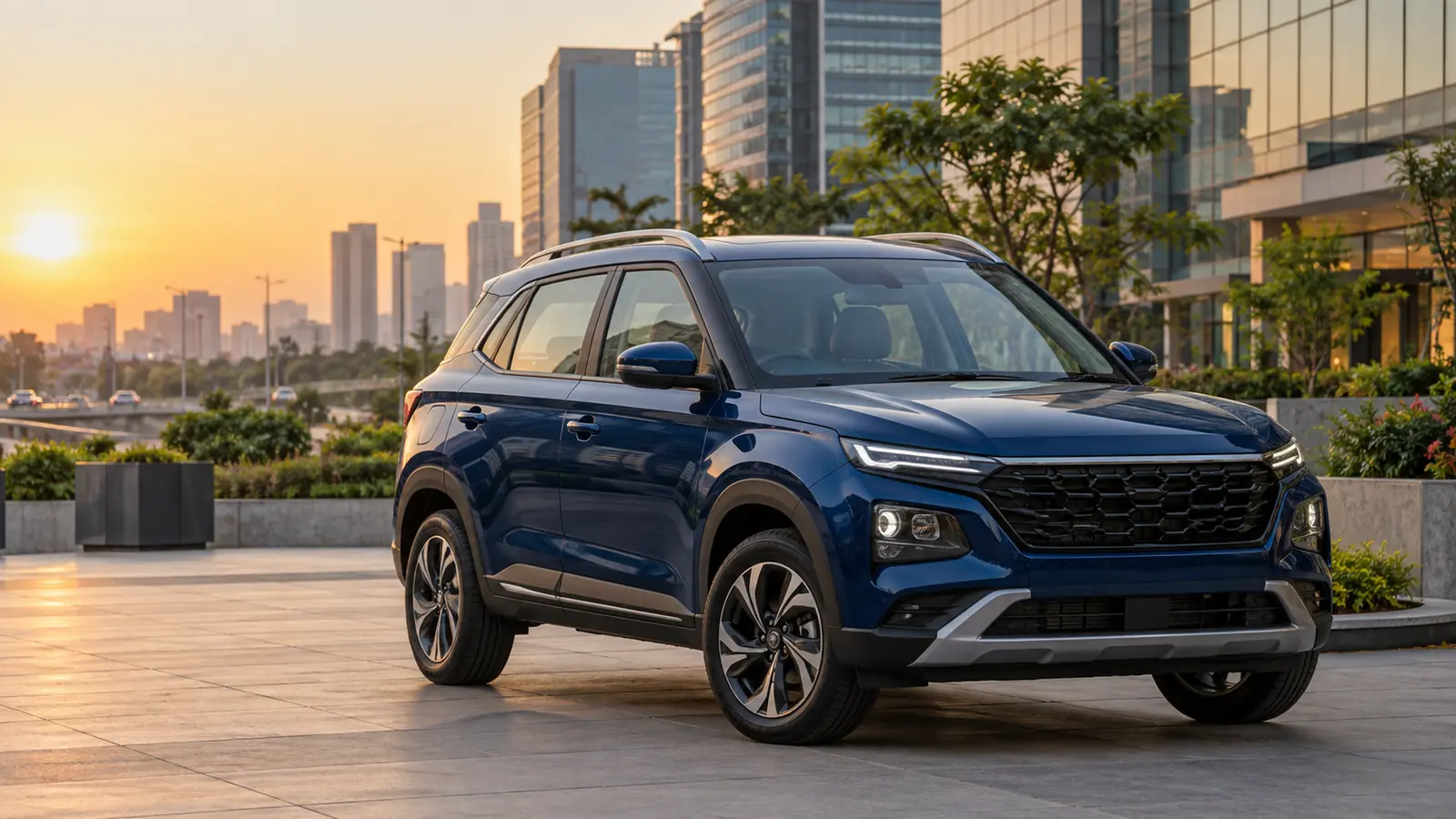
Primary sources: Honda Cars India — New Elevate pre-launch booking announcement, 1 October 2026; Honda Cars India — live Elevate product page. Accessed 2 October 2026. The cover image is an illustrative depiction of a generic unbranded SUV and does not show an official Honda vehicle design.

Read more
Oct 01, 2026

MG Hector Tomahawk EV vs PHEV: Price, Range and Buyer Guide

JSW MG Motor India has introduced the Hector Tomahawk with two electrified powertrains: a fully electric version and a plug-in hybrid. The decision creates a useful but complex choice for Indian SUV buyers. One version removes the petrol engine entirely, while the other combines a large electric-only range with a petrol engine for longer journeys.

The model was formally launched on 26 August 2026, and the company says bookings are open. According to the official JSW MG Motor India launch announcement, EV deliveries were scheduled to begin in September 2026, while PHEV test drives and deliveries are due to start in November 2026. Here is what the published prices, batteries, range claims and ownership plans mean before you shortlist a variant.

MG Hector Tomahawk EV and PHEV prices explained

MG has announced both Battery-as-a-Service (BaaS) and full-ownership prices. The introductory BaaS price starts at ₹13.99 lakh for the EV, plus a battery rental of ₹4.90 per kilometre. The PHEV starts at ₹21.79 lakh under BaaS, plus ₹3.20 per kilometre. These introductory BaaS offers are stated to apply to a limited number of bookings.

For customers who want the vehicle and battery together, the introductory ex-showroom price starts at ₹19.49 lakh for the EV and ₹25.69 lakh for the PHEV. The manufacturer's variant-wise price list publishes the following starting points:

Powertrain Introductory BaaS price Battery rental Introductory full-ownership price
Hector Tomahawk EV From ₹13.99 lakh ₹4.90/km From ₹19.49 lakh
Hector Tomahawk PHEV From ₹21.79 lakh ₹3.20/km From ₹25.69 lakh

All four amounts above are manufacturer-published introductory figures. The full-ownership prices are ex-showroom, so registration, insurance, accessories and other on-road charges vary by location and quotation. A lower BaaS entry price should not be compared with a full-ownership price in isolation because the battery-rental contract adds an ongoing kilometre-based cost.

How the EV and PHEV powertrains differ

The Hector Tomahawk EV uses a 69.2 kWh battery, a permanent-magnet synchronous motor producing 150 kW and 310 Nm, and supports DC charging at up to 90 kW. MG publishes an ARAI/MIDC-certified range of 517 km on one charge. Certification provides a common comparison point, but actual range changes with speed, traffic, temperature, climate-control use, gradients, tyre pressure and vehicle load.

The PHEV pairs a 1.5-litre petrol engine with a dedicated hybrid transmission, a 20.5 kWh battery and a 148 kW electric motor. MG claims more than 115 km of pure-electric driving and a combined range above 1,100 km with a full tank and full charge. The company also describes four operating modes: pure electric, series hybrid, parallel hybrid and engine-direct drive. Those published figures and modes appear in the official technical overview; real-world results will depend on conditions and how often the PHEV is charged.

EV deliveries have begun; PHEV buyers wait until November

Timing may decide which version some buyers can consider immediately. MG's August launch release scheduled EV deliveries from September 2026 and PHEV test drives and deliveries from November 2026. The company's August 2026 sales update subsequently said dispatches of the EV were underway and repeated the November timing for the PHEV.

Ask the dealership for a written delivery estimate for the exact colour, seating layout and variant. A national launch schedule does not guarantee stock at every dealership, and delivery dates can change with allocation and logistics.

Seating and size: one key difference between the two versions

The EV is offered in five-seat and seven-seat configurations, while the PHEV is available only as a seven-seater. MG lists the SUV at 4,745 mm long, 2,130 mm wide including mirrors and 1,770 mm tall, with a 2,810 mm wheelbase. The company also states ground clearance of 230 mm at the battery.

The five-seat version has a claimed boot capacity of up to 610 litres with all seats in use. Seven-seat buyers should inspect third-row access, knee room and luggage space with every row raised. A large exterior does not by itself answer whether the final row and boot will work for a family's regular travel pattern.

Technology and safety equipment to verify by variant

MG's launch specification includes six airbags as standard across variants, electronic stability control, traction control, hill hold, ABS with EBD, tyre-pressure monitoring, ISOFIX mounts and all-wheel disc brakes. The company also lists a 360-degree camera and Level 2 advanced driver-assistance functions including adaptive cruise control, lane-keeping assistance, forward-collision warning and automatic emergency braking.

Cabin technology includes a 15.6-inch HD display, an 8.8-inch driver display, wireless Apple CarPlay and Android Auto, and i-SMART 3.0 with more than 80 connected features. MG additionally describes a generative-AI voice assistant that understands more than 30 Hinglish commands and a Vehicle-to-Home function that can supply power from the vehicle battery.

Feature availability can differ by variant and may depend on software, connectivity or compatible equipment. Verify the final feature list, subscription requirements and operating limits in the current brochure and written order form. Driver-assistance technology supports the driver; it does not replace attentive driving.

BaaS or full battery ownership: what to compare

BaaS reduces the published upfront vehicle price by separating the battery from the purchase. It may suit a buyer who values a lower initial outlay and understands the rental contract. Full ownership is simpler for buyers who prefer one purchase price and do not want a kilometre-linked battery payment.

Before choosing BaaS, ask for the complete agreement and examine minimum monthly usage, billing method, taxes, escalation clauses, excess-kilometre treatment, early termination, vehicle resale, insurance responsibilities and what happens if the vehicle is unused. Also confirm whether the rental is included in any loan calculation or must be paid separately.

MG states that a lifetime battery warranty is offered to the first owner of both EV and PHEV. The phrase “first owner” is important. Ask for the warranty document, coverage limits, exclusions, transfer rules, required service schedule and the relationship between the warranty and BaaS contract before relying on it.

Who should consider the Hector Tomahawk EV?

The EV is the more direct choice for a household with dependable home or workplace charging and predictable daily travel. It avoids petrol use and offers the lower published starting price under both BaaS and full ownership. Its 517 km certified range is strong on paper, but the practical decision should be based on regular routes, overnight charging, highway charging reliability and the range buffer you want to maintain.

Buyers who take frequent intercity trips should map chargers they can actually use, check connector compatibility and examine how the 90 kW maximum DC rate translates into charging time at different battery levels. A test drive should also include ride comfort, braking feel, visibility, rear-seat comfort and parking in the places you use most often.

Who should consider the Hector Tomahawk PHEV?

The PHEV may better suit drivers who can charge regularly for local journeys but want a petrol-powered fallback for long or uncertain routes. Its claimed 115-plus-kilometre electric range could cover many daily patterns without starting the engine, while the combined range claim is aimed at long-distance flexibility.

That benefit depends on charging behaviour. A plug-in hybrid driven mostly without charging carries a battery and electric system without using their full benefit. Compare fuel consumption with a depleted battery, charging time, boot and cabin packaging, service requirements for both propulsion systems and the higher purchase price. Since customer test drives begin in November 2026, the final decision should follow a drive of the production PHEV rather than the specification sheet alone.

A practical checklist before booking

  • Obtain a written on-road quotation for the exact variant, colour and seating layout.
  • Compare the complete BaaS contract with the full-ownership price over your expected annual kilometres.
  • Confirm the charger, installation scope, electrical upgrades and expected installation time.
  • Read the vehicle, battery and roadside-assistance warranty documents.
  • Verify ADAS, camera, connected-car and comfort features on the exact variant.
  • Check insurance treatment for the battery under BaaS and full ownership.
  • Ask for a written delivery estimate and refund conditions before paying a booking amount.
  • Test the second and third rows with the passengers who will use them regularly.

MG Hector Tomahawk EV vs PHEV: the buyer takeaway

The EV offers the lower entry point and a straightforward zero-tailpipe-emission powertrain for buyers with reliable charging. The PHEV costs more but adds petrol-backed long-distance flexibility and a substantial claimed electric-only range. BaaS can reduce the initial price for either version, although its continuing rental means the contract deserves the same attention as the vehicle quotation.

Before deciding, use AutoCred's eligibility checker to review an indicative eligible loan amount and estimated EMI. It can help you identify a realistic variant and down payment before visiting the showroom. Results are indicative; final eligibility, interest rate, tenure, documentation and approval remain subject to the lender's verification and policy.

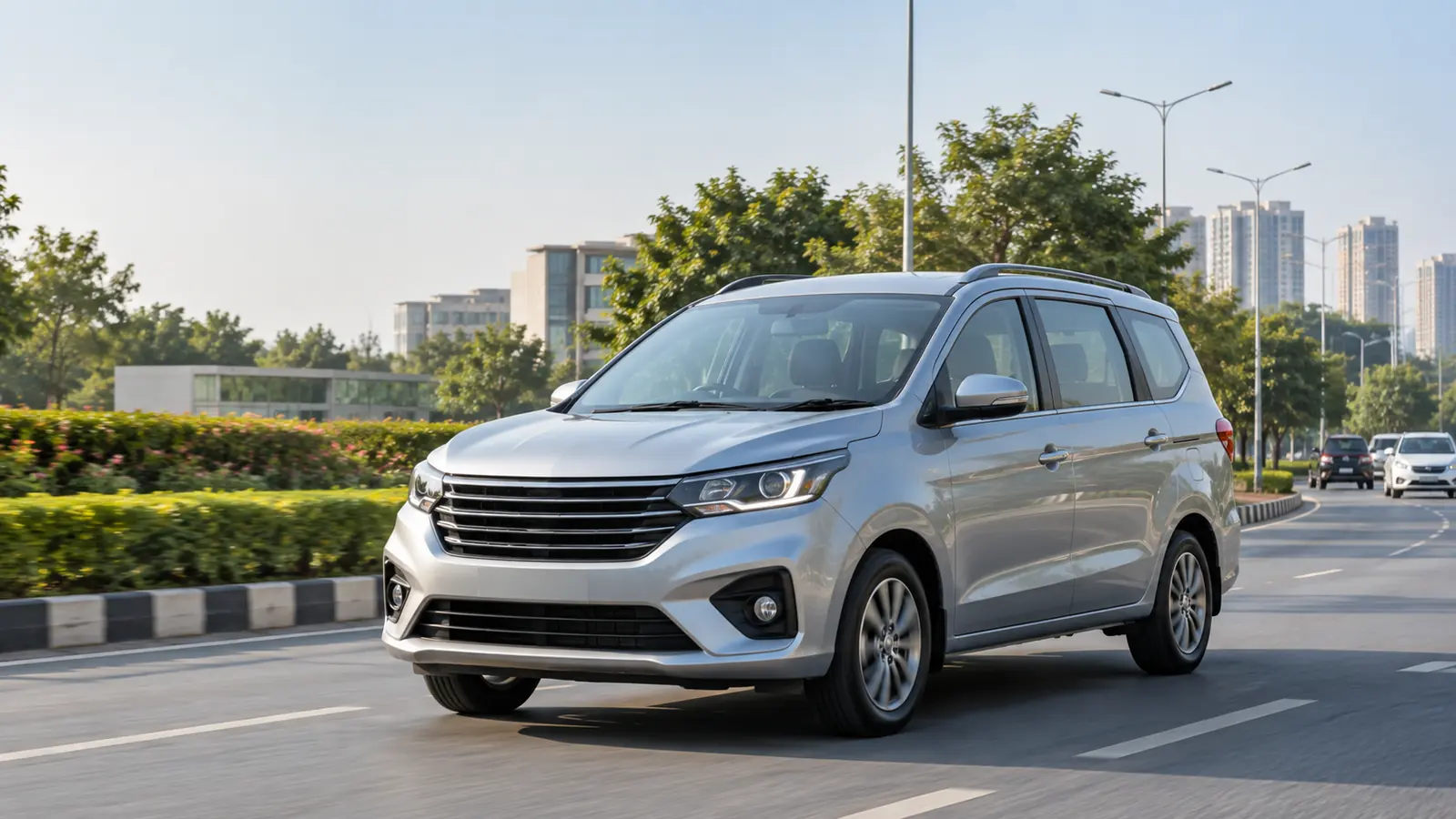
Primary sources: JSW MG Motor India — Hector Tomahawk EV and PHEV launch release, 26 August 2026; JSW MG Motor India — August 2026 sales update. Accessed 1 October 2026. The cover image is an illustrative depiction of generic unbranded electrified SUVs and does not show an official MG vehicle design.

Read more
Sep 30, 2026

Hyundai Bayon Bookings Open at ₹11,000: What Buyers Should Know

Hyundai Motor India has opened bookings for the Hyundai Bayon, its upcoming 4.2-metre petrol SUV. Customers can reserve the model online or through an authorised Hyundai dealership with an initial booking amount of ₹11,000.

The official announcement dated 23 September 2026 confirms manual and Intelligent Variable Transmission options, an in-built generative AI voice assistant and Hyundai’s Global K Enhanced Platform. Hyundai has not yet announced the Bayon’s price, engine capacity, power and torque figures, fuel efficiency, variant list or a specific delivery date, so buyers should treat unofficial figures cautiously.

Hyundai Bayon booking amount and process

The Bayon can be booked for ₹11,000 on Hyundai India’s website or at any authorised Hyundai dealer. Hyundai says the delivery timeline will be communicated when the vehicle launches during the festive season. The booking announcement does not specify the launch date or publish detailed cancellation and refund terms.

Before paying, ask the dealer for a written booking receipt, the cancellation policy, any deduction that may apply, the process for changing a variant or colour and whether the reservation position transfers between dealerships. A booking secures interest in the model; it does not establish the final on-road price, delivery date or finance approval.

What Hyundai has confirmed about the Bayon

Hyundai describes the India-spec Bayon as a 4.2-metre mid-size SUV developed around five themes: intelligence, safety, comfort, performance and style. It will use a petrol powertrain with a choice of manual transmission or IVT. The company has not stated whether more than one petrol engine will be offered or which gearbox will be available on each variant.

The official material also confirms an in-built generative AI voice assistant intended to provide more natural interaction between the driver and the car. Hyundai has not published the assistant’s complete command list, supported languages, data requirements, subscription terms or privacy settings. Those practical details should be checked in the final brochure and during a dealership demonstration.

Size and everyday usability

At 4.2 metres long, the Bayon sits beyond India’s sub-four-metre classification. Hyundai says its proportions and interior packaging are intended to provide useful legroom, headroom and shoulder room. The manufacturer’s release does not list the width, height, wheelbase, ground clearance or boot capacity.

Those missing dimensions will matter when comparing the Bayon with other SUVs. Buyers should check rear-seat comfort with the front seats adjusted for regular occupants, ease of entry for older family members, luggage space with the parcel shelf in place, outward visibility and the turning circle during a test drive.

Manual and IVT choices: what buyers should consider

A manual transmission may suit buyers who prefer direct control or want to keep the purchase price lower, depending on the final variant structure. The IVT should be more convenient in heavy urban traffic because it removes the need for repeated clutch operation. Hyundai has not announced transmission-wise prices or certified efficiency figures.

Do not choose between the two solely on an expected EMI difference. Test-drive both powertrains on slow roads, inclines and faster sections. Compare low-speed response, overtaking confidence, noise, braking feel and the ease of parking. The final decision should also include the on-road price, expected annual usage and how often the car will operate in congestion.

Design details confirmed for the India-spec Bayon

Hyundai lists a sculpted bonnet, a new front fascia, H-Edge LED daytime-running lights, geometric wheel arches, wrap-around door cladding and bridge-type roof rails among the design highlights. These details appear in the official booking release.

Exterior styling can change the perceived size of an SUV, but buyers should also examine practical details. Check headlamp performance, mirror coverage, wheel and tyre sizes by variant, the cost of replacing lower-profile tyres and whether roof rails are functional or decorative. Paint choices and wheel designs may also be limited to particular trims.

Safety claim versus an independent crash-test rating

Hyundai says the Global K Enhanced Platform is engineered for five-star Indian safety standards and emphasises occupant protection, structural rigidity and advanced safety engineering. The announcement also says the Bayon will have a broad set of safety features. It does not publish an independent Bharat NCAP or Global NCAP result for the car.

“Engineered for” a standard is not the same as a published test rating. Buyers should wait for the final specification sheet and any independent result that becomes available. Compare the standard safety equipment on every variant, including the number of airbags, electronic stability control, hill-start assistance, tyre-pressure monitoring and child-seat provisions, rather than assuming all advertised equipment is standard across the range.

What remains unknown before launch

Hyundai has not announced ex-showroom prices, the complete variant structure, engine displacement, output figures, certified fuel economy, boot capacity, warranty packages or the exact launch and delivery calendar. The company has also not detailed the infotainment screen, connected-car features or driver-assistance package in the booking release.

These gaps are normal at a pre-launch booking stage, but they limit meaningful comparison. Buyers should avoid selecting a trim or arranging finance around leaked prices. Wait for a signed quotation that separates the ex-showroom price, registration, insurance, accessories, extended warranty and service packages.

Who should consider the Hyundai Bayon?

The Bayon may appeal to buyers who want a petrol SUV with a conventional manual option and an automatic choice, along with connected technology in a 4.2-metre package. The generative AI assistant could be useful for drivers who regularly use voice controls, provided the final system supports their preferred language and functions without distracting from driving.

It may be less suitable for customers who specifically require diesel, electric or sub-four-metre alternatives, because the current announcement confirms only a petrol powertrain and a 4.2-metre length. Buyers with fixed delivery deadlines should also wait until Hyundai publishes the launch and allocation schedule.

A practical checklist before confirming the booking

  • Obtain the written refund and cancellation conditions for the ₹11,000 booking amount.
  • Wait for the final price list and variant-wise equipment sheet before choosing a trim.
  • Test the rear seat, boot, visibility and both transmission options with your usual passengers.
  • Ask how the AI assistant handles data, connectivity, supported languages and future subscriptions.
  • Compare standard safety equipment instead of relying only on platform marketing.
  • Build the budget from the complete on-road quotation, insurance and planned down payment.

What buyers should watch next

The next decisive update will be Hyundai’s formal launch communication. It should provide prices, variants, technical specifications, equipment distribution and delivery timing. Until that information is public, the ₹11,000 booking option is best viewed as an early reservation rather than a complete purchase decision.

The Bayon’s final value will depend on how Hyundai positions it against established petrol SUVs, which features are standard and how large the price gap is between manual and IVT versions. Dealership availability and test-drive access will be equally important once customer cars begin arriving.

Check indicative car loan eligibility before paying

Before finalising the booking or selecting a higher Bayon variant, check your indicative eligible loan amount and estimated EMI with AutoCred. It can help you compare the final on-road cost with an affordable finance range before you commit. Results are indicative; final eligibility, interest rate, tenure, documentation and approval remain subject to the lender’s verification and policy.

Primary source: Hyundai Motor India — Hyundai Bayon bookings announcement, 23 September 2026. Accessed 30 September 2026.

Read more
Sep 30, 2026

Renault Triber 100PS Launched at ₹7.84 Lakh: Buyer Guide

Renault India has launched the Triber 100PS, giving its compact seven-seat model a turbocharged engine and a substantially revised engineering package. The new version starts at ₹7.84 lakh ex-showroom and is available in Evolution, Techno and Emotion variants.

According to Renault India’s official release dated 28 September 2026, the Triber 100PS produces 100 PS and 180 Nm, has a certified fuel-efficiency figure of 21 km/l and retains the model’s flexible five-, six- and seven-seat layouts. The headline numbers make this more than a cosmetic edition, but buyers should still compare the three variants closely because equipment differs by trim.

Renault Triber 100PS prices and variants

The manual-only turbo range begins with the Evolution at ₹7,84,900, followed by the Techno at ₹8,53,900 and the Emotion at ₹8,99,900. These are ex-showroom prices listed in the manufacturer’s launch communication; registration, insurance and other on-road charges will vary by city. Renault has not listed an automatic transmission for the 100PS variants in this release.

Variant Powertrain Ex-showroom price
EvolutionTurbo TCe 100 manual₹7,84,900
TechnoTurbo TCe 100 manual₹8,53,900
EmotionTurbo TCe 100 manual₹8,99,900

The ₹1.15 lakh difference between the entry and top 100PS variants should be judged against the features each version includes, not just the monthly EMI. Ask the dealer for a variant-wise equipment sheet and an itemised on-road quote before deciding whether the Techno or Emotion adds features your family will regularly use.

What has changed beneath the body

Renault says the Triber 100PS is its first Indian vehicle built on the Renault Group Entry Platform, or RGEP. The company describes the vehicle as comprehensively re-engineered rather than simply fitted with a stronger engine. Changes listed in the official technical summary include a new Renault Engine Management System, revised thermal management, structural enhancements, updated suspension geometry, front and rear anti-roll bars, MTV damper technology, recalibrated brakes and India-specific vehicle-dynamics tuning.

For a prospective buyer, that wider rework matters because an increase in power and torque also changes the demands placed on cooling, braking and chassis control. The useful questions for a test drive are therefore broader than straight-line acceleration: observe low-speed smoothness, steering effort, body control over uneven roads, braking confidence and comfort in the second and third rows.

100 PS, 180 Nm and the 21 km/l claim

The turbocharged TCe 100 petrol engine develops 100 PS and 180 Nm, while Renault quotes certified fuel efficiency of 21 km/l. The official release notes that the certification figure was obtained under prescribed test conditions; real-world consumption can change with traffic, driving style, passenger and luggage load, road conditions and air-conditioning use.

The larger torque figure should be most relevant when the car is carrying several occupants, climbing gradients or completing highway overtakes. It should not be treated as proof of a particular real-world performance time because Renault has not published acceleration figures in the launch release. A fully loaded test drive, where permitted, will give a better impression of how the powertrain suits your regular use.

Seven-seat flexibility remains the Triber’s central advantage

The Triber 100PS retains five-, six- and seven-seat configurations, Easy-Fix removable third-row seats, a sliding and reclining second row and one-touch tumble access. Renault lists more than 100 seating combinations, up to 625 litres of boot space in the five-seat configuration, 182 mm of ground clearance, 23 litres of cabin storage and roof rails rated to carry up to 50 kg in its published feature summary.

Those figures indicate considerable flexibility for a sub-four-metre vehicle, although the most important test is whether the layout works for the people and luggage you usually carry. Check third-row knee room, headroom, access, seat removal effort and usable luggage space with every required seat raised. Families should also confirm whether child seats can be installed in the positions they intend to use.

Comfort and connectivity equipment to check by variant

Depending on the trim, the Triber 100PS can include an eight-inch floating touchscreen, wireless Android Auto and Apple CarPlay, a digital LED instrument cluster, automatic air-conditioning, cruise control, wireless phone charging, rain-sensing wipers, automatic headlamps and a Smart Access Card. Renault also lists independent rear air-conditioning with vents serving the second and third rows in the official specification overview.

Because the release states that features vary by variant, do not assume every item is standard from Evolution onward. Confirm the exact infotainment functions, climate-control system, camera and parking-assistance equipment on the specific car being quoted. A demonstration with all rows occupied can also show whether rear cooling is adequate for your typical climate and usage.

Safety equipment and the checks buyers should make

Renault says six airbags and 21 safety features are standard across the Triber 100PS range. Depending on the variant, the equipment can also include front parking sensors, a rear-view camera with guidelines and a tyre-pressure monitoring system. These claims come from the launch release, which does not publish an independent crash-test result for this specific 100PS configuration.

Buyers should ask for the complete standard-safety list, verify whether electronic stability control and hill-start assistance are included in the relevant trim, and read the owner’s manual for airbag and child-restraint guidance. Driver-assistance features and parking aids can be useful, but they do not replace safe speeds, attentive driving or correctly fitted restraints.

How the Triber 100PS fits Renault’s India strategy

The launch is also the Indian debut of RGEP and forms part of Renault’s wider product programme. The company says it is planning 12 product interventions over 18 months under its futuREady India roadmap. Renault also reports that more than 2.5 lakh Tribers have been sold in India, making the model one of its stronger local products. Both statements appear in the 28 September announcement.

That context explains why Renault has invested in a higher-output version while retaining the body’s modular packaging. The 100PS line can broaden the Triber’s appeal among buyers who previously liked its space and price but wanted more reserve performance. Its market impact will depend on actual deliveries, test-drive impressions, variant demand and the value buyers see in the price step from the existing naturally aspirated range.

Who should shortlist the Renault Triber 100PS?

The new version deserves consideration from households that need occasional seven-seat flexibility, value compact exterior dimensions and frequently drive with passengers or luggage. It may also suit buyers who want stronger highway performance while keeping the Triber’s removable third row and sub-four-metre footprint.

It is less straightforward for customers who require an automatic gearbox in the higher-output model, because Renault’s launch price table lists the TCe 100 only with a manual transmission. Compare the 100PS manual with the existing Energy AMT, as well as similarly priced alternatives, on driving convenience, usable space, safety equipment, warranty, service access and total on-road cost.

What to do before booking

  • Get a written variant-wise feature list and itemised on-road quotation from an authorised Renault dealer.
  • Test-drive the car on city roads and a faster section, with several occupants if possible.
  • Verify third-row comfort and luggage capacity in the seating layout you will use most often.
  • Compare insurance, extended warranty, service plans and accessories separately from the vehicle price.
  • Build an EMI budget that leaves room for fuel, maintenance, insurance renewal and other monthly commitments.

Check indicative car loan eligibility before you commit

Before paying a booking amount, use AutoCred to check your indicative eligible loan amount and estimated EMI. This can help you decide whether the Evolution, Techno or Emotion fits your planned down payment and monthly budget before you reach the showroom. Results are indicative; final eligibility, interest rate, tenure, documentation and approval remain subject to the lender’s verification and policy.

Primary sources: Renault India — Triber 100PS launch release, 28 September 2026; Renault India press and media archive. Accessed 30 September 2026.

Read more
Sep 29, 2026

Volkswagen’s 2027 Sub-4-Metre SUV for India: What Is Confirmed

Volkswagen has confirmed that an all-new sub-4-metre compact SUV is being developed for India, with its market introduction scheduled for 2027. The company says the model will be its most accessible German-engineered SUV in the country, will use the India-focused MQB-A0-IN platform and will be manufactured locally.

Those are the important confirmed facts in Volkswagen India’s official announcement dated 21 August 2026. The company has not yet announced the production name, price, engine range, variant list, booking date or detailed equipment. Buyers should therefore treat unofficial specifications and launch estimates as speculation until Volkswagen publishes them.

What Volkswagen has officially confirmed

The upcoming model will measure under four metres and will enter India’s high-volume compact SUV segment. Volkswagen says it is being developed specifically for India with a strong focus on localisation and Indian customer preferences. Local production is intended to build on the existing supplier and manufacturing ecosystem created around the MQB-A0-IN architecture.

The manufacturer’s release also says the platform can support efficient powertrains, advanced technology and safety systems suited to Indian emission and safety requirements. That describes the engineering direction, but it does not confirm a particular engine, gearbox, safety rating or feature list for the production vehicle.

Why a sub-4-metre SUV matters for Volkswagen India

Volkswagen currently sells the Taigun and larger SUVs alongside the Virtus sedan and performance-focused models in India. A smaller SUV can give the brand access to buyers who want the seating position and road presence of an SUV while keeping the vehicle compact enough for crowded cities and limited parking spaces.

The company describes this segment as India’s largest passenger-vehicle category and expects the new SUV to deliver greater scale and volume. The strategic opportunity is clear: a more accessible entry point can bring Volkswagen into consideration for households that may currently view its range as being above their planned budget. Actual value will still depend on the final price, standard equipment, ownership costs and dealer reach announced closer to launch.

What the MQB-A0-IN platform tells us

MQB-A0-IN is a locally adapted architecture co-developed by engineering teams in India and Europe. Volkswagen says the platform is designed for high localisation, efficient production timelines and a low cost of ownership while retaining the ability to accommodate modern safety and powertrain systems.

For a buyer, high localisation can matter because local sourcing and production may support competitive pricing, parts availability and serviceability. It does not guarantee a low price or a particular maintenance cost. Those outcomes will depend on the finished product, the number of locally sourced components, the warranty and service packages, and the commercial positioning Volkswagen selects for launch.

Confirmed timing versus details still awaited

Volkswagen has scheduled the model’s Indian market introduction for 2027. The official release does not provide a month or quarter, so a more precise launch date should not be assumed. It also does not identify whether bookings, dealer previews or production will begin before the market introduction.

Several practical details remain open. The production name, exterior dimensions beyond the sub-four-metre classification, boot capacity, ground clearance, fuel options, power output, transmission choices, safety equipment, infotainment features and variant-wise prices have not been announced. A responsible buying decision should wait for Volkswagen’s final specification sheet and an itemised on-road quotation.

How the new SUV could fit into a buyer’s shortlist

The vehicle is likely to appeal to buyers who want a compact footprint, local production and Volkswagen’s focus on driving dynamics, safety and build quality. Those themes are part of the company’s stated positioning for the model, but they still need to be assessed in the production version through independent testing and a proper test drive.

When the SUV arrives, compare it on more than its headline price. Review the standard safety equipment on each variant, rear-seat space, luggage capacity, visibility, ride comfort, fuel efficiency under your typical usage and the nearest authorised service support. A lower-priced base variant may omit features that matter to your family, while a higher trim can push the on-road price into a different competitive set.

A sensible planning checklist before the 2027 launch

  • Follow Volkswagen India’s official newsroom for the production name, launch date and verified specifications.
  • Ignore unofficial price and engine claims until they appear in a manufacturer release or official brochure.
  • Compare the on-road price, insurance, warranty and service package rather than only the ex-showroom figure.
  • Check rear-seat access, boot usability, ride quality and parking ease during a test drive.
  • Plan the down payment and EMI around monthly affordability, not the maximum amount a lender may offer.

What buyers should watch next

The next meaningful updates will be the production identity, final design, powertrain choices, variant structure and a firmer launch timeline. Local production on MQB-A0-IN is already confirmed, so supplier readiness and plant planning are also worth watching as Volkswagen moves towards 2027.

Until those details arrive, the most useful conclusion is that Volkswagen is preparing a smaller, locally manufactured SUV aimed at a broader Indian audience. The announcement expands the brand’s future volume strategy, but it is too early to rank the vehicle against established compact SUVs without price, features and verified road-test information.

Check indicative car loan eligibility before booking

Once the new Volkswagen SUV’s prices and variants are officially announced, check your indicative eligible loan amount and estimated EMI with AutoCred before paying a booking amount or choosing a higher trim. The estimate can help you match the vehicle budget to your income and existing obligations. Final eligibility, interest rate, tenure, documentation and approval remain subject to the lender’s verification and policy.

Primary source: Volkswagen India — all-new sub-4 metre compact SUV announcement, 21 August 2026. Accessed 29 September 2026.

Read more
Sep 28, 2026

Mahindra Thar OG 2026 Launched: Prices, Features and Buyer Guide

Mahindra has launched the Thar OG as the next chapter of its three-door lifestyle SUV, with an introductory ex-showroom price starting at ₹10.32 lakh. According to the company’s official launch announcement dated 22 September 2026, customer deliveries are scheduled to begin from 11 October 2026.

The launch matters because Mahindra has not treated the update as a cosmetic refresh. The Thar OG receives a new platform, revised suspension and damping hardware, electric power steering, upgraded off-road systems, more powerful engine options and a broader safety package on the higher trim. For buyers, the practical question is whether these changes make the focused three-door format easier to live with without diluting its off-road identity.

Mahindra Thar OG price and delivery timeline

Mahindra lists three trims—AXT, LXT and ZXT—with engine, transmission and drivetrain choices spread across the range. The official variant table starts at ₹10.32 lakh for the AXT and extends to ₹18.99 lakh for the highest-priced ZXT configuration. These are introductory ex-showroom prices, and Mahindra states that the introductory offer is valid for deliveries completed by 30 November 2026.

An ex-showroom figure is only one part of the purchase budget. Registration, insurance, accessories and the buyer’s location can materially change the on-road price. Buyers comparing variants should therefore obtain an itemised dealer quotation and use the on-road amount—not only the advertised starting price—when planning a down payment and loan requirement.

What has changed underneath the Thar OG?

The Thar OG is built on Mahindra’s M_Glyde 4G platform, which the company says has greater stiffness. At the rear, a PENTALINK suspension with Watts Link is intended to improve cornering stability and control. Mahindra also lists its DAVINCI frequency-dependent damping technology, electric power steering and additional noise, vibration and harshness treatment among the changes aimed at improving everyday refinement.

That combination is particularly relevant to customers who like the compact three-door Thar format but also expect predictable behaviour in city traffic and on highways. A specification sheet cannot establish ride quality by itself, so a test drive over broken roads, tight turns and typical commuting speeds remains essential. Buyers should also check rear-seat access and luggage space with their usual passengers before deciding that the three-door layout suits daily family use.

Engines, transmissions and off-road hardware

Mahindra has announced three powertrains for the Thar OG. The G20 TGDi mStallion petrol produces 119 kW and 330 Nm, the D22 mHawk diesel produces 111.9 kW and 330 Nm, and the D117 CRDe diesel continues with 87.2 kW and 300 Nm. The manufacturer’s launch specification lists manual and automatic transmissions, together with rear-wheel-drive and four-wheel-drive configurations depending on the selected engine and variant.

The four-wheel-drive versions can be equipped with an electronic locking differential and terrain modes for mud, sand and snow. Mahindra’s feature list also distinguishes some terrain-assist functions by drivetrain and engine, so customers should verify the exact hardware on the configuration they intend to order. A feature advertised for the model range may not be standard on every trim.

Safety and cabin features vary by trim

The ZXT feature list includes six airbags, four-wheel disc brakes, tyre-pressure monitoring, a rear-view camera and front parking sensors. Mahindra describes four of the airbags as Head Pelvis Thorax Shoulder units for front and rear passenger protection. The AXT feature list, by comparison, specifies dual airbags, electronic stability control with rollover mitigation, a roll cage and front disc with rear drum brakes. Buyers should read the variant sheet carefully rather than assuming the headline safety equipment applies to the entry trim.

Higher variants also add items such as LED headlamps and daytime-running lights, 19-inch alloy wheels, leatherette upholstery, a wireless charger and frequency-dependent damping. The LXT list includes a 26.03 cm touchscreen, Android Auto and Apple CarPlay, cruise control and electrically adjustable outside mirrors. Availability remains variant-specific as detailed in the official feature annexure.

What the Thar OG means for buyers

The update appears designed to widen the three-door Thar’s appeal while keeping it distinct from conventional compact SUVs. Electric power steering, revised damping and better cabin isolation target everyday usability; the locking differential, terrain modes and four-wheel-drive choices preserve the capability-led positioning. The result is a broader range, but also a more complex buying decision.

Choose the drivetrain around actual use. A rear-wheel-drive version may cover style-led urban driving at a lower entry point, while customers who genuinely travel on difficult terrain should compare four-wheel-drive hardware and tyre choices. Similarly, a large wheel and premium cabin package may improve appearance and equipment, but buyers should assess ride comfort, replacement-tyre cost and total on-road price.

A practical Thar OG buying checklist

  • Request the exact variant-wise on-road price, including insurance and dealer-fitted accessories.
  • Confirm the engine, transmission, drivetrain and off-road equipment on the booking form.
  • Test rear-seat access, boot usability, steering effort and ride comfort on representative roads.
  • Compare the EMI at a comfortable tenure instead of selecting a vehicle only from the lowest advertised monthly figure.
  • Review the written delivery estimate and whether the introductory price applies to the expected delivery date.

Keep a separate ownership reserve beyond the down payment. Insurance renewal, scheduled service, tyres, fuel and accessories will continue after the purchase, and an off-road-oriented SUV can have different running-cost priorities from a regular hatchback or compact crossover. A comfortable loan structure should leave enough monthly room for those costs and for unexpected household expenses. Comparing the total amount repayable across tenures is more useful than looking only at the lowest EMI, because extending the tenure can reduce the monthly payment while increasing total interest.

Check indicative eligibility before booking

Before paying a booking amount, check your indicative car loan eligibility and estimated EMI with AutoCred. It can help you compare a realistic finance amount with the Thar OG variant you are considering before a dealer visit. The result is an initial planning estimate; final eligibility, interest rate, tenure, documentation and approval depend on the lender’s verification and policy.

Primary source: Mahindra & Mahindra — Thar OG launch announcement and feature annexure, 22 September 2026. Accessed 28 September 2026.

Read more
Sep 27, 2026

New Skoda Slavia 2026: 8-Speed Automatic, Features and Bookings

The new Skoda Slavia has been unveiled for India with a revised design, more cabin technology and a notable change to its automatic-transmission line-up. Skoda Auto India opened pre-bookings on August 18, 2026, at ₹15,000, but its announcement did not include the final variant prices or a customer-delivery date.

That distinction matters. This is a confirmed product update with bookings underway, yet buyers still need the price list and final variant specifications before judging value. Here is what the official new Slavia announcement confirms and what prospective owners should verify next.

New Slavia pre-bookings and launch line-up

The updated Slavia will be offered in Classic, Classic+, Signature, Sportline and Prestige trims. The Monte Carlo version will also be available from the start of sales, rather than arriving later as a separate addition. Skoda says the Slavia has recorded nearly 80,000 sales to date, giving the company an established base for this update.

Exterior changes include new LED headlamps and taillamps, sequential rear indicators, revised front and rear structures, and fresh alloy-wheel designs. The colour range includes Candy White, Carbon Steel, Brilliant Silver, Lava Blue, Deep Black, Cherry Red, Shimla Green and Steel Grey, with Arctic Silver and Cappuccino Beige added for the new model. Availability will vary by variant, so the brochure and dealer allocation will be important once prices are announced.

The 1.0 TSI gets an eight-speed automatic

The most significant mechanical update is the new eight-speed torque-converter automatic paired with the 1.0 TSI petrol engine. Skoda describes this as a first for the sedan's segment. A six-speed manual will remain available with the 1.0 TSI, preserving a lower-complexity option for drivers who prefer to shift for themselves.

The 1.5 TSI continues with a seven-speed DSG automatic, and Skoda says the 1.5-litre variants now receive rear disc brakes. The company has also marked some performance, power, measurement and dimension information as provisional until homologation is complete. Buyers comparing specifications should therefore use the final brochure rather than assuming every preliminary figure or feature will apply to every trim.

Cabin technology focuses on daily usability

The revised equipment list goes beyond a cosmetic facelift. According to the manufacturer's feature summary, the car gains a 360-degree Area View camera and Park Pilot with front parking sensors. A rear-seat massage function is also being introduced, an unusual comfort feature in this class.

A 10.25-inch digital instrument display is joined by a 10.1-inch infotainment system with wireless Android Auto and Apple CarPlay. The new voice assistant is designed to recognise Indian English accents and can provide information or handle functions such as music, calls and climate control. From Classic+ upward, Skoda lists equipment including rain-sensing wipers, a rear defogger, all-LED lighting, an auto-dimming interior mirror, an electric sunroof and alloy wheels.

Safety equipment needs a variant-by-variant check

Skoda says six airbags and more than 25 active and passive safety features will be standard across the range, while higher variants will offer more than 40. The company also says the model carries forward the Slavia's five-star Global NCAP credentials for adult and child occupant protection.

Those headline figures are useful, but a buyer should still inspect the final variant chart. Confirm which trim includes the 360-degree camera, front parking sensors, rear disc brakes and the convenience features you consider essential. A safety rating is one part of the decision; tyre specification, braking hardware, visibility, child-seat requirements and driver familiarity also affect real-world ownership.

What to check before paying the booking amount

The ₹15,000 pre-booking amount gives interested customers a way to register early, but the value equation will become clearer only after ex-showroom prices are published. Ask the dealer for the written cancellation and refund terms, the expected delivery window, the exact engine-and-gearbox combination for your chosen trim, and an itemised on-road quotation.

Test-drive the powertrain you intend to buy. The eight-speed automatic may appeal to urban users seeking smoother low-speed progress, while the 1.5 TSI with DSG is positioned for stronger performance. The final choice should reflect your traffic conditions, annual distance, running costs and service access rather than the transmission's gear count alone.

Plan the finance after choosing the right variant

Once prices are announced, compare the on-road cost with a comfortable monthly budget before moving to a higher trim. You can use AutoCred's car loan eligibility checker to estimate an indicative borrowing range and tenure. The result is indicative; the final loan amount, interest rate, terms and approval depend on the lender's assessment.

Source note: Confirmed launch, booking, feature, powertrain and safety information in this article comes from Skoda Auto India's linked August 18, 2026 announcement. Buyer guidance and interpretation are AutoCred's editorial analysis.

Read more