Hyundai Bayon Bookings Open at ₹11,000: What Buyers Should Know
Hyundai Motor India has opened bookings for the Hyundai Bayon, its upcoming 4.2-metre petrol SUV. Customers can reserve the model online or through an authorised Hyundai dealership with an initial booking amount of ₹11,000.
The official announcement dated 23 September 2026 confirms manual and Intelligent Variable Transmission options, an in-built generative AI voice assistant and Hyundai’s Global K Enhanced Platform. Hyundai has not yet announced the Bayon’s price, engine capacity, power and torque figures, fuel efficiency, variant list or a specific delivery date, so buyers should treat unofficial figures cautiously.
Hyundai Bayon booking amount and process
The Bayon can be booked for ₹11,000 on Hyundai India’s website or at any authorised Hyundai dealer. Hyundai says the delivery timeline will be communicated when the vehicle launches during the festive season. The booking announcement does not specify the launch date or publish detailed cancellation and refund terms.
Before paying, ask the dealer for a written booking receipt, the cancellation policy, any deduction that may apply, the process for changing a variant or colour and whether the reservation position transfers between dealerships. A booking secures interest in the model; it does not establish the final on-road price, delivery date or finance approval.
What Hyundai has confirmed about the Bayon
Hyundai describes the India-spec Bayon as a 4.2-metre mid-size SUV developed around five themes: intelligence, safety, comfort, performance and style. It will use a petrol powertrain with a choice of manual transmission or IVT. The company has not stated whether more than one petrol engine will be offered or which gearbox will be available on each variant.
The official material also confirms an in-built generative AI voice assistant intended to provide more natural interaction between the driver and the car. Hyundai has not published the assistant’s complete command list, supported languages, data requirements, subscription terms or privacy settings. Those practical details should be checked in the final brochure and during a dealership demonstration.
Size and everyday usability
At 4.2 metres long, the Bayon sits beyond India’s sub-four-metre classification. Hyundai says its proportions and interior packaging are intended to provide useful legroom, headroom and shoulder room. The manufacturer’s release does not list the width, height, wheelbase, ground clearance or boot capacity.
Those missing dimensions will matter when comparing the Bayon with other SUVs. Buyers should check rear-seat comfort with the front seats adjusted for regular occupants, ease of entry for older family members, luggage space with the parcel shelf in place, outward visibility and the turning circle during a test drive.
Manual and IVT choices: what buyers should consider
A manual transmission may suit buyers who prefer direct control or want to keep the purchase price lower, depending on the final variant structure. The IVT should be more convenient in heavy urban traffic because it removes the need for repeated clutch operation. Hyundai has not announced transmission-wise prices or certified efficiency figures.
Do not choose between the two solely on an expected EMI difference. Test-drive both powertrains on slow roads, inclines and faster sections. Compare low-speed response, overtaking confidence, noise, braking feel and the ease of parking. The final decision should also include the on-road price, expected annual usage and how often the car will operate in congestion.
Design details confirmed for the India-spec Bayon
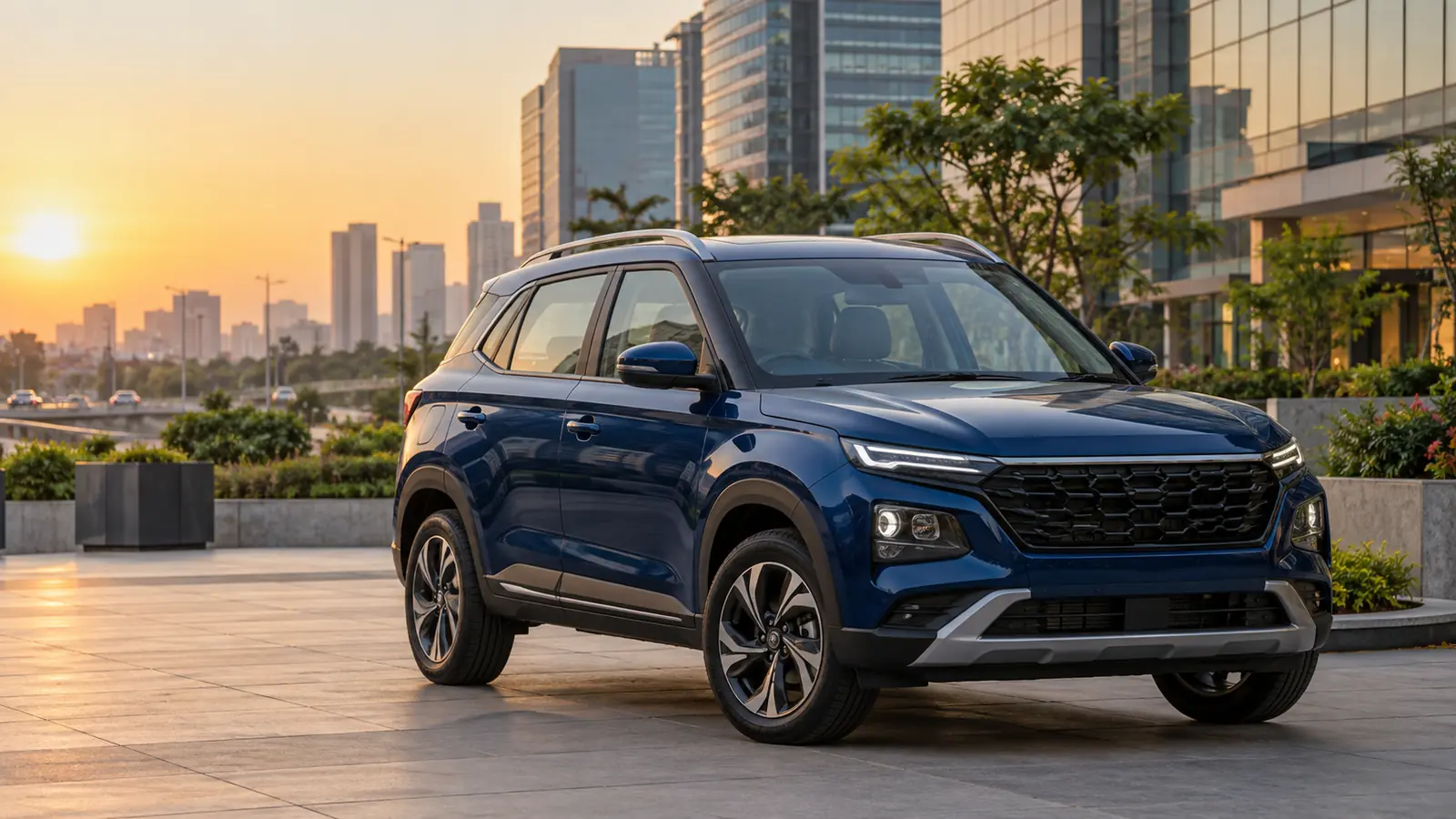
Hyundai lists a sculpted bonnet, a new front fascia, H-Edge LED daytime-running lights, geometric wheel arches, wrap-around door cladding and bridge-type roof rails among the design highlights. These details appear in the official booking release.
Exterior styling can change the perceived size of an SUV, but buyers should also examine practical details. Check headlamp performance, mirror coverage, wheel and tyre sizes by variant, the cost of replacing lower-profile tyres and whether roof rails are functional or decorative. Paint choices and wheel designs may also be limited to particular trims.
Safety claim versus an independent crash-test rating
Hyundai says the Global K Enhanced Platform is engineered for five-star Indian safety standards and emphasises occupant protection, structural rigidity and advanced safety engineering. The announcement also says the Bayon will have a broad set of safety features. It does not publish an independent Bharat NCAP or Global NCAP result for the car.
“Engineered for” a standard is not the same as a published test rating. Buyers should wait for the final specification sheet and any independent result that becomes available. Compare the standard safety equipment on every variant, including the number of airbags, electronic stability control, hill-start assistance, tyre-pressure monitoring and child-seat provisions, rather than assuming all advertised equipment is standard across the range.
What remains unknown before launch
Hyundai has not announced ex-showroom prices, the complete variant structure, engine displacement, output figures, certified fuel economy, boot capacity, warranty packages or the exact launch and delivery calendar. The company has also not detailed the infotainment screen, connected-car features or driver-assistance package in the booking release.
These gaps are normal at a pre-launch booking stage, but they limit meaningful comparison. Buyers should avoid selecting a trim or arranging finance around leaked prices. Wait for a signed quotation that separates the ex-showroom price, registration, insurance, accessories, extended warranty and service packages.
Who should consider the Hyundai Bayon?
The Bayon may appeal to buyers who want a petrol SUV with a conventional manual option and an automatic choice, along with connected technology in a 4.2-metre package. The generative AI assistant could be useful for drivers who regularly use voice controls, provided the final system supports their preferred language and functions without distracting from driving.
It may be less suitable for customers who specifically require diesel, electric or sub-four-metre alternatives, because the current announcement confirms only a petrol powertrain and a 4.2-metre length. Buyers with fixed delivery deadlines should also wait until Hyundai publishes the launch and allocation schedule.
A practical checklist before confirming the booking
- Obtain the written refund and cancellation conditions for the ₹11,000 booking amount.
- Wait for the final price list and variant-wise equipment sheet before choosing a trim.
- Test the rear seat, boot, visibility and both transmission options with your usual passengers.
- Ask how the AI assistant handles data, connectivity, supported languages and future subscriptions.
- Compare standard safety equipment instead of relying only on platform marketing.
- Build the budget from the complete on-road quotation, insurance and planned down payment.
What buyers should watch next
The next decisive update will be Hyundai’s formal launch communication. It should provide prices, variants, technical specifications, equipment distribution and delivery timing. Until that information is public, the ₹11,000 booking option is best viewed as an early reservation rather than a complete purchase decision.
The Bayon’s final value will depend on how Hyundai positions it against established petrol SUVs, which features are standard and how large the price gap is between manual and IVT versions. Dealership availability and test-drive access will be equally important once customer cars begin arriving.
Check indicative car loan eligibility before paying
Before finalising the booking or selecting a higher Bayon variant, check your indicative eligible loan amount and estimated EMI with AutoCred. It can help you compare the final on-road cost with an affordable finance range before you commit. Results are indicative; final eligibility, interest rate, tenure, documentation and approval remain subject to the lender’s verification and policy.
Primary source: Hyundai Motor India — Hyundai Bayon bookings announcement, 23 September 2026. Accessed 30 September 2026.