Car Market Performance

Oct 22, 2026

Inchcape Q3 2026: Australia's Distribution Strategy Reset

Inchcape's 22 October 2026 trading update, covering July–September, puts Australia at the centre of its distribution challenge: the business is reviewing products and positioning while reshaping its brand portfolio.

The useful question for car-market watchers is how a distributor responds when its own sales move against the wider market. A product portfolio can become less competitive even while customers elsewhere in the same market keep buying cars.

Inchcape Q3 volumes versus the wider car market

Year-on-year Q3 volume changes from Inchcape's official update.
BusinessInchcape volumesTotal industry volumes
GroupUp 3%Up 9%
AustraliaDown 50%Up 1%
Europe & AfricaUp 21%Up 2%

The release notes that Inchcape volumes include acquisitions; its industry benchmark excludes Thailand and Argentina, where its volumes are immaterial.

These comparisons point to different commercial problems. Outgrowing a market may reflect a broader business perimeter as well as stronger demand. Falling sharply while the market expands calls for closer examination of the vehicles offered, their positioning and the effectiveness of distribution. The group headline cannot explain every region.

Australia: product positioning and a distribution exit

Inchcape attributes Australia's weakness to a fuel-disruption-led shift towards new-energy vehicles and deteriorating competitiveness of its key brand partner. It reports a product-range and positioning review alongside restructuring, plus a mutually agreed exit from the Deepal distribution contract.

Our reading is that the response goes beyond reducing overheads. Reviewing the cars offered and their place in the market addresses the commercial proposition itself. Exiting a contract changes portfolio exposure, but the announcement alone does not demonstrate a recovery or establish how customers' support arrangements will be handled locally.

For an Indian buyer comparing cars, start with an affordable shortlist: check your indicative eligible amount and estimated EMI before shortlisting or visiting a dealer. Results are indicative; final eligibility, rate, tenure and approval depend on the lender. Keep room in your budget for ownership costs.

What would demonstrate progress in the distribution strategy?

Watch the relationship between the distributor's volumes and the market, then ask what changed. A recovery supported by a more suitable product range would tell a different story from growth driven by an acquisition. Neither should be judged from a headline percentage alone.

Inchcape now expects a full-year 2026 adjusted operating margin of approximately 5.5%, reflecting Australia's underperformance, according to its outlook. This is management guidance, not a completed-year result.

For India, treat the update as an international distribution case study. It does not establish an Indian launch, discount, delivery commitment or change in warranty. Before paying a booking amount, ask the local seller to document the supplying entity, service support, cancellation terms and the specific car being offered. A global strategy announcement cannot replace those checks.

Before finalising your shortlist or visiting a dealer, review your indicative eligible amount and estimated EMI with AutoCred. Results are indicative; final eligibility, rate, tenure and approval depend on the lender. Compare the eventual lender terms with your complete ownership budget.

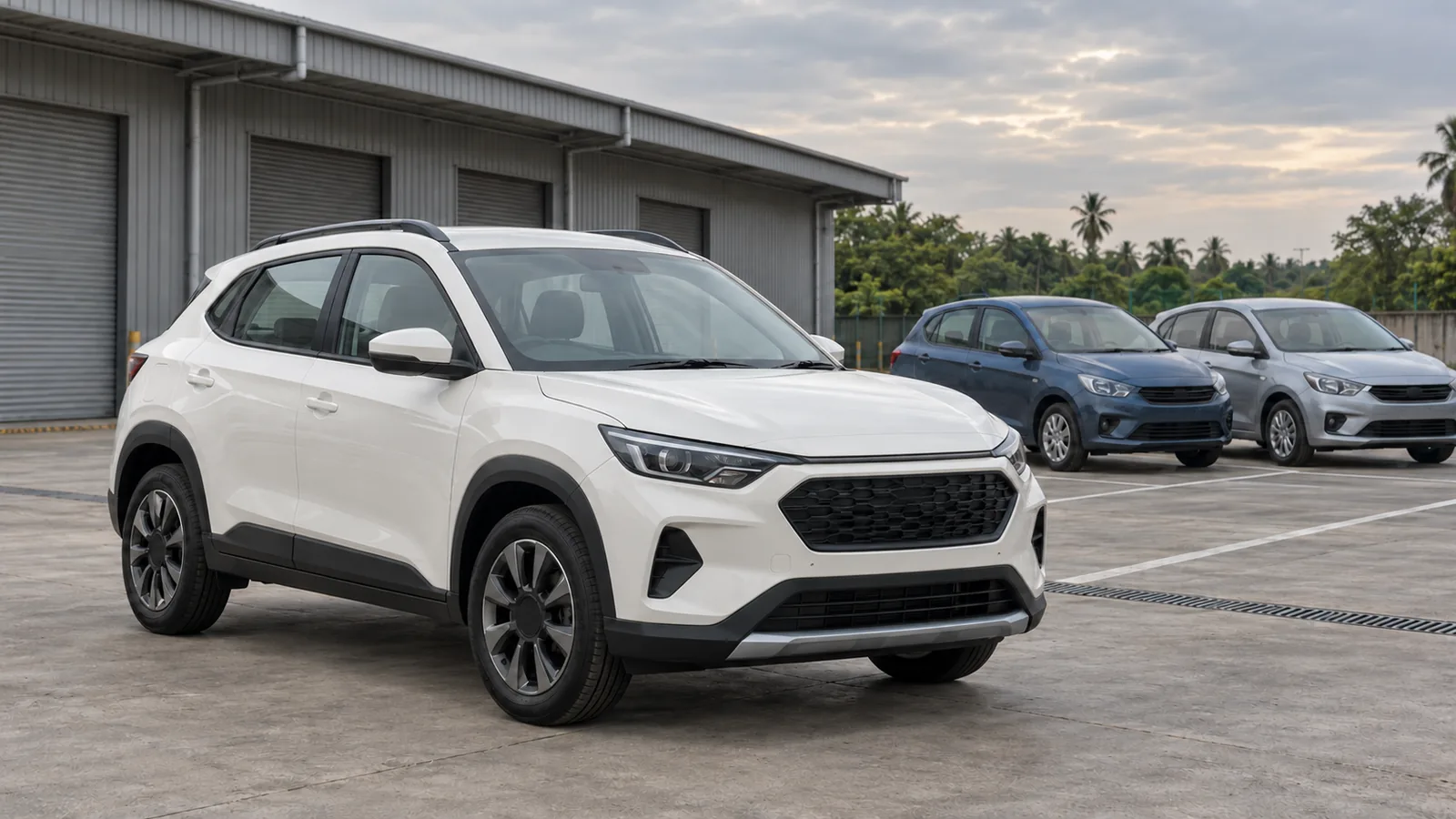
Cover: AI-generated illustration of generic unbranded vehicles in an Indian inspection yard; not an actual Inchcape facility or an official vehicle design.

Read more
Oct 22, 2026

Audi’s Humanoid Logistics Pilot: Parts Sequencing and Scale

Audi, Agile Robots, Dassault Systèmes and NVIDIA have announced a proof of concept for automating parts sequencing at Audi’s Ingolstadt plant. The 21 October 2026 announcement puts a specific logistics task at the centre of the project.

The commercial question is whether adaptable robots can prepare components reliably for assembly. That requires a system to work with the variety and pace of production, as well as perform an individual picking task.

Cover: AI-generated illustration of a generic, unbranded SUV at an Indian industrial site. It does not show an Audi model, the Ingolstadt plant or an official vehicle design.

What are Audi and Agile Robots testing?

Audi says mobile humanoids are picking components from containers and arranging them for final assembly in its Production Lab. The machines combine humanoid reach with a mobile base; dual arms and AI-based perception are intended to handle varied components. Source: project and robot description.

Sequencing means preparing parts in the order in which production needs them. Picking a component successfully is one step. Placing the correct component into the correct sequence is what makes that action useful to the assembly process.

Why does parts sequencing matter?

To illustrate the challenge, Audi cites around one million daily picks in its existing material-supply process. That is context for the task being studied. Source: sequencing operations.

From an operations perspective, automation must remain dependable when component shape, orientation or packaging varies. A system that needs frequent intervention would have different economics from one that handles the required variety consistently. The relevant assessment is the complete workflow.

What role does the virtual factory environment play?

The partners are creating a virtual twin using Dassault Systèmes’ DELMIA application and NVIDIA Omniverse libraries. Feasibility, timing, ergonomics and safety are to be tested before deployment within Audi’s logistics environment. Source: virtual validation plan.

A virtual twin is a digital representation of the working environment. Its value in this project is the ability to examine how the task fits that environment before expanding physical deployment. Those findings still need to translate into reliable operation.

What would demonstrate commercial progress?

Our assessment is that the next useful evidence would concern performance over repeated operations and a broader range of components. The questions to watch include:

  • Can the system maintain correct picking and sequencing as the task changes?
  • How much intervention does it need during ordinary operation?
  • How do installation, support and operating costs compare with the process it serves?

These are evaluation questions, rather than results established by the announcement. The confirmed stage is a proof of concept already underway. Source: project status. A conclusion about factory-wide capacity gains or financial returns would require further evidence.

What can Indian car buyers take from it?

The project is useful context for Audi’s approach to production technology. For an individual purchase, assess the locally offered vehicle, service arrangements and written quotation. The announcement does not establish a change in Indian vehicle prices or delivery schedules.

Check affordability before a dealer visit

Check your indicative eligible amount and estimated EMI with AutoCred before shortlisting or visiting a dealer. Assess the indication alongside the complete vehicle quote and your household budget. Results are indicative; final eligibility, rate, tenure and approval depend on the lender.

Read more
Oct 22, 2026

Toyota Europe 2026 Sales: Hybrid Scale and BEV Growth

Toyota Motor Europe’s latest January–September 2026 sales update shows a changing powertrain mix beneath modest overall growth. Battery-electric sales expanded much faster than total volume, while the wider electrified range remained the main source of sales.

For readers following the car market, the useful question is how that mix is changing. A record total, a growth percentage and a powertrain’s share each describe a different part of the business.

Cover: AI-generated illustration of generic, unbranded cars on an Indian retail forecourt. These are not actual Toyota or Lexus models or official vehicle designs.

Toyota Europe nine-month sales: The key figures

Reported categoryJanuary–September 2026Year-on-year change
TME total vehicle sales936,042+0.6%
Electrified vehicle sales813,623+13%
Battery-electric vehicle sales104,832+136%

Source: Toyota Motor Europe’s sales release. Totals cover Toyota and Lexus, including commercial vehicles, across TME’s reporting region, which includes markets outside the EU.

What does the 87% electrified share mean?

TME reports an electrified share of 87%. That category includes hybrids as well as battery-electric vehicles. Its model breakdown lists hybrid sellers such as Yaris Cross and Corolla alongside BEVs including Toyota C-HR+ and bZ4X. Source: electrified mix and model breakdown.

BEVs account for approximately 11.2% of total TME vehicle sales: AutoCred’s calculation using 104,832 divided by 936,042, rounded to one decimal place. Source figures: official sales update.

This distinction matters when reading an electrification headline. The broad category describes vehicles using different forms of electric propulsion. To understand demand for cars that rely entirely on battery power, examine the BEV line separately.

Why rapid BEV growth can coexist with modest total growth

A fast-growing category can still represent a minority of the overall business. Its percentage increase depends on the starting base, whereas the company total also reflects the performance of the rest of the range. Growth rates should therefore be read alongside volumes and shares.

Our assessment is that the figures support a portfolio-led reading of Toyota’s electrification strategy. Hybrid scale and BEV expansion can operate together. Neither the biggest percentage increase nor the largest existing category, considered alone, explains the whole sales mix.

Sales figures also need to be kept separate from profitability. Revenue, production cost, incentives and investment would be needed to assess the financial return from that mix. A larger sales category does not establish its margin.

What can Indian buyers take from the update?

Use the regional results as context for the manufacturer’s wider business. For a purchase in India, compare the locally offered version, its specifications and the written vehicle quote. An overseas sales release cannot establish an Indian launch date, local stock or delivery allocation.

Choose a powertrain against your daily route and ownership arrangements. For a BEV, examine dependable charging access; for any car, compare the complete purchase and running costs using your expected usage. Global popularity is only one input to that decision.

Check affordability before shortlisting

Check your indicative eligible amount and estimated EMI with AutoCred before shortlisting or visiting a dealer. Assess the indication alongside your vehicle quote and household budget. Results are indicative; final eligibility, rate, tenure and approval depend on the lender.

Read more
Oct 22, 2026

Tesla Q3 2026: Higher Gross Profit, Lower Operating Income

Tesla’s quarterly update dated 21 October 2026 presents a useful distinction between gross profit and operating earnings. In the third quarter, gross profit increased, but a larger operating-expense bill left operating income below the year-earlier level.

For readers following the car industry, this shows why revenue or vehicle sales alone cannot explain an automaker’s performance. The cost of running and developing the wider business also matters.

Cover: AI-generated illustration of a generic, unbranded electric sedan in an Indian commercial setting. It does not depict an actual Tesla model or an official vehicle design.

Tesla Q3 2026 results: What changed?

Group metric, US$ millionQ3 2025Q3 2026
Total revenue28,09528,046
Gross profit5,0545,494
Operating expenses3,4304,776
Income from operations1,624718
Operating margin5.8%2.6%

Source: Tesla’s unaudited financial summary and statement of operations. These are group figures, including businesses beyond vehicle sales.

Why did higher gross profit not lift operating income?

Tesla attributes operating-expense growth to research projects, stock-based compensation and selling, general and administrative costs. Its explanation also identifies lower regulatory-credit revenue and weaker energy-business gross profit among the pressures on operating income. Source: year-over-year financial summary.

Gross profit is measured before operating expenses. A business can therefore improve the difference between revenue and direct costs while earning less after research, administration and other operating spending. The table shows that distinction without requiring a conclusion about whether every individual product became more profitable.

Our assessment is that the commercial question is how effectively development spending translates into products, capabilities and customer demand. Higher expenditure is an input to that process; its eventual return needs evidence from execution and results.

What does the automotive revenue line tell us?

Total automotive revenue was US$20.560 billion, down 3% year on year. Tesla also identifies lower vehicle average selling prices, including mix effects, among the factors affecting group revenue. Source: financial and year-over-year summaries.

That is broader than a price list for a particular market. Product mix, the regions in which vehicles are sold and the items included in a reporting category all need consideration before drawing a conclusion about an individual purchase.

What should Indian car buyers take from the results?

Use the update as context for Tesla’s business performance. It does not replace an India-specific vehicle quotation, equipment list or written delivery commitment. A change in global operating earnings cannot establish the discount a buyer will receive.

When comparing a car, identify the exact version and separate the included equipment from optional software, accessories and ownership packages. Ask for the complete payable amount and the applicable terms. Judge the delivered vehicle and support arrangements alongside the broader company story.

The practical decision remains whether the car meets your driving, parking and ownership needs at a cost you can sustain. A quarterly financial headline is only one part of that assessment.

Check affordability before shortlisting

Check your indicative eligible amount and estimated EMI with AutoCred before shortlisting or visiting a dealer. Compare the indication with the written vehicle quote and your household budget. Results are indicative; final eligibility, rate, tenure and approval depend on the lender.

Read more
Oct 22, 2026

Michelin Q3 2026: Replacement Tyres and Premium Strategy

Michelin’s 20 October 2026 market update highlights the support provided by replacement tyres and its premium brand, despite weaker original-equipment business. Its Consumer segment’s revenue rose 2.2% in the third quarter, while the nine-month picture remained mixed.

For Indian car buyers, the useful lesson is how a tyre supplier balances sales to carmakers with demand from vehicles already on the road. It also helps explain why a headline about supplier growth is not an announcement of lower ownership costs.

Cover: AI-generated illustration of a generic vehicle and tyre-service setting. It does not depict a named Michelin tyre product or an official Michelin facility.

Michelin Q3 2026: Keep the reporting periods separate

MeasureReported performance
Group revenue, January–September 2026€19.175 billion; down 0.5%
Group revenue, same period at constant exchange ratesUp 1.0%
Consumer revenue, January–September 2026€10.397 billion; down 1.0%
Consumer revenue, third quarterUp 2.2%
MICHELIN-brand replacement volumes, first nine monthsUp 4%

Source: Michelin’s official financial release, pages 1, 3 and 8. Consumer includes automotive, two-wheel and related distribution.

A quarterly improvement and a cumulative decline can coexist. Currency-adjusted growth also answers a different question from revenue translated at actual exchange rates. Neither measure, by itself, establishes profit growth.

Why replacement demand matters to the car market

Michelin estimates that the global passenger-car and light-truck replacement tyre sell-in market grew 1% over the first nine months, while original equipment declined 1%. These are worldwide market estimates, not India-only sales. Source: release, page 3.

Our assessment is that replacement business provides a different route to the customer from winning a factory-fit contract. A tyre company must persuade the owner choosing a replacement, alongside supporting relationships with vehicle manufacturers. Availability, the retail experience and confidence in the product therefore belong in the commercial discussion.

What is Michelin’s premium-tyre strategy?

The company points to growth in larger-diameter, higher-value tyres and new ranges, including Primacy 5 Energy. It also reports replacement-market price increases in response to higher input costs. Source: official release, pages 1 and 8.

This makes product selection and pricing part of the strategy, alongside volume. For a buyer, however, a premium-positioning claim should lead to a more specific comparison: which tyre suits the car, what is available locally and what the complete fitted quotation includes.

What should Indian owners check?

Use the vehicle’s approved tyre specification as the starting point. Ask the retailer to identify the proposed product precisely and explain the applicable warranty, fitting charges and availability. Treat the global sales-mix discussion as industry context rather than a reason to change wheel size.

For a new-car shortlist, ask about replacement options and obtain a local fitted-cost quotation for the specified tyres. Include that expense in the wider ownership budget. Global revenue trends cannot tell you the price or delivery time a retailer will offer in your city.

Compare the complete ownership budget

Check your indicative eligible amount and estimated EMI with AutoCred before shortlisting or visiting a dealer. Assess the indication alongside the vehicle quote and expected ownership expenses. Results are indicative; final eligibility, rate, tenure and approval depend on the lender.

Read more
Oct 21, 2026

Aptiv–NVIDIA Automated Driving: Air Cooling and Cost Strategy

Aptiv’s 21 October 2026 announcement expands its NVIDIA collaboration around automated-driving systems. The plan combines NVIDIA Hyperion and the Halos safety system with Aptiv’s compute architecture and vehicle-integration capabilities, targeting wider deployment across vehicle segments.

The business angle is practical: making a complex system easier for carmakers to integrate could matter as much as increasing its computing capability. For buyers, however, a supplier partnership needs to translate into clearly specified equipment on a purchasable car.

Cover: AI-generated illustration of a generic, unbranded hatchback near Bengaluru. It does not depict Aptiv hardware, an autonomous-driving demonstration or an announced vehicle.

Why does Aptiv emphasise air cooling?

Aptiv says its approach supports NVIDIA Thor-based computing and advanced AI models using air cooling. It presents this as a way to reduce system cost and complexity, particularly for combustion-engine vehicles. The release does not quantify the savings. Source: Aptiv.

Our assessment is that this makes thermal integration a useful part of the commercial story. A carmaker evaluating a computing platform must consider how the complete installation fits the vehicle, alongside its processing capability. A claimed saving at that level still needs to be assessed against the chosen vehicle design and programme requirements.

It should not be read as a promise of a cheaper showroom price. The supplier’s system cost and the customer’s final vehicle price are different decisions. The announcement alone cannot establish how much, if anything, an individual buyer would save.

How does the scalable-platform strategy work?

The proposed architecture accommodates AI models from the automaker, Aptiv, NVIDIA or other providers. Aptiv also describes component, subsystem and complete ADAS offerings, and expects a Hyperion-based demonstration at CES 2027. Source: official release.

In commercial terms, that gives the strategy several possible entry points: a customer could evaluate an individual part of the system or a broader integrated offering. The important evidence to watch is which vehicle programmes adopt it, what capability they specify and how those programmes progress towards customer delivery.

What does this mean for Indian car buyers?

The release names no India-bound model, local launch date or retail price for this collaboration. Its stated development scope should not be treated as confirmation that a specific showroom car can drive itself. Source: Aptiv announcement.

For any assisted-driving feature on your shortlist, ask the dealer to identify the exact function and demonstrate its controls. Read the vehicle’s own instructions for driver supervision, operating conditions, alerts and how to resume control. Assess the delivered feature rather than the supplier or chipmaker’s name.

Also request written details of included software, any paid subscriptions and support arrangements. If future capability is mentioned during a sales discussion, separate it from the functions included in the car being delivered. Build the purchase decision around equipment you can verify.

Budget for the car you can buy today

Check your indicative eligible amount and estimated EMI with AutoCred before shortlisting or visiting a dealer. Compare that indication with an itemised vehicle quote and a comfortable household budget. Results are indicative; final eligibility, rate, tenure and approval depend on the lender.

Read more
Oct 21, 2026

Porsche Technologies: Engineering and Digital Units Join Forces

Porsche has announced a new technology-services identity, Porsche Technologies, bringing together Porsche Engineering and Porsche Digital. The company’s 21 October 2026 announcement outlines a combined engineering, software and digital-services offering for Porsche and external customers.

For readers following automotive business strategy, the useful question is how this organisation could connect vehicle development with the digital experience customers actually use.

Cover: AI-generated illustration of a generic, unbranded sedan outside an engineering building. It does not depict a Porsche model or an actual Porsche facility.

When is Porsche Technologies expected to launch?

Porsche plans the launch for the beginning of the second quarter of 2027. The proposed network comprises around 2,700 employees across nine countries. Markus-Christian Eberl is named as the future CEO. These are announced plans, rather than evidence that the combined operation has already launched. Source: Porsche Newsroom.

What will the combined service portfolio cover?

The portfolio spans the initial product idea, hardware and software development, validation and operation. Porsche also describes using data and AI to improve development processes. The intended customer base extends beyond automotive into other industrial and technology sectors. Source: official announcement.

Why joining engineering and digital work matters

Our assessment is that the strategic opportunity lies in managing the connections between disciplines. Consider a connected-car function: the physical controls, vehicle electronics, mobile application and customer-support process need to work together. A change to one part can create extra validation work elsewhere.

A combined service team could make responsibility for those connections clearer. However, a shared brand alone cannot demonstrate faster development or better quality. The useful evidence would be completed customer programmes, reliable delivery and measurable commercial results.

For a services business, there is also a balancing act between reusing common tools and accommodating each customer’s requirements. Too little reuse can duplicate effort; too much standardisation can make a solution poorly suited to its customer. How the combined organisation manages that balance will matter more than its new identity.

What should Indian car buyers take from this?

The announcement gives no India vehicle launch, local price or buyer delivery date. It also provides no quantified savings or profit target for the combined business. Source: Porsche’s published plan.

For a purchase decision, keep the discussion tied to the exact car and variant on offer. Ask the dealer to demonstrate the functions you expect to use, explain any subscription terms and confirm the applicable warranty and support arrangements in writing. An industry technology announcement is background context; it cannot replace those product-specific checks.

During a test drive, try ordinary tasks such as connecting your phone, changing navigation settings and using the controls while parked. Clear operation and dependable support are more useful purchase criteria than assumptions about what a future organisation might deliver.

Build a practical shortlist

Start with the features and ownership support you need, then match the shortlist to a comfortable budget. Check your indicative eligible amount and estimated EMI with AutoCred before shortlisting or visiting a dealer. Results are indicative; final eligibility, rate, tenure and approval depend on the lender.

Read more
Oct 21, 2026

Alpine 2026 Sales Pass 13,000: EV and Retail Growth Strategy

Alpine's 20 October 2026 update says sales have already exceeded 13,000 cars this year. The Renault Group brand highlights the A290, A390 and retail expansion. Source: Alpine's official update.

For readers following the electric-car market, the useful story is how a specialist manufacturer is trying to reach a broader customer base while retaining a premium identity. Sales volume, retail access and product differentiation each tell a different part of that story.

Cover: AI-generated illustration of a generic unbranded electric hatchback in a studio, not an actual Alpine model or an official design.

What Alpine's 2026 sales milestone tells us

Alpine reports these rounded milestones. Source: official growth commentary.

PeriodCompany-reported sales
2024Around 4,500 cars
2025More than 10,000 cars
2026, as of the updateMore than 13,000 cars

The latest figure covers only part of the year, while the earlier figures describe completed calendar years. These rounded milestones should not be turned into a precise year-on-year growth percentage. They establish the direction of expansion, without establishing profitability or the economics of each sale.

A290, A390 and a wider retail network

Alpine names the A290 its best-selling model, alongside the A390 electric sport fastback. New customers represent 80% of buyers; its network covers 26 countries through 251 sales points. Source: Alpine's product and retail update.

Our reading is that product expansion and retail access need to work together. A manufacturer can attract attention with a compelling vehicle, but a prospective owner still needs a place to assess it, understand the specification and discuss support. A bigger sales network offers more opportunities for those conversations; it does not, by itself, prove consistent service quality.

Personalisation supports the premium strategy

Alpine presented A290 Collection and broader Atelier Alpine personalisation for A290 and A390, covering colours, finishes and equipment. Source: Alpine's Paris product update.

Personalisation can give buyers reasons to choose a specific configuration beyond the entry price. It may support premium positioning, but its financial contribution depends on what customers actually order and the cost of supplying those options. The announcement is not evidence of a particular margin improvement.

Keep motor-show attention separate from buying evidence

Alpine reports 270,000 stand visitors. It also explicitly describes the A310 VISION as a concept rather than a production-model announcement. Source: official show overview.

Footfall measures attention, not orders or deliveries. Similarly, a design study cannot substitute for a confirmed production specification. The stronger test of the strategy will be sustained customer demand, reliable execution and support that keeps pace with expansion.

What Indian buyers can use from this global update

This release provides no India launch, local price or delivery commitment. Source: scope of Alpine's announcement. For a vehicle offered locally, ask the seller to identify the service location, written warranty terms and exact cost of optional equipment before paying a booking amount.

Keep those ownership questions alongside your budget. Before shortlisting a car available in India or visiting its dealer, check your indicative eligible amount and estimated EMI with AutoCred. Results are indicative; final eligibility, rate, tenure and approval depend on the lender.

Read more
Oct 21, 2026

SKF Vertevo Q3 2026: Automotive Margins and Separation Strategy

SKF's 21 October 2026 report shows higher adjusted automotive margins alongside weaker organic sales at SKF Vertevo. Reading profitability and volumes together helps explain the business. Source: SKF Q3 2026 report.

Cover: AI-generated illustration of a generic unbranded sedan near a components factory; it does not show an SKF facility or an official vehicle design.

SKF Vertevo Q3 2026 automotive results

These automotive figures exclude SKF's continuing industrial operations. The 2025 comparatives are restated for the new reporting structure; monetary amounts are millions of Swedish kronor. Source: report, page 20.

Automotive measureQ3 2026Q3 2025, restated
Net sales5,9936,178
Adjusted operating profit273208
Adjusted operating margin4.6%3.4%
Reported operating result−252−159

Organic sales fell 4.0%. Adjusted profit excludes items affecting comparability; the reported operating result remained a loss. Source: automotive results and reconciliation, page 20.

Why the vehicle aftermarket mix matters

SKF links improved adjusted margins partly to favourable pricing and a stronger aftermarket mix as original-equipment volumes declined. Currency helped; costs and lower production weighed. Source: automotive commentary, page 20.

For market watchers, the implication is to ask what is driving a margin change. Better profitability can reflect the composition of sales rather than a broad recovery in new-vehicle demand. Watching both customer mix and factory utilisation gives a more useful picture than treating one improved percentage as proof of stronger car sales.

Separation plans and the production transition

SKF says its extraordinary general meeting approved the automotive distribution and listing. Its separation page schedules a Capital Markets Day for 17 November 2026 and describes a Nasdaq Stockholm listing of SKF Vertevo as expected on 1 December 2026. These remain forward-looking milestones. Source: SKF automotive separation update.

Some production lines still require transfer during 2027; contract manufacturing is expected to start declining in Q2 2027. Reporting automotive as discontinued operations does not mean it has stopped operating. Source: CEO statement, page 2.

For the strategy to be assessed fairly, the questions are practical: can production move smoothly, can service remain consistent, and can the separated business support customers through the handover? Those questions require subsequent operating evidence. A corporate milestone alone cannot answer them.

What Indian car buyers should take from the update

A supplier transition is worth following for execution and continuity, but it is not a retail car price announcement. Buyers should judge an actual vehicle quotation, service support and parts availability on evidence for their chosen model. A global supplier margin cannot establish the discount, delivery timing or ownership costs a local dealer will offer.

Ask for a written on-road quotation and keep recurring ownership costs within a comfortable household budget. Before committing to a shortlist or dealer visit, check your indicative eligible amount and estimated EMI with AutoCred. Results are indicative; final eligibility, rate, tenure and approval depend on the lender.

Read more
Oct 21, 2026

Jeep Avenger's 300,000 Orders: Powertrain Choice and Growth Strategy

Jeep says the Avenger has reached 300,000 orders since its 2023 launch. The milestone, announced on 20 October 2026, provides a useful case study in how a compact SUV can broaden a brand's reach through powertrain choice and product updates.

For Indian readers, the relevant lesson is how to assess a manufacturer's growth strategy and compare ownership options. The European product information discussed here requires a separate India-specific announcement before it can support a local launch or equipment claim.

Cover illustration: an AI-generated generic unbranded compact SUV in a studio. It does not depict the actual Jeep Avenger or its official design.

What Jeep's 300,000-order milestone measures

In the official 20 October release, Jeep reports the cumulative order milestone and says the Avenger is sold in more than 70 markets. It also says electrified versions account for approximately 60% of total sales.

Keep those measures separate. The order total is cumulative; it should not be read as annual deliveries. The electrified sales share also does not establish a battery-electric-only share. These distinctions matter when comparing the headline with another manufacturer's registrations, wholesale shipments or retail deliveries.

Our interpretation is that the announcement demonstrates demand for the model, while further delivery and powertrain-specific data would be needed to assess conversion, profitability and the contribution of each version.

Powertrain choice is a concrete part of the strategy

Jeep's 7 September product update describes petrol, e-Hybrid, full-electric and 4xe options, alongside manual and automatic transmissions and front- and all-wheel drive. That earlier release also identifies an expanded range with a new turbo-petrol version.

The strategic logic is to let a compact SUV serve buyers with different charging access, driving habits and capability requirements. A household without dependable home charging can approach a purchase differently from one with a dedicated parking space and a predictable commute.

This is an analysis of the product offering. The releases do not quantify how many additional orders each powertrain generated, so the milestone should not be attributed entirely to any single engine or technology.

Product renewal complements the wider choice

The October release says the Avenger was refreshed in May, with changes to styling and interior surfaces, LED matrix headlights, a digitally recreated 360-degree camera view and an updated Selec-Terrain selector.

These actions show how a manufacturer can work on perceived quality and everyday usability alongside its propulsion range. Whether a particular upgrade is valuable remains a customer-level question: try the controls, examine visibility and check the actual specification of the version being offered.

For market analysis, the next useful evidence would be the mix of delivered vehicles, customer uptake of the revised range and whether demand remains consistent after the initial product update. An order milestone alone does not settle those questions.

What Indian SUV buyers should compare

Apply the same practical framework to vehicles officially available in India. Start with your usual route, parking and charging arrangements, then compare the exact local variants. Ask for an itemised quotation and separate essential equipment from features you would rarely use.

Look beyond the purchase figure when weighing the alternatives: include insurance, servicing and any charging installation in your own budget. Use written local specifications and terms to confirm what the dealer is offering.

Before your dealer visit, check an indicative eligible amount and estimated EMI with AutoCred to build an affordable shortlist. Results are indicative; final eligibility, rate, tenure and approval depend on the lender.

Read more