Michelin Q3 2026: Replacement Tyres and Premium Strategy
Michelin’s 20 October 2026 market update highlights the support provided by replacement tyres and its premium brand, despite weaker original-equipment business. Its Consumer segment’s revenue rose 2.2% in the third quarter, while the nine-month picture remained mixed.
For Indian car buyers, the useful lesson is how a tyre supplier balances sales to carmakers with demand from vehicles already on the road. It also helps explain why a headline about supplier growth is not an announcement of lower ownership costs.
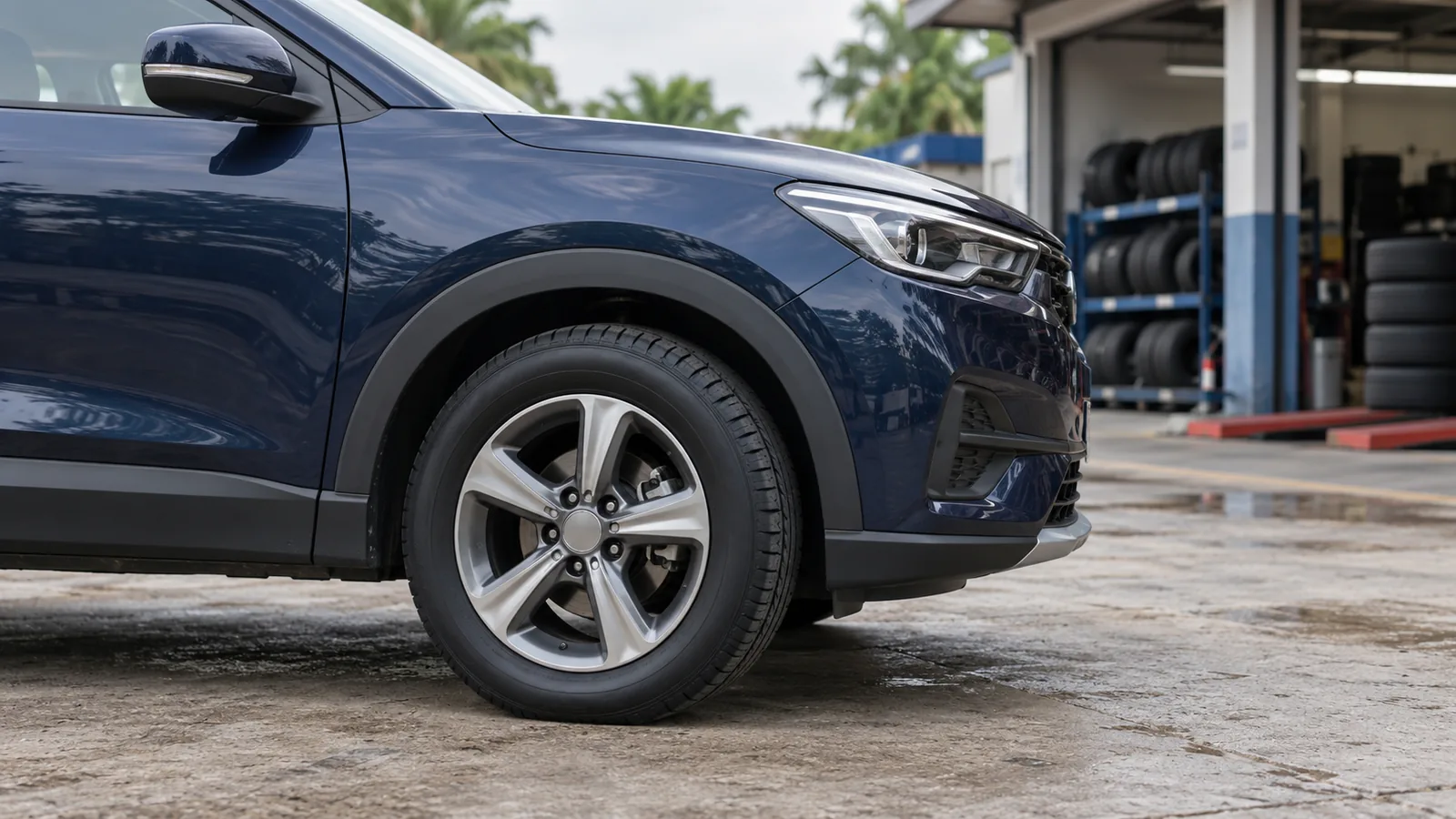
Cover: AI-generated illustration of a generic vehicle and tyre-service setting. It does not depict a named Michelin tyre product or an official Michelin facility.
Michelin Q3 2026: Keep the reporting periods separate
| Measure | Reported performance |
|---|---|
| Group revenue, January–September 2026 | €19.175 billion; down 0.5% |
| Group revenue, same period at constant exchange rates | Up 1.0% |
| Consumer revenue, January–September 2026 | €10.397 billion; down 1.0% |
| Consumer revenue, third quarter | Up 2.2% |
| MICHELIN-brand replacement volumes, first nine months | Up 4% |
Source: Michelin’s official financial release, pages 1, 3 and 8. Consumer includes automotive, two-wheel and related distribution.
A quarterly improvement and a cumulative decline can coexist. Currency-adjusted growth also answers a different question from revenue translated at actual exchange rates. Neither measure, by itself, establishes profit growth.
Why replacement demand matters to the car market
Michelin estimates that the global passenger-car and light-truck replacement tyre sell-in market grew 1% over the first nine months, while original equipment declined 1%. These are worldwide market estimates, not India-only sales. Source: release, page 3.
Our assessment is that replacement business provides a different route to the customer from winning a factory-fit contract. A tyre company must persuade the owner choosing a replacement, alongside supporting relationships with vehicle manufacturers. Availability, the retail experience and confidence in the product therefore belong in the commercial discussion.
What is Michelin’s premium-tyre strategy?
The company points to growth in larger-diameter, higher-value tyres and new ranges, including Primacy 5 Energy. It also reports replacement-market price increases in response to higher input costs. Source: official release, pages 1 and 8.
This makes product selection and pricing part of the strategy, alongside volume. For a buyer, however, a premium-positioning claim should lead to a more specific comparison: which tyre suits the car, what is available locally and what the complete fitted quotation includes.
What should Indian owners check?
Use the vehicle’s approved tyre specification as the starting point. Ask the retailer to identify the proposed product precisely and explain the applicable warranty, fitting charges and availability. Treat the global sales-mix discussion as industry context rather than a reason to change wheel size.
For a new-car shortlist, ask about replacement options and obtain a local fitted-cost quotation for the specified tyres. Include that expense in the wider ownership budget. Global revenue trends cannot tell you the price or delivery time a retailer will offer in your city.
Compare the complete ownership budget
Check your indicative eligible amount and estimated EMI with AutoCred before shortlisting or visiting a dealer. Assess the indication alongside the vehicle quote and expected ownership expenses. Results are indicative; final eligibility, rate, tenure and approval depend on the lender.