Blog

Oct 11, 2026

Kia Syros EV Buyer Guide: Range, Charging and Booking Checks

The Kia Syros EV deserves a closer look from buyers considering a compact electric SUV. Its official India showroom page presents an appealing range and charging proposition, but the booking decision should begin with your routine: where the car will charge, which journeys it must handle, and what the exact variant costs to own.

This is a buyer analysis of Kia's live product information checked on 11 October 2026, rather than a claim of a new launch today. It separates the advertised figures from the practical questions you should resolve before paying a booking amount.

Kia Syros EV range and charging: read the conditions

Kia's official Syros EV showroom page advertises a certified range of 526 km under ARAI MIDC-Full and approximately 39 minutes for charging from 10% to 80% using a 100 kW DC charger under standard test conditions. Kia notes that charging time can vary with battery condition, charger specifications and ambient temperature.

These headline figures are reference points, not a promise for every journey or every charging stop. Confirm which battery and variant the quoted range applies to. For a road trip, plan around chargers you can actually use and retain a comfortable arrival reserve rather than trying to reproduce a certification result.

Start with your parking and charging arrangement

Before comparing cosmetic options, decide how charging will work at home. Ask for an installation assessment covering the parking space, cable route, electrical requirements, permissions and the complete installed cost. If you rent your home or use shared parking, clarify access and responsibility for the equipment.

A nearby public charger is useful only if its availability fits your routine. Check access hours, connector compatibility, payment arrangements and an alternative location. Visit the site yourself where practical. A charging plan that depends on a single unfamiliar location deserves more checking before you commit.

The right question is not whether an EV can work in principle. It is whether charging this car will be convenient for your household. Someone with dependable home access may reach a different decision from a buyer who must arrange every charging session away from home.

Choose the variant around useful equipment

Kia's product page lists comfort and assistance features, with some equipment identified specifically for X-Line. It also describes sliding and reclining rear seats. Use the exact variant specification to establish what is included; do not assume everything pictured on a showroom page is standard.

Bring the passengers who will use the car to the test drive. Set the front seat for the regular driver, then check the rear seating and luggage space together. A seating arrangement that feels spacious during a short demonstration may change once your usual bags or family equipment are loaded.

Check affordability before choosing the trim: use AutoCred's eligibility checker to check an indicative eligible amount and estimated EMI before shortlisting or visiting a dealer. Results are indicative; final eligibility, rate, tenure and approval depend on the lender. Include charging installation, insurance and any separate battery payment in your budget comparison.

Separate the vehicle quote from ownership programmes

The same Kia page describes Battery-as-a-Service and buyback programmes. However, its additional introductory buyback benefit has a footnote ending on 30 September. Do not assume that extra benefit applies to an October booking without written confirmation of an extension.

Ask for a conventional purchase quotation and, if offered to you, a separate Battery-as-a-Service proposal. Compare the full payment structure rather than the smallest upfront number. Check what is included, any recurring obligation, usage conditions, exit terms and how a future sale would work.

A buyback proposal also needs its own document. Establish who provides it, the applicable duration, vehicle-condition requirements, mileage conditions and the method used to calculate the amount. Treat a promotional headline as an invitation to inspect the contract, rather than as an unconditional resale guarantee.

A booking checklist for Syros EV buyers

  • Exact car: Get the trim, battery specification, colour and included equipment recorded on the quotation.
  • Charging: Confirm the home installation plan or a workable public-charging alternative.
  • Payments: Separate registration, insurance, accessories, charger installation and battery-related obligations.
  • Support: Request the full battery and vehicle warranty terms, including eligibility, exclusions and transfer conditions.
  • Delivery: Ask for a written delivery estimate and the booking-cancellation and refund conditions.

The Syros EV's published proposition makes it worth evaluating, but your own use case should decide the shortlist. A convincing test drive, practical charging plan and clear contract matter more than choosing from headline figures alone.

Before your dealer visit, check your indicative eligible amount and estimated EMI with AutoCred so you can compare the exact variant against a realistic budget. Results are indicative; final eligibility, rate, tenure and approval depend on the lender.

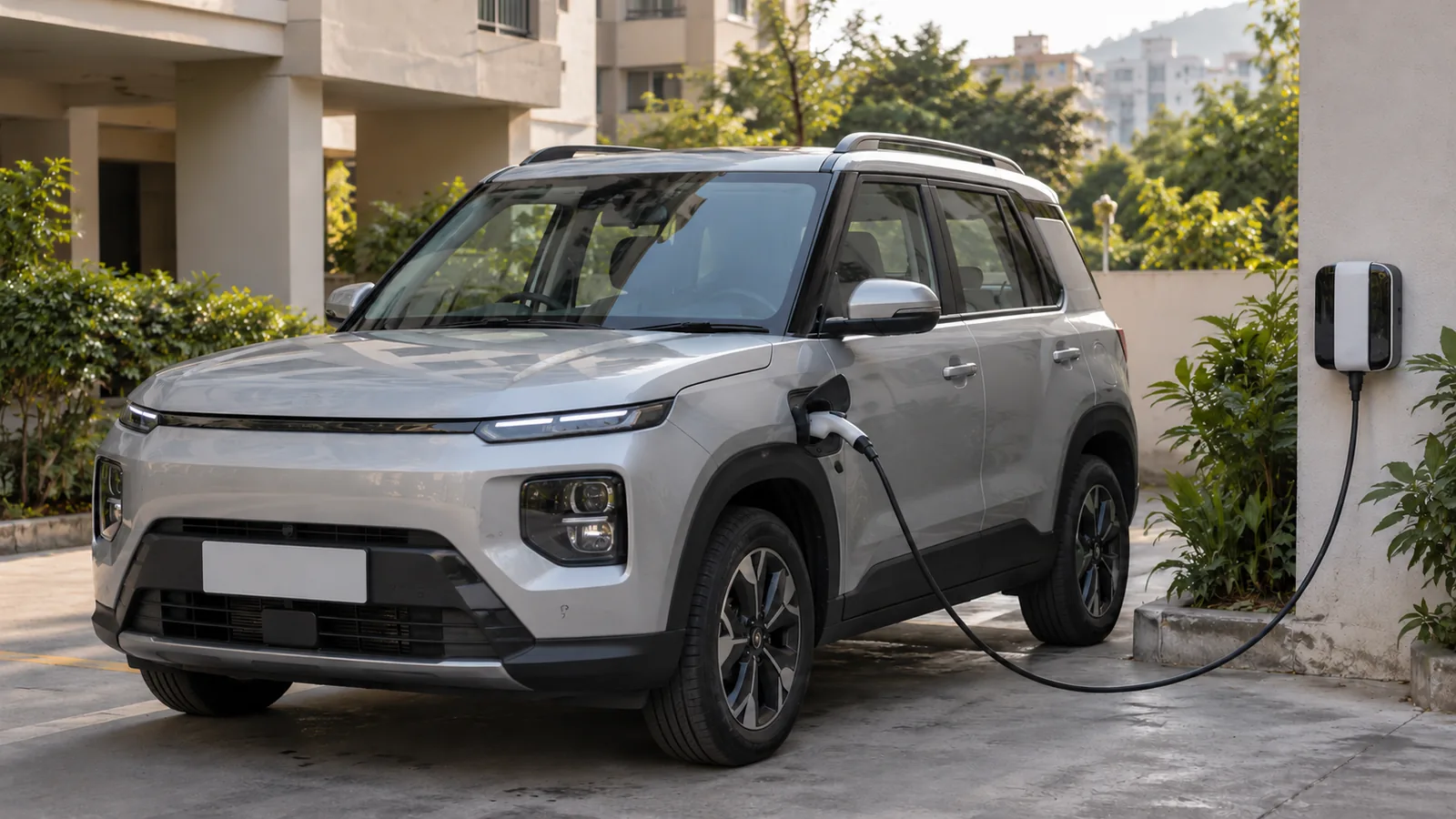
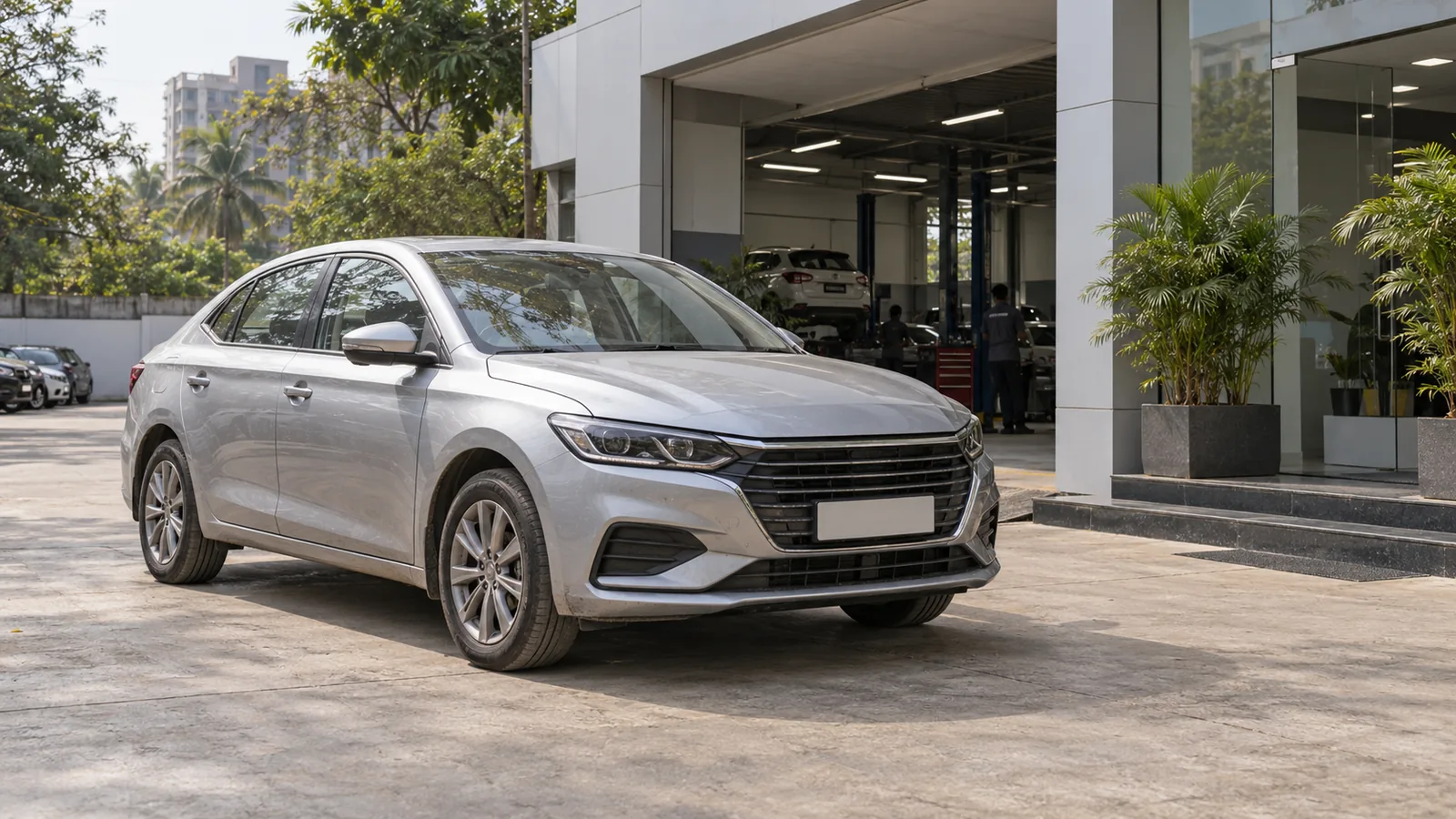
Cover image: AI-generated illustration of a generic unbranded compact electric SUV at a home charger. It does not depict an official Kia Syros EV design.

Read more
Oct 11, 2026

MINI India Personalisation Strategy: Mod My MINI Buyer Guide

A premium car can compete through its identity as well as its equipment. MINI India's official Mod My MINI programme makes that idea tangible: owners can personalise their cars through a manufacturer-backed route. For prospective buyers, the useful question is whether the chosen changes add enough personal value to justify their cost and ownership implications.

This article analyses the programme announced in August, alongside MINI's published first-half sales results. It does not present either announcement as fresh October news or assume that earlier sales growth came from the later programme.

What Mod My MINI officially offers

MINI's 26 August 2026 announcement describes personalisation for the Cooper and Countryman families, covering both new and existing vehicles. It includes original accessories, paint options and decals, with elements such as roofs, mirror caps, spoilers and brake calipers mentioned.

The release says the selection permits 2.5 million combinations and that official decals installed through the programme carry a 24-month warranty from installation. That decal warranty should not be treated as a blanket warranty for every accessory, paint operation or vehicle component. MINI directs customers to an authorised dealer to explore options and check parts availability.

The sales context: growth before the programme

In its 9 July 2026 first-half results, MINI India reported 504 customer deliveries between January and June, up 70% year on year. It identified the Countryman as the leading customer choice, followed by the Convertible and Hatch.

These figures provide context for a premium brand developing its product and customer-experience proposition. They are not October sales figures, and they cannot measure the impact of a programme announced afterwards. Neither release supplies programme take-up, accessory revenue or a sales-conversion rate.

Why personalisation can support a premium-car strategy

Our analysis is that personalisation gives a brand another way to distinguish its offering beyond a standard specification sheet. A buyer who values a particular colour combination or finish may find the ownership experience more appealing. An existing owner can also refresh a car without replacing it.

That creates a potential customer relationship beyond the initial vehicle purchase. It can give authorised dealers an additional reason to engage with owners and discuss accessories. Whether it generates meaningful commercial growth depends on demand, pricing and execution; the announcements do not establish those outcomes.

Personal choice should remain separate from mechanical capability. A changed roof finish or decorative treatment does not establish extra performance, improved safety or better efficiency. Start with the right car for your needs, then decide how much its appearance matters to you.

Budget for the complete car before selecting upgrades

Request the vehicle quotation and personalisation quotation separately. The latter should identify the work, parts, labour, applicable taxes and any care requirements. Ask whether installation happens before delivery or requires a later workshop visit, and obtain an agreed completion schedule.

Set your budget first: use AutoCred's eligibility checker to check an indicative eligible amount and estimated EMI before shortlisting a car or visiting a dealer. Results are indicative; final eligibility, rate, tenure and approval depend on the lender. Confirm with the lender whether any optional personalisation cost can form part of the financed amount.

An attractive finish can be worth paying for when you plan to enjoy it over your ownership period. It should not crowd out the money you need for insurance, maintenance or everyday expenses. Treat the upgrade as a personal purchase decision rather than assuming someone else will pay extra for it later.

Questions to ask about finish, warranty and resale

  • Compatibility: Is the option approved for your exact model and specification? Ask for the relevant part or work description.
  • Warranty: What covers the selected installation, what is excluded, and who handles a claim?
  • Care: Are there specific washing, polishing or repair instructions for the paint or decal?
  • Reversibility: Can the change be removed, and what might restoration involve? Do not assume every finish is reversible.
  • Documentation: Does the change need to be disclosed to your insurer or reflected in vehicle records? Confirm the requirements before work begins.
  • Resale: Would you still enjoy the option if it added no resale premium? A unique appearance does not guarantee higher residual value.

A practical decision for MINI buyers

Compare the unmodified car first: seating, luggage space, visibility, ride and ease of use should suit your routine. Then compare the selected personalisation with the standard appearance using actual samples where available. Lighting and a digital preview can make colours look different from the finished car.

MINI's programme is a concrete example of differentiation through owner choice. For market watchers, commercial success would need later evidence. For customers, success is simpler: a finish they want, a clear written price and support terms they understand.

Before committing, check your indicative eligible amount and estimated EMI with AutoCred and take a realistic budget to the dealer. Results are indicative; final eligibility, rate, tenure and approval depend on the lender.

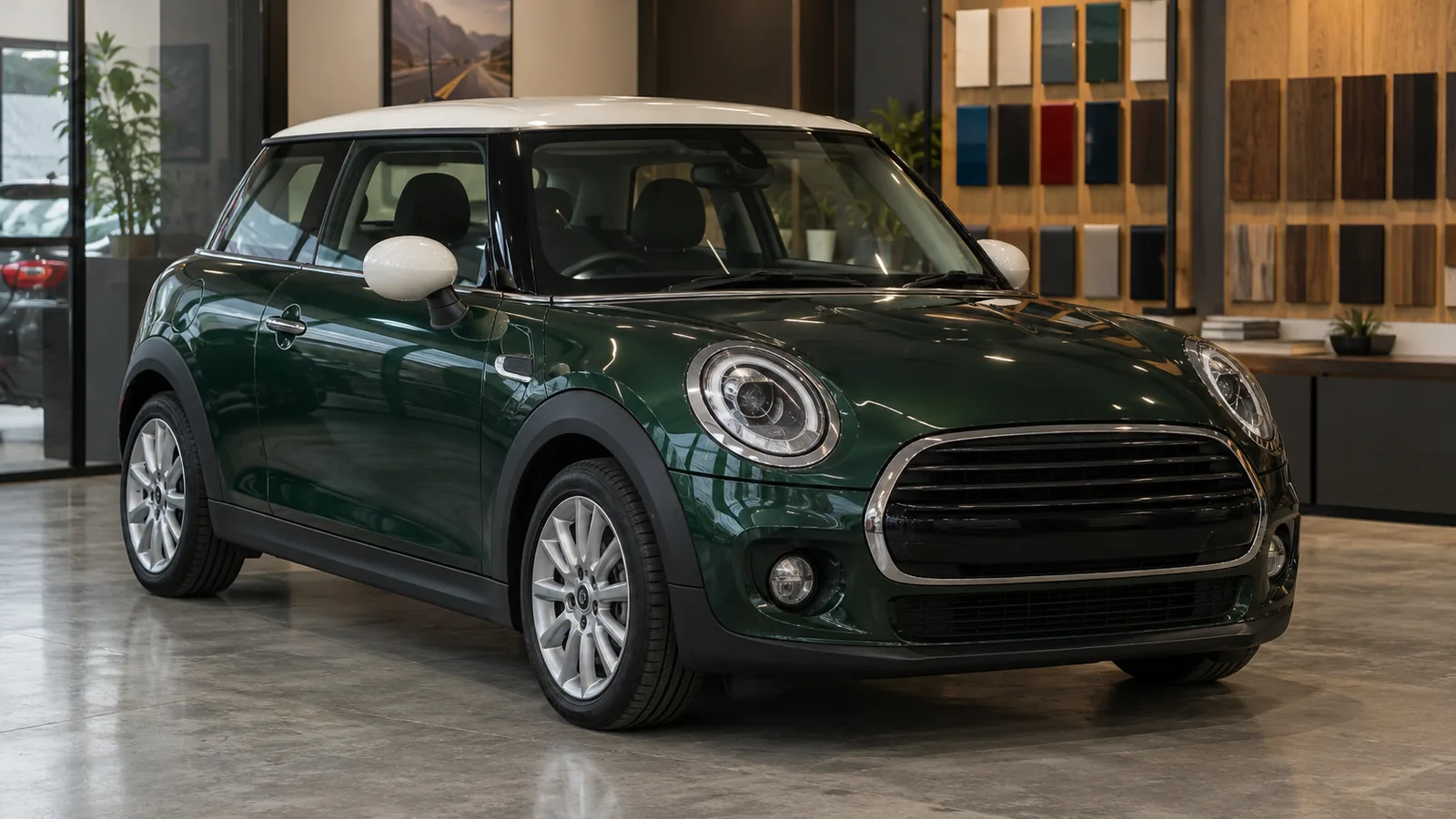
Cover image: AI-generated illustration of an unbranded compact hatchback in a detailing studio. It does not show an official MINI model or an approved programme configuration.

Read more
Oct 11, 2026

Volkswagen India Network Strategy: What Car Buyers Should Check

For a car buyer, a brand's growth strategy becomes practical when a showroom is easy to reach and a workshop can support the ownership journey. Volkswagen's official Maharashtra and Hyderabad network announcements offer a useful way to examine that relationship. This is an ownership and market-strategy analysis of those published updates, rather than a new sales report.

What Volkswagen officially announced

In its 15 July 2026 Maharashtra announcement, Volkswagen reported 17 sales locations and 16 service outlets in the state following a dealership inauguration in Chhatrapati Sambhajinagar. It described a standalone showroom with a nearby, separate spares and service facility.

The same release said the Virtus accounted for nearly 65% of Volkswagen's sales in that city. That is a share of the brand's local portfolio, not a share of all cars sold in the city or a national market-share figure. The distinction matters when interpreting the commercial role of a dealership.

Earlier, its 30 June 2026 Hyderabad announcement described the Volkswagen Deccan workshop at IDA Uppal with 23 service bays. Volkswagen reported six showrooms and five workshops in Hyderabad, and 272 touchpoints nationally at that time. These are dated snapshots, not independently verified October network totals.

Why network investment belongs in a sales-strategy discussion

Our reading is that physical access can help a manufacturer turn product interest into a more workable ownership proposition. A nearby showroom makes it easier to organise a test drive, compare seating and discuss a quotation. A usable workshop addresses a different question: how much disruption might a service visit create after the purchase?

Those benefits are possibilities to evaluate, not measured outcomes from these announcements. The releases do not establish that the added facilities caused higher registrations, shorter waiting times or improved customer satisfaction. A network count is evidence of presence; performance requires separate sales and service data.

The local Virtus mix also illustrates why national SUV enthusiasm should not replace local judgement. Buyers should compare the body style that suits their parking, passenger needs and roads. A strong local sedan mix can inform a dealer's priorities, but it does not prove a sedan is the right choice for every household.

Check the workshop, not just the showroom address

A split sales-and-service arrangement deserves attention before booking. The most convenient place to buy a car may not be the place that maintains it. Map both addresses, check the route at a realistic time of day and ask how vehicle collection or drop-off works.

Ask whether the workshop handles the exact model and the work you expect, how appointments are arranged, and what happens when a repair requires a part that is unavailable locally. A large facility can still have busy periods. Bay count alone does not tell you the next available appointment or the time needed for a particular job.

Put access and affordability together: use AutoCred's eligibility checker to check an indicative eligible amount and estimated EMI before shortlisting a car or visiting a dealer. Results are indicative; final eligibility, rate, tenure and approval depend on the lender. Leave room in your household budget for insurance, upkeep and the practical cost of service visits.

What to ask during a dealer visit

  • Where will the car be serviced? Confirm the authorised workshop address and contact details separately from the showroom.
  • What does routine ownership cost? Request a written maintenance estimate for the exact variant, with inclusions and exclusions explained.
  • How are delays handled? Ask about appointment availability, parts ordering and the process for receiving repair updates.
  • What support is actually included? Obtain the applicable warranty, roadside-assistance and service-package documents rather than relying on a verbal summary.
  • What is the full purchase amount? Separate the vehicle price, registration, insurance, accessories and optional packages in the quotation.

For example, a showroom near your office may make a test drive simple while the workshop requires a longer trip from home. That does not automatically rule out the car. It gives you a concrete ownership trade-off to compare with another brand, alongside the driving experience and overall cost.

How to judge whether the strategy is working

For market watchers, the useful follow-up is whether facility investment accompanies sustained retail demand and dependable service delivery. New locations alone cannot answer that. For buyers, the immediate test is more personal: does the local network provide a convincing route from test drive to routine maintenance?

Volkswagen's announcements document concrete investment in customer access. Their practical value depends on the outlet you will use, the model you choose and the support available when you need it. Verify those details before letting a broad network headline influence a booking decision.

Before your next dealer visit, check your indicative eligible amount and estimated EMI with AutoCred so you can shortlist against a realistic budget. Results are indicative; final eligibility, rate, tenure and approval depend on the lender.

Cover image: AI-generated illustration of a generic unbranded sedan outside a service reception building; it does not depict an official Volkswagen vehicle or facility.

Read more
Oct 10, 2026

Nissan October 2026 Offers: Sales Strategy and Buyer Checks

A car offer is most useful when you can identify the benefit that applies to your exact purchase. Nissan's official consumer-offer terms specify October 2026 retail applicability and describe variant-specific discounts, exchange benefits and customer-category offers. They provide a timely window into how targeted incentives can support a manufacturer's sales strategy.

This is an analysis of the current published terms, rather than an announcement of a new blanket discount. For buyers, the practical task is to turn an offer description into an itemised, documented quotation before paying a booking amount.

What Nissan's October offer terms actually confirm

The official page limits discounts to specified variants and sets documentation and customer-category conditions. It specifies that the New Magnite's exchange and scrappage benefits are alternatives. Source: Nissan India offer conditions.

These categories should be treated as routes to eligibility, rather than amounts that every customer can automatically add together. The page does not give a complete model-wise table of current rupee benefits. Ask the dealer to identify the exact variant, benefit amount, validity and supporting conditions in writing.

How conditional benefits can support market performance

Our reading of this structure is that Nissan is addressing different obstacles to completing a purchase. An exchange incentive can help a customer who must dispose of an existing car. An employer-linked benefit can give an eligible household another reason to consider a quotation. Variant-specific incentives let the brand focus an offer more narrowly than an across-the-board price reduction.

Those are possible commercial purposes, not measured outcomes. The terms alone cannot establish how many extra cars the programme sells, whether a dealer has excess stock or how much negotiating room a particular buyer has. Assessing the sales effect would require separate volume and inventory evidence.

For a buyer, the important implication is that a headline offer can be less relevant than the benefit available on the configuration you want. Keep the vehicle's suitability, final payable amount and delivery commitment at the centre of the comparison.

Separate the exchange bonus from your old car's value

Exchange claims need ownership, transaction and transfer evidence, with relationship proof where relevant. Source: exchange documentation requirements.

Ask the dealer to show the valuation of your old car and the exchange bonus as separate entries. Compare the valuation with another credible purchase offer for the same vehicle. A larger bonus is not necessarily the better overall deal if the underlying trade-in valuation is lower.

Clarify who will handle the ownership transfer, which evidence you will receive and what happens if a document is delayed. Keep copies of the signed valuation and transaction paperwork so that the benefit and the old vehicle's disposal remain traceable.

Compare the offer against a realistic repayment budget. Use AutoCred's car loan eligibility checker to check an indicative eligible amount and estimated EMI before shortlisting or visiting a dealer. Results are indicative; final eligibility, rate, tenure and approval depend on the lender.

Confirm corporate and scrappage eligibility before budgeting

Obtain a checklist for the customer category you intend to use. Submit only the documents needed through the authorised process, and ask the dealer to confirm that your employer, relationship or other qualifying evidence is accepted before including the benefit in your purchase budget.

Nissan requires a Certificate of Deposit from an authorised scrapping facility, subject to timing conditions. Source: scrappage incentive conditions. Ask how the dealer will apply those conditions to your certificate. Do not assume an exchange and scrappage benefit can both be claimed on the same purchase.

Why the September booking note needs clarification

The October 2026 applicability line sits alongside a September-only Early Booking Bonanza note. Source: applicability and early-booking note. That September wording does not establish eligibility for a fresh October booking.

If a salesperson includes an early-booking benefit, request the current written scheme that authorises it for your order. This keeps a potentially outdated website note from becoming an unsupported assumption in your quotation.

Compare final quotations, not the advertised saving

Use the same variant, insurance coverage and accessory choices when comparing dealers. Have each quotation separate the vehicle price, unconditional discount, conditional benefits, registration, insurance and optional extras. Ask which benefits appear immediately on the invoice and whether any require later processing.

A useful offer is one you qualify for, can document and can see reflected in the final payable amount. Nissan's published conditions make clear why an offer-led sales strategy still needs careful execution at the dealership. For the customer, a complete quotation is the bridge between marketing appeal and an assessable purchase decision.

Prepare your shortlist: check your indicative eligible amount and estimated EMI with AutoCred before shortlisting or visiting a dealer. Use the estimate alongside the written quotation and your ownership budget. Results are indicative, and final eligibility, rate, tenure and approval depend on the lender.

Cover image: AI-generated illustration of a generic, unbranded crossover at an Indian showroom; it does not depict an official Nissan vehicle or dealership.

Read more
Oct 10, 2026

2026 Toyota Fortuner Leader Edition: Price, Features and Bookings

Toyota has announced the 2026 Fortuner Leader Edition, with bookings scheduled to open on 12 October 2026. The update focuses on appearance and cabin presentation, while offering a choice between manual and automatic transmissions. Toyota's official announcement gives buyers confirmed prices to work with before approaching a dealer.

The important decision is how much the edition's styling appeals to you, and which transmission suits the people who will actually drive the SUV. Start with those questions before building a budget around optional accessories or a finance offer.

2026 Fortuner Leader Edition price in India

Toyota published the following ex-showroom prices in its 9 October 2026 release:

Confirmed variantEx-showroom price
Fortuner Leader Edition 4x2 Manual₹36.51 lakh
Fortuner Leader Edition 4x2 Automatic₹38.72 lakh

The automatic costs ₹2.21 lakh more on this published price list, calculated by subtracting the manual's price from the automatic's. Your on-road difference will also depend on the applicable registration charges, insurance quotation and any extras you select.

Manual or automatic: which version should you shortlist?

The automatic deserves a test drive if your routine includes frequent congestion, tight parking or several family members sharing the driving. Use that drive to judge how naturally you can control the SUV at low speed and how comfortable you feel during repeated stops. Convenience is personal: the right choice should make your normal journeys easier.

The manual is worth considering if you prefer choosing gears yourself and want to keep the purchase budget closer to the lower listed price. Test the clutch, driving position and gear changes on a representative route. A short, clear-road demonstration may not tell you how the car will feel during your longest commute.

Ask for quotations with matching insurance and accessory assumptions so that the transmission comparison stays meaningful. If financing is involved, compare the down payment, monthly repayment and total interest for each option using the actual lender offer. Keep enough room for fuel, maintenance and other household commitments.

What is new in the Leader Edition?

Announced changes include black exterior trim and wheels, a black roof treatment, black-and-maroon cabin trim, ambient lighting, illuminated scuff plates, auto-folding mirrors and tyre-pressure monitoring. Source: Toyota's edition announcement.

View a display vehicle before deciding how much those changes matter to you. Check the upholstery finish in daylight, the cabin lighting in a shaded setting and the operation of the convenience features. Ask the dealer to identify the edition's included equipment separately from accessories offered at extra cost.

Check the budget before selecting your transmission. Use AutoCred's car loan eligibility checker to check an indicative eligible amount and estimated EMI before shortlisting or visiting a dealer. Results are indicative; final eligibility, rate, tenure and approval depend on the lender.

Check the drivetrain against your intended use

The announced Leader Edition versions are 4x2. Toyota's variant list is the relevant reference when choosing this edition. If four-wheel drive is a requirement, compare a specifically listed 4x4 variant and its equipment before placing an order.

For everyday use, pay close attention to visibility, the effort required to enter and leave the cabin, and how confidently you can manoeuvre the vehicle in your parking space. Bring the family members who will travel regularly. Their comfort and your ease of use are more useful buying criteria than the visual impression of a large SUV alone.

What to confirm when bookings open

Ask the dealer for a written order that names the edition, transmission, colour and included equipment. The release gives a booking opening date, rather than an individual customer's delivery commitment. Obtain the expected allocation and delivery timing for your own order.

  • Booking terms: confirm the payment amount, cancellation policy, refund process and treatment of any price changes before delivery.
  • On-road quotation: separate vehicle price, registration, insurance and optional accessories. Compare insurance terms as well as the premium.
  • Vehicle allocation: ask when the dealer will share the vehicle identification number and manufacturing details for your assigned SUV.
  • Inspection: arrange to inspect the allocated vehicle's exterior, cabin and equipment before final delivery formalities.

Warranty and ownership costs need a separate check

Toyota's announcement lists a standard three-year/100,000 km warranty and five years of complimentary roadside assistance, with warranty-extension options subject to their terms. Source: official ownership package.

Request the warranty booklet, extension price and servicing schedule for the vehicle you order. Check coverage, exclusions and the nearest convenient authorised workshop. Build the ownership budget from those documents and your own expected usage, rather than assuming an edition name changes maintenance costs or future resale value.

Prepare for a more focused dealer visit: check your indicative eligible amount and estimated EMI with AutoCred before shortlisting or visiting a dealer. Use that estimate alongside the final on-road quotation and your running-cost budget. Results are indicative, and final eligibility, rate, tenure and approval depend on the lender.

Cover image: AI-generated illustration of a generic, unbranded large SUV; it does not depict the official Toyota Fortuner Leader Edition.

Read more
Oct 10, 2026

Renault Duster Hybrid: 29 km/l Mileage, Bookings and Buyer Guide

Renault has opened bookings for the Duster strong hybrid E-Tech 160 in India, adding a new option to the family-SUV shortlist. Renault's official announcement provides the first details buyers need to assess the powertrain. The purchase decision, however, still needs a complete quotation and a test drive that reflects how the car will be used.

The useful question is whether the hybrid can deliver the combination of convenience, driving feel and ownership cost that suits your household. A headline mileage figure helps start that comparison; it cannot finish it.

Renault Duster hybrid bookings, mileage and reveal date

These details are confirmed in Renault India's release dated 9 October 2026:

Buyer questionOfficially confirmed detail
When did bookings open?9 October 2026
What is the booking amount?₹21,000 through Renault India's website or authorised dealerships
When is the full reveal?17 October 2026
What mileage has been announced?29 km/l, ARAI-certified
What is the powertrain?1.8-litre petrol engine, two electric motors and a 1.4 kWh battery
What is the combined output?160 PS

How the E-Tech strong hybrid works

Renault says a multi-mode transmission manages the petrol and electric drive. The system recovers energy during deceleration and braking and can use electric propulsion in suitable conditions. The battery charges during driving, so it does not need an external charging connection. Source: official E-Tech announcement.

For a household without a convenient charging space, that makes charging access a less central part of the shortlist. The more useful test-drive questions concern low-speed response, the transition when the engine joins in, accelerator control in traffic and how the brakes feel. Drive the route you normally use, with the air conditioning on and the family aboard where practical.

What does the 29 km/l figure mean for your fuel budget?

Treat Renault's certified figure as a comparison reference, rather than a promise for your commute. Before estimating savings, ask for the certification details and look for independent road tests once the hybrid is available. Keep your expectations tied to the route, traffic, load and driving style you intend to use.

Build a conservative ownership comparison with the same annual distance and local fuel-price assumption for each shortlisted car. Calculate fuel expenditure from a realistic mileage assumption, then include servicing, insurance and the purchase-price difference. A hybrid's financial case is strongest when the savings you expect are supported by your usage, rather than by the most optimistic figure in a brochure.

Set a workable budget before choosing a variant. Use AutoCred's car loan eligibility checker to check an indicative eligible amount and estimated EMI before shortlisting or visiting a dealer. Results are indicative; final eligibility, rate, tenure and approval depend on the lender.

Is the Duster hybrid price confirmed?

The 9 October release does not provide hybrid prices or a variant-wise equipment list. Renault's current Duster product page lists a ₹10.49 lakh starting figure against the authentic TCe 100 MT petrol version. That figure should not be used as the hybrid's price.

Wait for the hybrid's own price and specification sheet before deciding whether to stretch your budget. Compare equivalent equipment: a lower-priced petrol version with fewer features may be a poor baseline for judging the hybrid premium. Ask the dealer to separate vehicle price, registration, insurance, accessories and any optional packages in writing.

What to check before paying the booking amount

A booking can establish interest, but its value depends on the terms attached to it. Confirm the following before committing:

  • Cancellation and refund: obtain the refund conditions, any deductions and the expected processing time.
  • Allocation and delivery: ask whether the booking secures a specific variant or only a place in the dealer's enquiry queue. Request a written delivery estimate once allocation is available.
  • Hybrid warranty: obtain the terms for the battery, electric motors and related components, including exclusions and transfer conditions.
  • Service readiness: check which nearby workshop will support the hybrid and ask for its maintenance schedule and itemised service estimates.
  • Everyday practicality: verify luggage space, rear-seat comfort and spare-wheel provision on the actual hybrid configuration.

Should you book now or wait for the full reveal?

Booking now can make sense if the Duster is already on your shortlist, the cancellation terms are acceptable and you are comfortable waiting for the complete details. Waiting is sensible if the final on-road price, warranty or equipment could change your choice. Either approach should leave room for a test drive and a comparison with the alternatives.

Focus on the cost of the exact car you would buy and the experience of driving it on your own route. The strongest reason to choose the hybrid will be a clear fit with those needs, backed by the final quotation and ownership terms.

Prepare your dealer visit: check your indicative eligible amount and estimated EMI with AutoCred before shortlisting or visiting a dealer. Keep the down payment and ongoing running costs in your budget. Results are indicative, and final eligibility, rate, tenure and approval depend on the lender.

Cover image: AI-generated illustration of a generic, unbranded SUV in an Indian setting; it does not depict the official Renault Duster hybrid.

Read more
Oct 09, 2026

Tesla India Growth Strategy: Charging Access Is the Buyer Test

Tesla's latest quarterly delivery announcement shows the scale of its global car business. For an Indian buyer, however, the more useful test is local: can the car be charged conveniently, can the charging bay actually be accessed, and is service support practical from home? Those questions also explain why charging infrastructure matters to the company's prospects in India.

In its official release dated 2 October 2026, Tesla reported 486,532 worldwide vehicle deliveries and 464,391 vehicles produced in the third quarter. This analysis uses that latest operating update alongside Tesla's current Indian location listings, rather than treating global volume as evidence of Indian sales.

What Tesla's global delivery figures mean for India

The quarterly release combines Model 3 and Model Y deliveries at 478,237 vehicles. It does not provide an India sales total or a separate Indian Model Y figure. Its numbers therefore cannot establish Tesla's local market share, dealer-level demand or delivery availability for an individual Indian customer. All these figures come from the same company announcement.

Global scale is relevant to the manufacturer's production capability. Local adoption requires a different kind of scale: usable charging and ownership support where customers live and travel. AutoCred's assessment is that convenient access can help turn product interest into a practical purchase, while inconvenient charging can narrow the audience even when the vehicle itself is appealing.

Tesla charging in India: access matters as much as location

Tesla's official pages illustrate why a pin on a map is only the beginning of the check. The following are specific listed locations, not a complete account of the Indian charging network:

Officially listed siteCharging hardwareAccess shown on Tesla's page
Worldmark 3, New DelhiFour Superchargers, up to 250 kW maximumPublic access, 24/7
Orchid Business Park, GurugramFour Superchargers, up to 250 kW maximum24/7, with access described as members only

The distinction is meaningful. A nearby charger with restricted entry may not serve the same purpose as a publicly accessible bay. Before depending on a location, confirm entry permissions, parking arrangements and current availability with Tesla or the site operator. Treat the advertised power as a maximum rating, not a promised charging time for every session.

How combined charging and service locations support growth

The Orchid Business Park listing also identifies a store, delivery centre and service centre at the site. Bringing those functions together can simplify parts of the customer journey: seeing a vehicle, receiving it and returning for support. This is a practical example of an ownership footprint, rather than simply another place to display cars.

Tesla's official India service directory lists locations in Gurugram and Mumbai. Buyers should use these as a starting point and confirm the nearest suitable facility directly; an online directory is not proof that every repair, bodywork job or replacement part is immediately available. This article does not treat the directory as an exhaustive count of every service arrangement.

From a market perspective, the important question is whether support is easy enough to use repeatedly. A showroom visit happens before purchase, but servicing and charging shape ownership afterwards. For a buyer living away from a listed facility, travel time, transport arrangements and repair support deserve attention before placing an order.

Supercharger fees to check before relying on public charging

Tesla's official India Supercharger fee guidance says congestion charges can apply at a busy site when the battery reaches the applicable charge threshold or the charging session has ended. It describes a five-minute grace period and a fee of up to ₹40 per minute, with the amount potentially varying by location.

That is a congestion fee, not the electricity tariff. Check the charging price and any parking charge separately, and read the notices shown in the app and on the vehicle before a session. An advertised charger location alone is not enough to calculate a reliable running-cost estimate.

The buyer checklist before ordering a Tesla in India

  • Resolve everyday charging: establish where the car will normally charge, whether the parking space is available to you, and what installation work and permissions are required.
  • Check actual routes: assess charging stops on journeys you regularly make, including entry restrictions and a workable alternative if a site is unavailable.
  • Confirm ownership support: ask which facility handles servicing, accident repairs and roadside support for your address.
  • Obtain a complete quotation: compare the vehicle, registration, insurance, charging installation and any optional equipment as separate costs.
  • Verify delivery terms: ask for the configuration, estimated delivery window and applicable cancellation terms in writing.

What will make Tesla's India strategy convincing to buyers?

The latest global delivery release establishes substantial manufacturing and customer-delivery scale. The local site listings show concrete charging and support facilities, but also demonstrate why access conditions must be checked individually. For Indian customers, the strongest ownership proposition is the one that works on their routes and at their parking space, not the one supported by the biggest worldwide headline.

Before shortlisting or visiting a dealer, use AutoCred's loan eligibility checker to check an indicative eligible amount and estimated EMI against your full purchase budget. Results are indicative; final eligibility, interest rate, tenure and approval depend on the lender.

Source note: Global production and delivery figures are from Tesla's 2 October 2026 quarterly operating release. Local facilities, access conditions and fees are from the linked official Tesla pages, checked on 9 October 2026. Buyer and market implications are AutoCred's analysis. Access conditions and prices can change; confirm them before travelling or ordering. The cover is an illustrative generated photograph of a generic unbranded EV and charger, not a Tesla vehicle or an official Tesla location.

Read more
Oct 09, 2026

Hyundai Record September Sales: What Car Buyers Can Infer

Hyundai Motor India reported its highest-ever monthly total sales in September 2026, with both domestic and export volumes growing year on year. The record is a useful signal about the scale and breadth of the company's current business, but it is not a shortcut to deciding which car to buy. Buyers still need model-specific information on availability, price, build date, equipment and ownership costs.

According to Hyundai Motor India's official September sales release, the company sold 77,916 vehicles during the month, up 10.8% year on year. That total comprised 57,166 domestic units, up 10.9%, and 20,750 export units, up 10.4%.

How Hyundai set a new monthly sales record

The September total exceeded Hyundai's previous record of 75,360 units in July 2026 by 2,556 units, or about 3.4%, based on AutoCred's calculation from the two company releases. Hyundai's official July sales announcement recorded 54,210 domestic units and 21,150 exports. September therefore added 2,956 domestic units compared with July, while exports were 400 units lower.

That comparison shows that the new high was led by a stronger domestic contribution rather than a new export peak. Domestic volume represented about 73.4% of Hyundai's September total and exports about 26.6%, calculated from the figures in the September release. The mix matters because it shows that the record was supported by two substantial channels rather than relying entirely on one market.

Hyundai also said the September result surpassed the July record and linked its outlook to festive-season demand and bookings for the upcoming Bayon. The sales release does not provide a model-by-model September split, so it cannot support claims about which individual Hyundai generated the increase.

What the record says about Hyundai's market position

A record month indicates that Hyundai's manufacturing, distribution and export system handled a large combined volume. Growth in both domestic and overseas sales also reduces dependence on a single demand channel. For the company, that can support factory utilisation, supplier planning and the business case for continued product investment.

For customers, the clearest positive is organisational scale. A manufacturer moving more than 20,000 export units alongside its domestic business has a broad production programme. That may help sustain parts sourcing and model development over time, although the monthly data alone does not prove that every variant will have short waiting periods or strong local stock.

What buyers should not infer from one record month

Company-wide volume does not reveal the demand, inventory or discount position of a particular model, engine, gearbox or trim. A popular SUV variant can have a long wait while another version of the same model is readily available. Conversely, a dealer may offer benefits on older stock even when the manufacturer reports a record total.

The release also combines domestic and export sales. Export performance is strategically important, but an export unit does not improve the immediate availability of a car at an Indian dealership. Buyers should treat the 57,166-unit domestic figure as the more relevant part of the record for the local market, while still recognising that it is an aggregate across Hyundai's range.

Finally, a monthly company release is not a price forecast. Strong volume does not guarantee that prices will rise, and it does not eliminate the possibility of model-specific schemes. Pricing can change with production costs, regulation, exchange rates, inventory and competitive activity. A signed quotation and written terms are more useful than trying to time a purchase from one sales headline.

How to use sales data when shortlisting a Hyundai

Sales momentum is most useful as a prompt for better questions. Ask the dealer for the exact production month of the available vehicle, the committed delivery date and the current cancellation policy. If a salesperson cites high demand, request the waiting period for the precise variant and colour you want rather than accepting a brand-wide estimate.

  • Compare written on-road prices: include registration, insurance, accessories, extended warranty, service packages and every conditional discount.
  • Check stock age: decode the VIN or obtain the production month in writing before invoicing an immediately available car.
  • Confirm scheme conditions: exchange, corporate, loyalty and finance benefits may not be available to every buyer or variant.
  • Ask about price protection: understand which price applies if delivery moves into another month.
  • Inspect the exact trim: infotainment, safety, wheel size and connected features can differ across variants that look similar in an advertisement.

Does higher volume improve bargaining power?

It depends on local supply. Strong sales can reduce negotiation room on a fast-moving model, but a dealer with older inventory may still be willing to offer insurance, accessories or a cash benefit. The relevant numbers are the dealer's stock position and the demand for your chosen configuration, neither of which appears in the company-wide release.

Obtain quotations from more than one authorised outlet and compare them on the same day. Separate the vehicle price from finance, insurance and accessory negotiations so that a discount in one column is not recovered in another. If a car is available immediately, conduct a pre-delivery inspection before registration and verify the odometer, tyre dates, paint condition and promised equipment.

Why the export share deserves attention

Exports accounted for roughly one in four Hyundai units reported in September, based on the company's figures. That is significant for India's role as a production base and shows that Hyundai's Indian operations serve markets beyond domestic showrooms. The July release adds context: exports reached 21,150 units that month, which Hyundai described as its highest monthly export number in more than 100 months.

For an Indian buyer, the export story is an indicator of production scale rather than a promise about quality, resale value or parts prices. The right checks remain specific to the car: warranty coverage, service-network access near home, scheduled-maintenance estimates, insurance cost and parts availability for the chosen variant.

What Hyundai's September record means for car buyers

The record confirms broad momentum: total, domestic and export volumes all grew year on year, and stronger domestic sales lifted September above July's previous high. It does not identify a best buy or prove that every Hyundai is equally easy to obtain. Buyers should use the data as evidence of company scale, then make the purchase decision from the exact model, variant and local deal.

Before shortlisting or visiting a dealer, use AutoCred's loan eligibility checker to check an indicative eligible amount and estimated EMI against the complete on-road price. Results are indicative; final eligibility, interest rate, tenure and approval depend on the lender.

Sources: Hyundai Motor India's official September 2026 sales release for the record total, domestic volume, exports and year-on-year changes; and its official July 2026 sales release for the previous record and comparison figures. Calculations are AutoCred's and are rounded to one decimal place where shown. Information was checked on 9 October 2026. The cover image is illustrative and shows generic unbranded vehicles, not Hyundai models.

Read more
Oct 09, 2026

MG Windsor Indulge Edition Teased: What Buyers Should Wait For

MG has opened an official India webpage for the Windsor Indulge Edition, signalling a new special edition of its electric crossover. For buyers, the most useful fact at this stage is also the simplest: this is a teaser, not a complete product announcement. The page confirms the edition name and provides an enquiry route, but it does not yet publish a price, a variant basis, a battery specification, a certified range or a delivery date.

That gap matters because a special edition can be anything from a cosmetic package to a feature-led derivative. Until MG issues the full specification and price, buyers should avoid treating the Indulge Edition as a new powertrain or assuming it will use the larger Windsor Pro battery. The official MG Windsor Indulge Edition teaser page should be the reference point for confirmed information as the company adds details.

What has MG confirmed about the Windsor Indulge Edition?

As of 9 October 2026, MG's India website identifies the vehicle as the Windsor Indulge Edition and places it within the Windsor EV section. The live page carries teaser visuals and an enquiry form. It does not display an ex-showroom price, booking amount, launch schedule, edition quantity or a list of additional equipment.

This means the edition is officially acknowledged, but the commercial proposition is still incomplete. A buyer can reasonably expect a Windsor-based vehicle because of the page location and name. It would be premature to infer the exact trim, battery, range, charging hardware, colours or cabin upgrades from the teaser alone.

What buyers should wait for before booking

The final announcement needs to answer several practical questions. The first is whether Indulge is based on a regular 38 kWh Windsor or a 52.9 kWh Pro variant. The second is whether the changes affect comfort, styling, technology or safety equipment. The third is how MG will price the vehicle under full-purchase and Battery-as-a-Service structures, if both are offered.

  • Exact variant basis: Exclusive, Essence, Exclusive Pro, Essence Pro or a separate derivative.
  • Battery and certified range: the fitted battery capacity and the official test-cycle figure for this edition.
  • Standard equipment: which visible and cabin changes are included rather than dealer-fitted accessories.
  • Charging package: home-charger rating, installation scope, public fast-charging capability and charging times.
  • Price structure: full-purchase price, any battery subscription charge, minimum usage terms and on-road treatment.
  • Availability: booking amount, production quantity, delivery timing, colour choices and city-wise allocation.

How the existing MG Windsor EV range sets the context

MG's official Windsor EV product page currently describes two battery choices in the wider range: a 38 kWh battery with a 332 km MIDC range and a 52.9 kWh battery for Pro variants with a 449 km MIDC range. It also lists five seats, 200 Nm of torque and battery-dependent charging times. These figures explain the choices available in the current family; they are not confirmation of the Indulge Edition specification.

The distinction is essential for comparison. A larger battery can offer more range, but it can also increase the purchase price. A buyer who mostly charges at home and drives short urban routes may not gain enough from the extra capacity to justify the difference. Someone who frequently travels between cities may value the additional range more, provided reliable fast charging exists on the route.

When the Indulge specification arrives, compare it with the nearest regular Windsor variant line by line. Treat paint, upholstery and trim as personal-value items. Give more weight to equipment that changes everyday use, such as battery capacity, charging hardware, safety systems, seat comfort, camera quality and warranty coverage.

Why full purchase and BaaS must be compared separately

MG markets Windsor variants through both conventional purchase and Battery-as-a-Service options. A lower advertised BaaS entry price does not represent the entire ownership cost because the battery charge is paid according to the applicable plan. The final Indulge announcement needs to state whether the edition is available under both structures and disclose the relevant terms.

Ask for two written quotations: one for full purchase and one for BaaS. Each should show the ex-showroom price, registration, insurance, charger and installation cost, accessories, subscription rate, minimum billing or usage conditions, finance charges and any end-of-term obligations. Compare the totals over your expected ownership period and annual kilometres rather than comparing headline prices.

Financing can also work differently when the battery charge sits outside the vehicle invoice. Confirm which amount the lender finances, whether the subscription affects monthly cash flow and how insurance treats the battery. These details can change the real EMI-plus-running-cost calculation even when two advertisements look similar.

Which special-edition upgrades would add real value?

A worthwhile special edition should make the car more useful or meaningfully more comfortable at a reasonable premium. Buyers should look for factory-backed additions such as better seat materials, effective ventilation, useful driver-assistance functions, a clearer camera system, practical charging equipment or an improved warranty package. Cosmetic changes can still be appealing, but their value is subjective and resale demand may be harder to predict.

Check whether every highlighted item is factory fitted and covered by the vehicle warranty. Dealer-installed accessories can differ in fit, finish and warranty treatment. Also ask whether the edition changes wheel size: larger wheels may improve the visual stance but can raise replacement-tyre cost and affect ride comfort on broken roads.

What to verify on an MG Windsor test drive

Do not wait for the special-edition car to start evaluating the fundamentals. A test drive of the closest regular Windsor can establish whether its driving position, rear-seat comfort and packaging suit your household. Once the Indulge Edition reaches showrooms, inspect the exact derivative before paying the balance.

  • Urban comfort: assess low-speed ride, visibility, steering effort and brake response in traffic.
  • Rear seat: check access, headroom, reclining-seat comfort, floor height and air-conditioning performance.
  • Boot usability: load the luggage you normally carry and check the parcel shelf, charging-cable storage and seat-folding arrangement.
  • Controls: try common climate, navigation, camera and audio functions rather than judging only the screen size.
  • Charging: confirm connector compatibility, home electrical requirements, installation lead time and nearby public chargers.
  • Written coverage: verify vehicle and battery warranties, roadside assistance and the terms for any edition-specific parts.

Should you wait for the MG Windsor Indulge Edition?

Waiting makes sense for a buyer who already likes the Windsor but wants a more distinctive appearance or a richer equipment package. It also prevents a decision based on unconfirmed assumptions. If you need a car immediately, compare available Windsor variants on their published specifications and negotiate a complete on-road quotation rather than delaying solely for a nameplate whose price and content remain undisclosed.

The sensible decision point will come when MG publishes the edition's exact variant, battery, price and standard equipment. Calculate the premium over the closest regular Windsor and decide how much of it improves daily use. Before shortlisting or visiting a dealer, use AutoCred's loan eligibility checker to check an indicative eligible amount and estimated EMI against your budget. Results are indicative; final eligibility, interest rate, tenure and approval depend on the lender.

Sources: the official MG Windsor Indulge Edition teaser page for the edition name and current teaser status; and the official MG Windsor EV product page for wider-range battery, range, performance and charging context. Information was checked on 9 October 2026. Confirm final specifications, prices, subscription terms and availability with JSW MG Motor India or an authorised dealer. The cover image is illustrative and shows a generic unbranded electric crossover, not the MG Windsor.

Read more
Oct 08, 2026

Tata Aeris Petrol or iCNG? What Buyers Should Compare

The Tata Aeris gives compact-sedan buyers a choice that deserves more thought than a simple price comparison. Tata offers the new model with petrol and factory-fitted iCNG powertrains, while both fuel types can be paired with a manual gearbox or an AMT. That breadth makes the Aeris relevant to first-time buyers, urban commuters and families looking for a small sedan with a separate boot.

Tata's official Aeris launch article says the sedan was launched on 25 September 2026 for private customers, with introductory starting prices of ₹5.29 lakh for petrol and ₹6.29 lakh for iCNG. These are starting prices, so the right comparison is between like-for-like variants after adding registration, insurance and any accessories—not between the least expensive petrol version and a better-equipped CNG trim.

Tata Aeris petrol vs iCNG: which suits your driving?

The petrol Aeris is the simpler choice for buyers with moderate monthly use, irregular travel patterns or limited access to CNG stations. It avoids the need to plan refuelling around a smaller network and should suit households that value convenience more than the lowest possible fuel cost.

The iCNG version is aimed at drivers who cover more kilometres and have dependable CNG availability near home, work or a regular route. Its value depends on real local fuel prices, the price gap over an equivalent petrol variant and annual distance travelled. A lower per-kilometre fuel cost does not automatically make CNG the better financial choice if usage is low or refuelling requires a long detour.

Before deciding, record your normal monthly kilometres and obtain written on-road quotations for equivalent petrol and iCNG variants. Compare the additional purchase cost with a conservative estimate of monthly fuel savings. That produces a realistic break-even period and prevents an attractive running-cost claim from masking a higher upfront spend.

Manual or AMT: the decision within each fuel type

Tata confirms that the 1.2-litre Revotron petrol engine is offered with a five-speed manual transmission and an AMT. The company also offers iCNG with an AMT, combining factory-fitted CNG with two-pedal convenience.

A manual can appeal to drivers who prefer direct control and want to keep the purchase price lower. The AMT is likely to be easier in dense traffic, but buyers should test it on their own kind of route. Pay attention to creep behaviour, low-speed smoothness, hill starts and the pause between shifts. Those details matter more in daily use than the convenience of having no clutch pedal on a specification sheet.

Does the Aeris iCNG preserve useful boot space?

CNG sedans often force buyers to trade luggage room for lower running costs. Tata says the Aeris uses a twin-cylinder iCNG layout to improve packaging, while its petrol-focused official material lists a 419-litre boot. The twin-cylinder design is a practical advantage in principle, but the company does not state on the cited overview that the CNG model retains the full 419 litres.

That distinction is important. Take the luggage you regularly carry—or at least measure it—when you inspect the car. Check whether suitcases can pass the boot opening, whether the floor is level, where the spare wheel or puncture kit sits and how much usable height remains above the cylinders. A quoted volume cannot fully describe the shape of the available space.

Which Aeris features matter in everyday use?

The official Tata Aeris product page highlights a 26.03 cm HD touchscreen, ventilated front seats, wireless smartphone connectivity and charging, rear air-conditioning vents and 65W Type-C charging. Tata's launch material also lists a 12.7 cm digital instrument cluster and more than 35 connected-car functions.

Equipment varies by variant, so do not assume every highlighted feature is included at the starting price. Ask the dealer for the current variant-to-feature sheet and inspect the exact car you intend to buy. Useful checks include screen response, camera clarity in low light, rear-seat airflow, the position of charging ports and whether wireless phone functions work reliably with your handset.

Ventilated seats can improve comfort in hot weather, while a rear vent is valuable for passengers in slow traffic. A large display is less useful if basic controls require too many taps, so try common actions such as changing temperature, adjusting audio and connecting a phone during the test drive.

What safety equipment does Tata confirm?

Tata states that six airbags are standard across the Aeris range. The official launch article also lists electronic stability control, ABS with EBD and corner stability control, hill-hold control and ISOFIX child-seat anchors. Higher-level assistance includes a blind-view monitor, digital video recorder and a 360-degree camera, but availability should be checked against the selected variant.

For the iCNG versions, Tata cites gas-leak detection, leak-resistant materials, thermal-incident protection and rear-crash protection. These systems are relevant, but factory safety equipment does not replace routine inspection. Owners should follow the authorised service schedule and avoid unapproved changes to the fuel system.

Buyers should also ask whether an independently published Bharat NCAP rating is available for the exact Aeris version they are considering. Airbag count and active-safety features are useful inputs, but they are not a substitute for a model-specific crash-test result.

What should you verify on an Aeris test drive?

  • Powertrain: drive both petrol and iCNG versions if available, with the air-conditioning running and a realistic passenger load.
  • Transmission: test stop-start traffic, an incline, parking manoeuvres and a faster road before choosing manual or AMT.
  • Space: check rear knee room, headroom, child-seat access and the usable boot shape rather than relying only on capacity figures.
  • Visibility: assess the pillars, mirrors, camera views and night-time headlamp performance.
  • Ownership costs: request written details for warranty, scheduled service, insurance, roadside assistance and CNG-component inspection.

Who should shortlist the Tata Aeris?

The petrol manual is the straightforward entry point for value-focused buyers who do not drive enough to justify CNG. A petrol AMT may suit urban users who want easier commuting. The iCNG manual makes the strongest case for high-mileage drivers with easy CNG access, while the iCNG AMT targets buyers who want lower fuel expenditure without using a clutch in traffic.

The final choice should come from comparable on-road quotations, a realistic fuel-cost calculation and a test drive of the exact powertrain. Before shortlisting or visiting a dealer, use AutoCred's loan eligibility checker to check an indicative eligible amount and estimated EMI against your budget. Results are indicative; final eligibility, interest rate, tenure and approval depend on the lender.

Sources: Tata Group's official Aeris launch article for positioning, starting prices, powertrains, safety and cabin details; and the official Tata Aeris product page for current headline price and product features. Information was checked on 8 October 2026. Prices are introductory and ex-showroom unless stated; features and availability can vary by variant and location, so confirm a written quotation with an authorised dealer. The cover image is illustrative and shows a generic unbranded compact sedan, not the Tata Aeris.

Read more