Tata Aeris Petrol or iCNG? What Buyers Should Compare
The Tata Aeris gives compact-sedan buyers a choice that deserves more thought than a simple price comparison. Tata offers the new model with petrol and factory-fitted iCNG powertrains, while both fuel types can be paired with a manual gearbox or an AMT. That breadth makes the Aeris relevant to first-time buyers, urban commuters and families looking for a small sedan with a separate boot.
Tata's official Aeris launch article says the sedan was launched on 25 September 2026 for private customers, with introductory starting prices of ₹5.29 lakh for petrol and ₹6.29 lakh for iCNG. These are starting prices, so the right comparison is between like-for-like variants after adding registration, insurance and any accessories—not between the least expensive petrol version and a better-equipped CNG trim.
Tata Aeris petrol vs iCNG: which suits your driving?
The petrol Aeris is the simpler choice for buyers with moderate monthly use, irregular travel patterns or limited access to CNG stations. It avoids the need to plan refuelling around a smaller network and should suit households that value convenience more than the lowest possible fuel cost.
The iCNG version is aimed at drivers who cover more kilometres and have dependable CNG availability near home, work or a regular route. Its value depends on real local fuel prices, the price gap over an equivalent petrol variant and annual distance travelled. A lower per-kilometre fuel cost does not automatically make CNG the better financial choice if usage is low or refuelling requires a long detour.
Before deciding, record your normal monthly kilometres and obtain written on-road quotations for equivalent petrol and iCNG variants. Compare the additional purchase cost with a conservative estimate of monthly fuel savings. That produces a realistic break-even period and prevents an attractive running-cost claim from masking a higher upfront spend.
Manual or AMT: the decision within each fuel type
Tata confirms that the 1.2-litre Revotron petrol engine is offered with a five-speed manual transmission and an AMT. The company also offers iCNG with an AMT, combining factory-fitted CNG with two-pedal convenience.
A manual can appeal to drivers who prefer direct control and want to keep the purchase price lower. The AMT is likely to be easier in dense traffic, but buyers should test it on their own kind of route. Pay attention to creep behaviour, low-speed smoothness, hill starts and the pause between shifts. Those details matter more in daily use than the convenience of having no clutch pedal on a specification sheet.
Does the Aeris iCNG preserve useful boot space?
CNG sedans often force buyers to trade luggage room for lower running costs. Tata says the Aeris uses a twin-cylinder iCNG layout to improve packaging, while its petrol-focused official material lists a 419-litre boot. The twin-cylinder design is a practical advantage in principle, but the company does not state on the cited overview that the CNG model retains the full 419 litres.
That distinction is important. Take the luggage you regularly carry—or at least measure it—when you inspect the car. Check whether suitcases can pass the boot opening, whether the floor is level, where the spare wheel or puncture kit sits and how much usable height remains above the cylinders. A quoted volume cannot fully describe the shape of the available space.
Which Aeris features matter in everyday use?
The official Tata Aeris product page highlights a 26.03 cm HD touchscreen, ventilated front seats, wireless smartphone connectivity and charging, rear air-conditioning vents and 65W Type-C charging. Tata's launch material also lists a 12.7 cm digital instrument cluster and more than 35 connected-car functions.
Equipment varies by variant, so do not assume every highlighted feature is included at the starting price. Ask the dealer for the current variant-to-feature sheet and inspect the exact car you intend to buy. Useful checks include screen response, camera clarity in low light, rear-seat airflow, the position of charging ports and whether wireless phone functions work reliably with your handset.
Ventilated seats can improve comfort in hot weather, while a rear vent is valuable for passengers in slow traffic. A large display is less useful if basic controls require too many taps, so try common actions such as changing temperature, adjusting audio and connecting a phone during the test drive.
What safety equipment does Tata confirm?
Tata states that six airbags are standard across the Aeris range. The official launch article also lists electronic stability control, ABS with EBD and corner stability control, hill-hold control and ISOFIX child-seat anchors. Higher-level assistance includes a blind-view monitor, digital video recorder and a 360-degree camera, but availability should be checked against the selected variant.
For the iCNG versions, Tata cites gas-leak detection, leak-resistant materials, thermal-incident protection and rear-crash protection. These systems are relevant, but factory safety equipment does not replace routine inspection. Owners should follow the authorised service schedule and avoid unapproved changes to the fuel system.
Buyers should also ask whether an independently published Bharat NCAP rating is available for the exact Aeris version they are considering. Airbag count and active-safety features are useful inputs, but they are not a substitute for a model-specific crash-test result.
What should you verify on an Aeris test drive?
- Powertrain: drive both petrol and iCNG versions if available, with the air-conditioning running and a realistic passenger load.
- Transmission: test stop-start traffic, an incline, parking manoeuvres and a faster road before choosing manual or AMT.
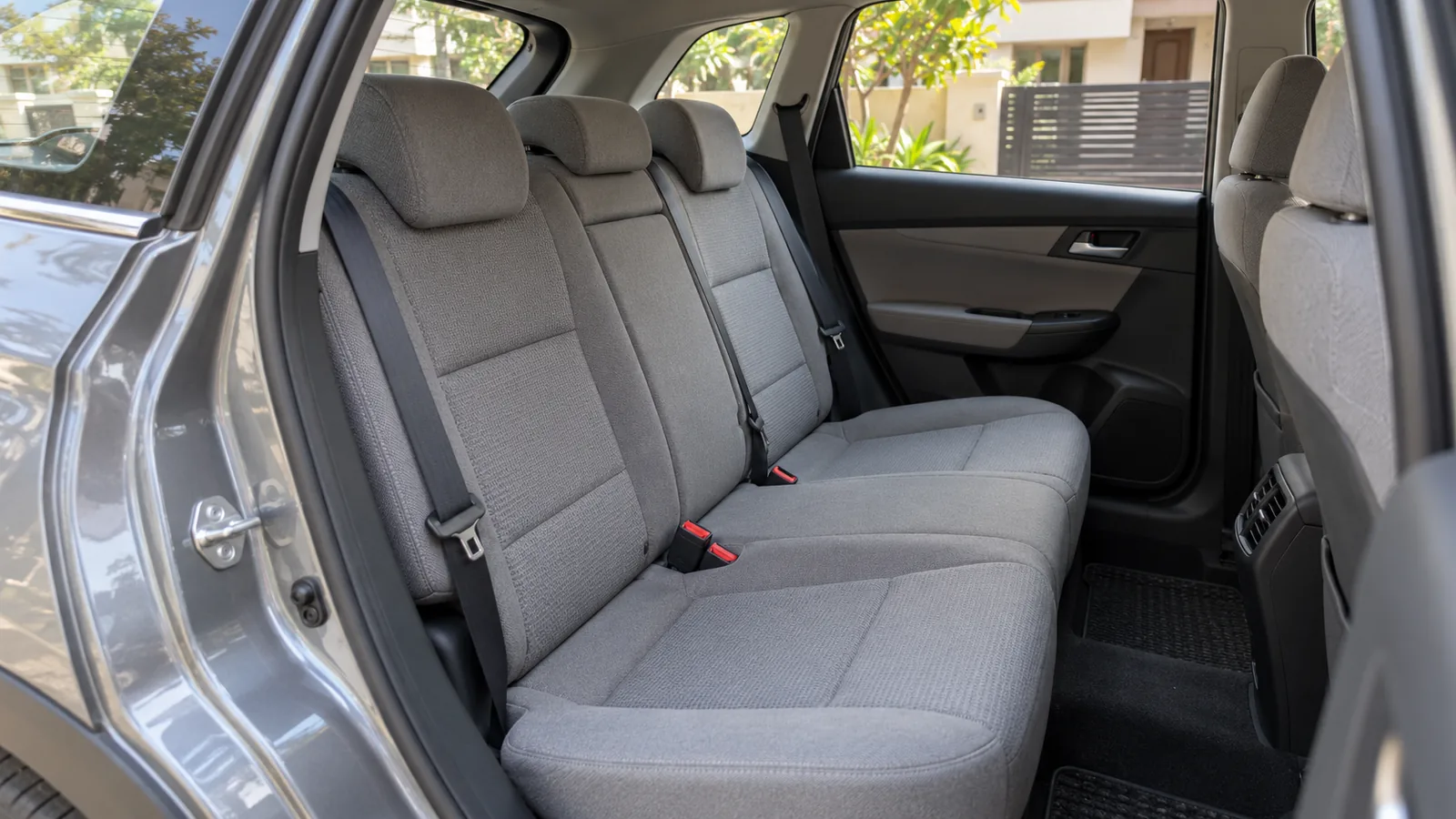
- Space: check rear knee room, headroom, child-seat access and the usable boot shape rather than relying only on capacity figures.
- Visibility: assess the pillars, mirrors, camera views and night-time headlamp performance.
- Ownership costs: request written details for warranty, scheduled service, insurance, roadside assistance and CNG-component inspection.
Who should shortlist the Tata Aeris?
The petrol manual is the straightforward entry point for value-focused buyers who do not drive enough to justify CNG. A petrol AMT may suit urban users who want easier commuting. The iCNG manual makes the strongest case for high-mileage drivers with easy CNG access, while the iCNG AMT targets buyers who want lower fuel expenditure without using a clutch in traffic.
The final choice should come from comparable on-road quotations, a realistic fuel-cost calculation and a test drive of the exact powertrain. Before shortlisting or visiting a dealer, use AutoCred's loan eligibility checker to check an indicative eligible amount and estimated EMI against your budget. Results are indicative; final eligibility, interest rate, tenure and approval depend on the lender.
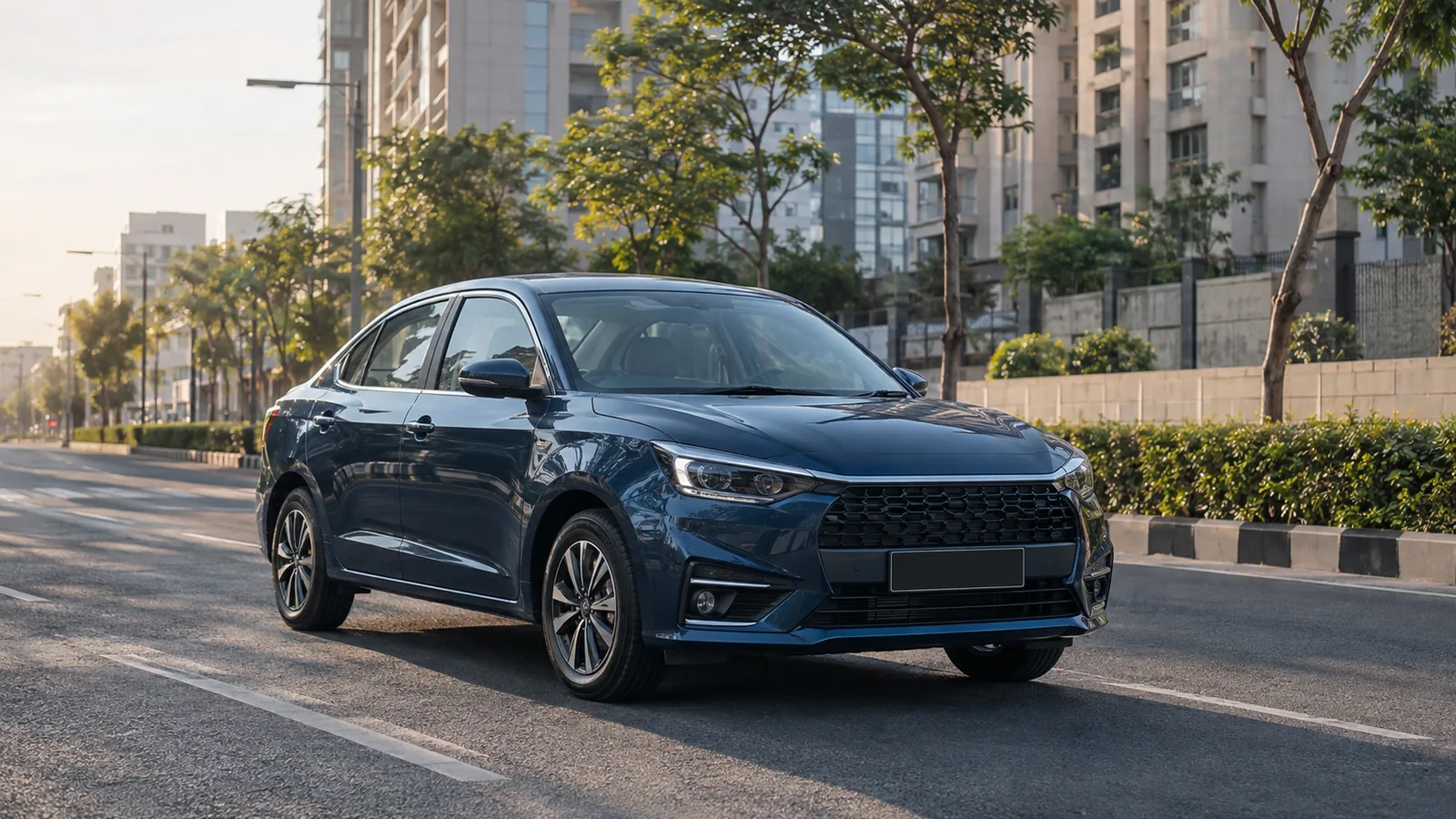
Sources: Tata Group's official Aeris launch article for positioning, starting prices, powertrains, safety and cabin details; and the official Tata Aeris product page for current headline price and product features. Information was checked on 8 October 2026. Prices are introductory and ex-showroom unless stated; features and availability can vary by variant and location, so confirm a written quotation with an authorised dealer. The cover image is illustrative and shows a generic unbranded compact sedan, not the Tata Aeris.