PM E-DRIVE’s 8,147-Charger Plan: What EV Car Buyers Should Know
India has approved ₹851 crore for the deployment of 8,147 public EV chargers under the PM E-DRIVE scheme. For electric-car buyers, this is a meaningful infrastructure signal because public charging coverage influences whether an EV can work beyond predictable home-to-office use. It is not, however, the same as 8,147 chargers already being operational.
The figures come from the Government of India's PM E-DRIVE backgrounder published by the Press Information Bureau on 1 October 2026. It states that the approvals cover three oil-marketing companies and 10 states as of 28 September 2026. The release does not provide a charger-by-charger commissioning schedule or a complete public list of live locations.
What has been approved under PM E-DRIVE
The latest government summary places the total PM E-DRIVE outlay at ₹11,900 crore and says implementation has been extended until March 2028. Within that total, ₹2,000 crore is earmarked for nationwide EV public charging stations. The approved ₹851 crore and 8,147 chargers therefore represent a substantial deployment programme, but they should be read as approved infrastructure rather than proof that every site is ready for use.
The same official release says PM E-DRIVE supports incentives for approximately 28.30 lakh EVs and had enabled 26.59 lakh sales as of June 2026. It also says ₹4,391 crore has been allocated for 14,028 electric buses, with 14,000 allocated as of August 2026. Those totals show the scheme's wider focus on mass mobility, commercial use and ecosystem development alongside charging infrastructure.
Does PM E-DRIVE give a subsidy on private electric cars?
The current official PM E-DRIVE portal lists demand-incentive categories covering electric two-wheelers, electric three-wheelers, e-ambulances, e-trucks and e-buses. It separately supports charging infrastructure and the modernisation of testing agencies. Private electric passenger cars are not listed as a demand-incentive category on that portal.
That means a private electric-car buyer should not treat the ₹11,900-crore scheme outlay as a direct discount on the price of a passenger car. The more relevant benefit is indirect: a larger and better-distributed public charging network can improve the practicality of EV ownership. Any state subsidy, registration concession, manufacturer offer or lender product should be checked independently for current eligibility and terms.
Approval is different from an operational charger
Public charging projects move through site identification, electricity connection, upstream infrastructure work, charger procurement, installation, testing and commissioning. A sanctioned amount or allocated charger therefore does not tell a buyer whether a particular station is live today, available around the clock or compatible with a chosen vehicle.
The official EV public-charging operational guidelines require operating data such as charger location, slot availability, pricing and digital-payment options to be shared with a national unified hub being developed by the Ministry of Heavy Industries. That can make trip planning more transparent once sites are commissioned and their data is kept current.
What the charger rollout could change for buyers
A denser public network can reduce dependence on a single charging stop, make inter-city routes easier to plan and give apartment residents more options when dedicated home charging is difficult. It can also add redundancy: if one charger is occupied or unavailable, another nearby site may prevent a long detour.
The real benefit will depend on where chargers are installed and how reliably they operate. A high charger count concentrated in a few urban pockets will not solve the same problem as well-spaced sites along highways and in smaller cities. Power rating also matters. A car that accepts high-rate DC charging will only benefit fully when a compatible charger can supply an appropriate rate and the battery is within a suitable temperature and state-of-charge window.
Seven checks before relying on public charging
- Map your regular routes: check live chargers near home, work and the inter-city roads you actually use.
- Confirm connector compatibility: verify the car's AC and DC connector standards against the station, not just the advertised charger power.
- Look for redundancy: identify at least one alternative charger near every planned stop.
- Check operating status: use current operator data or the operator's app shortly before arrival.
- Review access hours: some chargers sit inside premises with parking rules or restricted opening times.
- Compare the full tariff: charging, parking, idle-time and platform fees can all affect the cost of a stop.
- Plan around realistic range: allow for speed, weather, traffic, cabin cooling, elevation and battery reserve instead of relying only on the certified range figure.
Home charging still deserves priority
For many private EV owners, a dependable overnight home or workplace charger remains the simplest and most economical base. Public fast charging is especially useful for longer journeys, urgent top-ups and drivers without fixed parking. Buyers should ask the dealer for the approved home-charger specification, installation scope, electrical-load requirement, warranty responsibility and any additional civil-work cost.
Apartment residents should confirm parking rights, society approval, metering arrangements, cable routing and fire-safety requirements before booking an EV. A future public charger near the neighbourhood may help, but it should not be assumed until the location, commissioning status, access conditions and pricing are visible.
How to compare an electric car while the network expands
Start with daily distance, overnight charging access and the longest frequent route. Then compare usable battery capacity, certified and real-world range evidence, AC charging speed, maximum DC charging rate, charging curve, battery and vehicle warranty, thermal management and roadside assistance. A larger battery is not automatically the best answer if the car charges slowly or carries a large price premium.
Also compare the complete ownership cost rather than the ex-showroom price alone. Include insurance, charger installation, electricity tariff, public charging, scheduled maintenance, tyres and finance cost. Resale value is still developing across EV segments, so conservative assumptions are more useful than a guaranteed future-value claim unless it appears in a signed manufacturer or dealer contract.
What buyers can conclude today
The approval of ₹851 crore for 8,147 chargers is a concrete step in India's public-charging build-out. It improves the medium-term case for electric mobility, but buyers should separate approvals from commissioned, compatible and reliable chargers. The best purchase decision still comes from matching a specific EV and charging plan to real routes, parking access and budget.
Before visiting a dealer, use AutoCred's loan eligibility checker to see an indicative eligible amount and estimated EMI and keep the vehicle shortlist within a workable budget. Results are indicative; final eligibility, interest rate, tenure and approval depend on the lender.
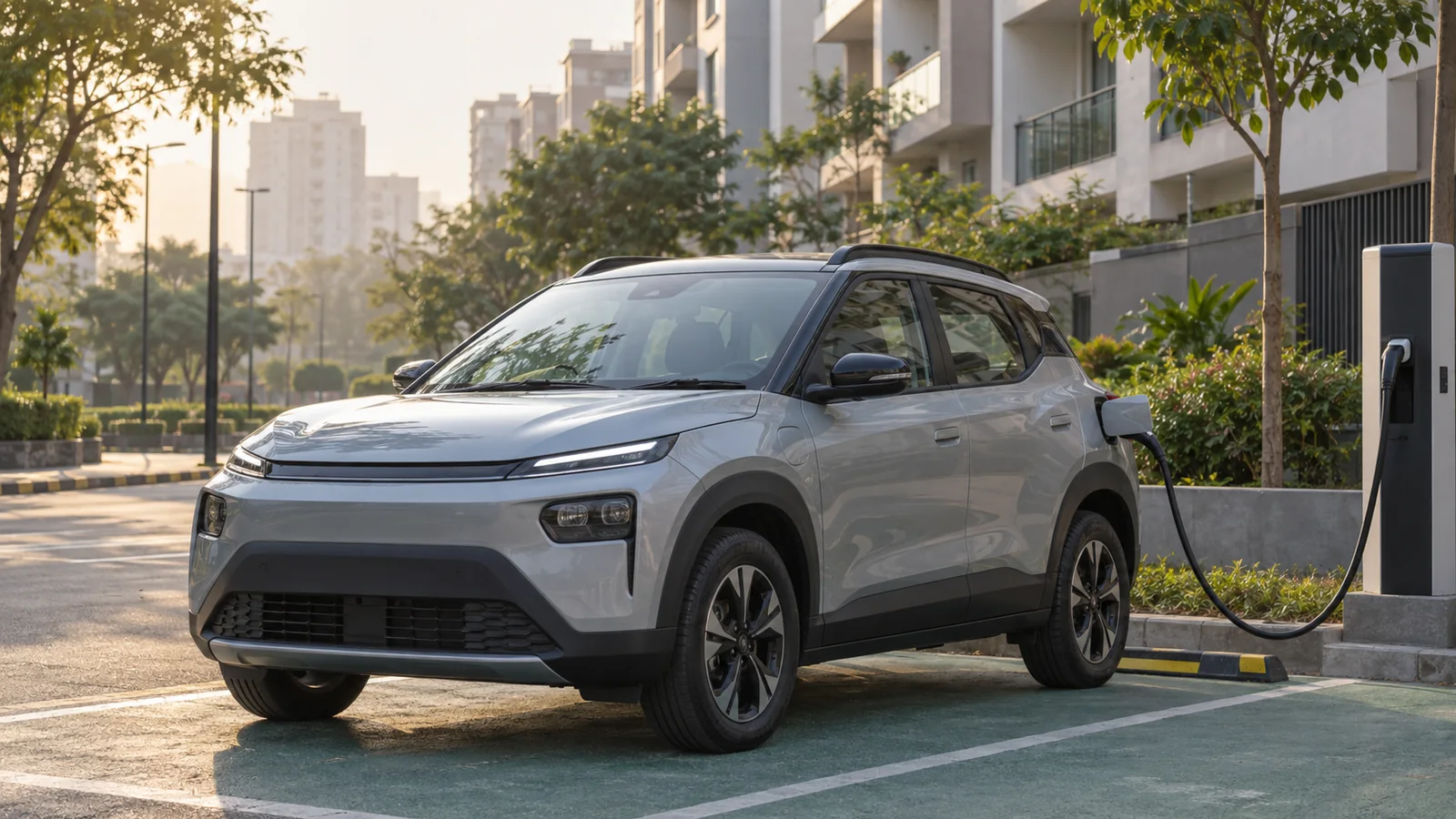
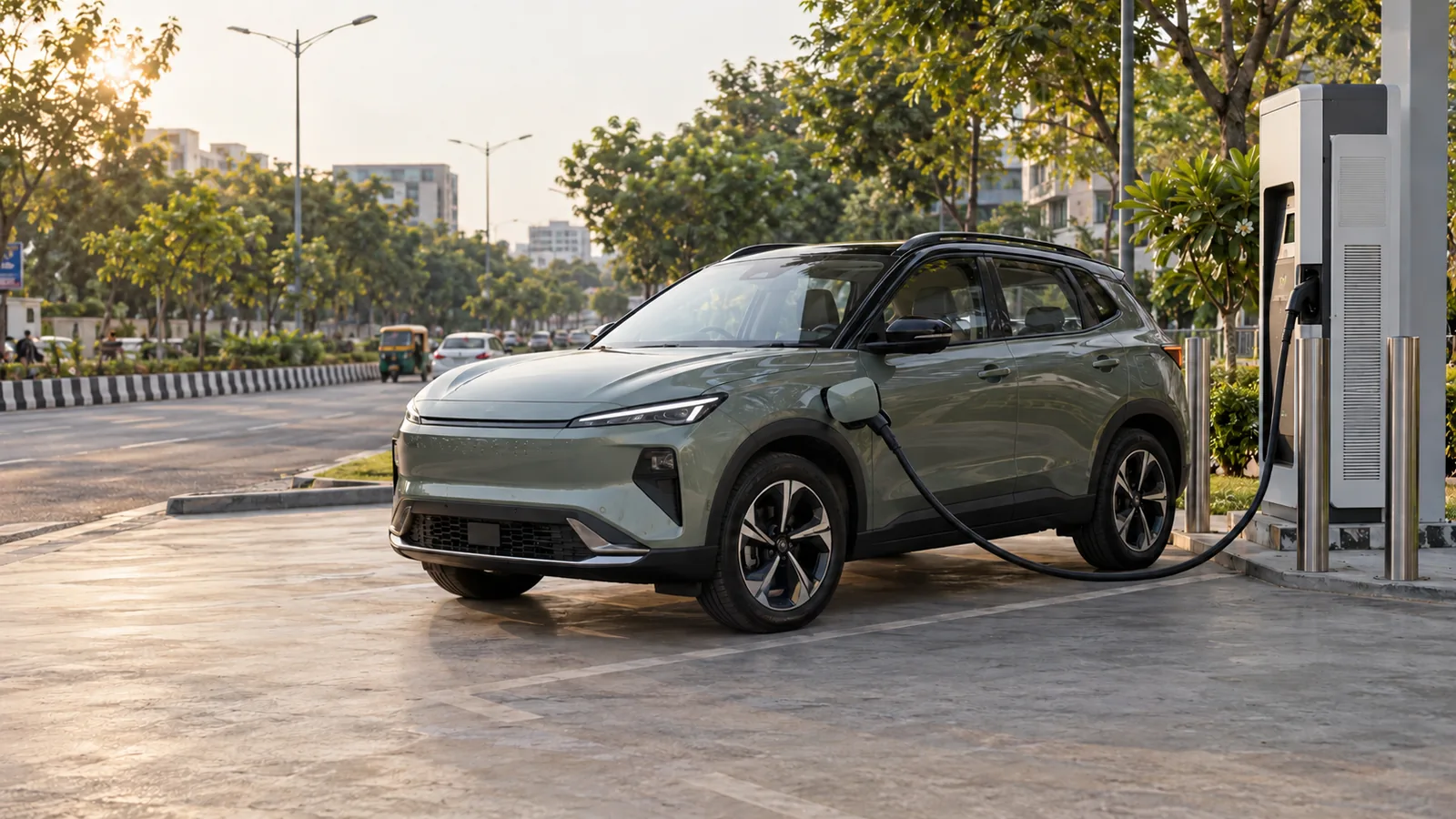
Sources: Government of India's PM E-DRIVE backgrounder, posted 1 October 2026, for the latest scheme outlay, supported sales, bus allocation and charging approvals; the Ministry of Heavy Industries' PM E-DRIVE portal for eligible categories and component allocations; and the Ministry's EV public-charging operational guidelines for implementation and data-sharing requirements. Information was checked on 7 October 2026. The cover image is illustrative and shows a generic unbranded electric vehicle and charging station.