Mazda–Yazaki Wire Harness Strategy: Fewer Variants, Local Supply
Mazda's latest reporting announcement puts supply-chain resilience alongside the customer experience in its growth priorities. A recent production change with Yazaki shows what that strategy can mean at component level: redesigning wire harnesses and their manufacturing process together, rather than treating automation as a separate equipment purchase.
The strategic context in Mazda's October report announcement
In its 20 October 2026 announcement for the Mazda Integrated Report, the company identifies building a resilient supply chain with partners as a material issue toward 2035. The associated metrics include domestic production volume and local business-partner labour productivity.
Those measures make an operational question worth following: how does the manufacturer organise the work between vehicle development, parts suppliers and assembly plants? The report announcement describes priorities and measurement, rather than proving that every related performance target has been achieved.
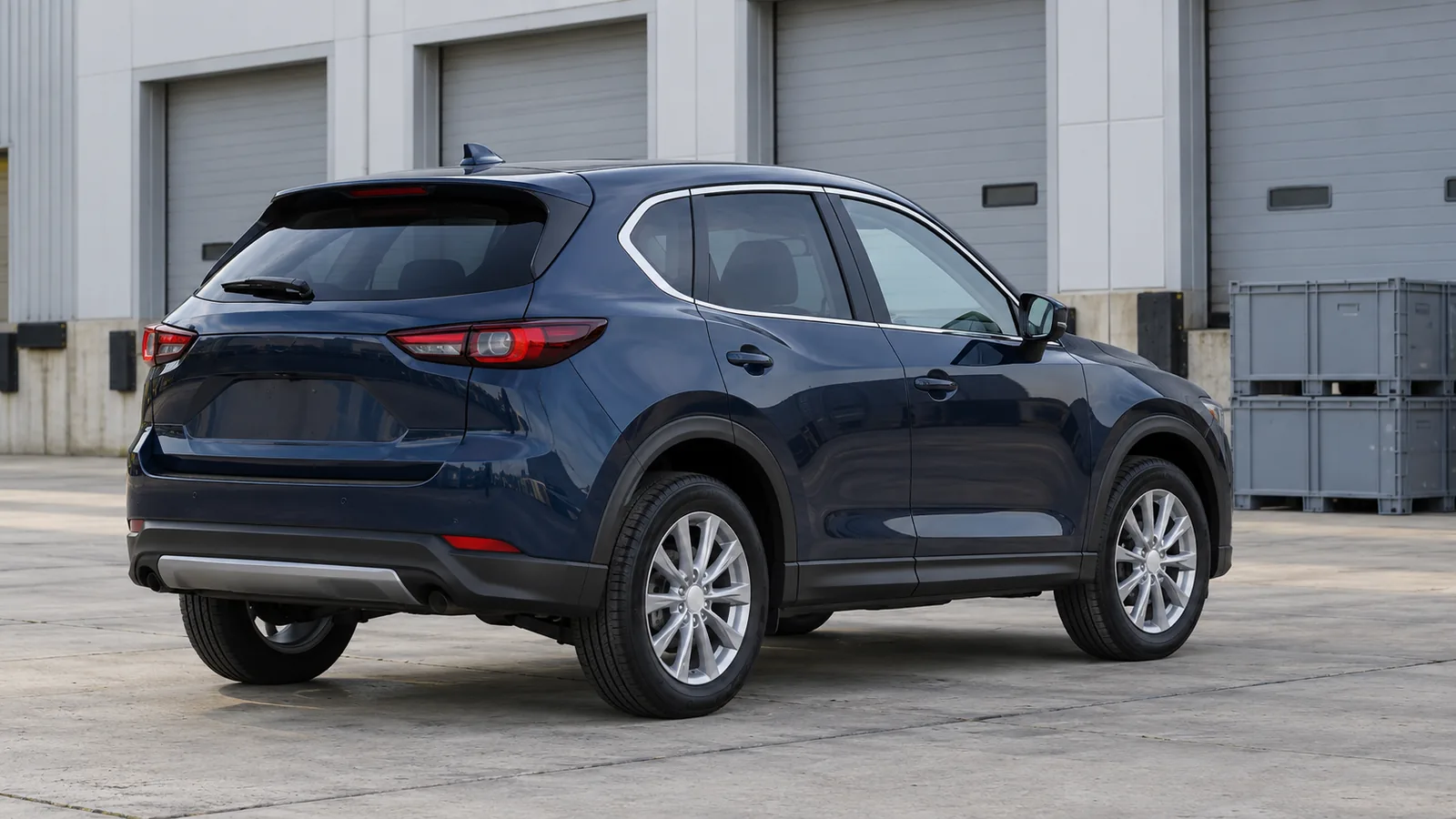
Cover: AI-generated illustration of a generic unbranded crossover beside a components warehouse, not a Mazda CX-5, a Yazaki facility or an actual wire-harness production line.
What Mazda and Yazaki changed for the CX-5
The companies' 15 October 2026 joint release describes the first application of their work on production close to vehicle-assembly plants and greater automation in the all-new Mazda CX-5. Wire harnesses distribute electrical power and transmit data throughout a vehicle.
The partners reviewed harness variants, specifications, structures and manufacturing processes from the early development stages. Their explanation is that delicate, complex assembly work cannot be automated simply by installing equipment or robots; the product and the process need to be considered together.
What the approximately 80% reduction actually measures
The joint release reports approximately 80% fewer wire-harness variants in the all-new CX-5 than in its predecessor, through optimisation of the vehicle including this initiative.
This measures the number of harness variations. It is not a stated reduction in wiring weight, manufacturing cost, labour requirements or the number of retail vehicle trims. AutoCred's interpretation is that fewer distinct component versions can simplify what a supply system must coordinate, but the scale of any commercial benefit needs its own evidence.
Keep the purchase budget grounded in a quotation: Use AutoCred's eligibility checker for an indicative eligible amount and estimated EMI before shortlisting a car or visiting a dealer. Results are indicative; final eligibility, rate, tenure and approval depend on the lender.
How production closer to assembly fits the strategy
The release describes harness assembly at a Yazaki affiliate's Mine City plant, supplying Mazda's Hiroshima and Yamaguchi plants. The partners plan further model applications.
For assessing manufacturing competitiveness, the useful follow-up is how that arrangement performs as demand and specifications change. A nearby production system still needs dependable parts, consistent execution and coordination with vehicle assembly. Its location alone does not establish a measured reduction in delivery delays or a guaranteed retail-price saving.
What this means for Indian car buyers
This is global manufacturing context, not an India launch or a local availability announcement. It helps explain why a carmaker's improvement programme may involve supplier relationships and component design as well as new factories.
For an actual purchase, use the offered model's equipment list, written delivery commitment, warranty and service information. Supply-chain strategy is useful background, but the quoted vehicle and ownership terms remain the evidence for your decision.
Check affordability before finalising the shortlist
Check your car-loan eligibility with AutoCred for an indicative eligible amount and estimated EMI before shortlisting or visiting a dealer. Compare the estimate with your down payment, confirmed quotation and ownership-cost budget. Results are indicative; final eligibility, rate, tenure and approval depend on the lender.