Maruti e VITARA Zeta vs Alpha: ADAS and Comfort Upgrade Guide
Choosing between the Maruti Suzuki e VITARA Zeta and Alpha is a question of how much assistance and cabin equipment you want to pay for. A useful comparison starts with the features you would use on an ordinary weekday, then checks whether the extra outlay leaves enough room for the rest of EV ownership.
This guide reviews the current official NEXA India model information and its variant specification table, checked on 20 October 2026. It is a buying guide, rather than a new launch announcement.
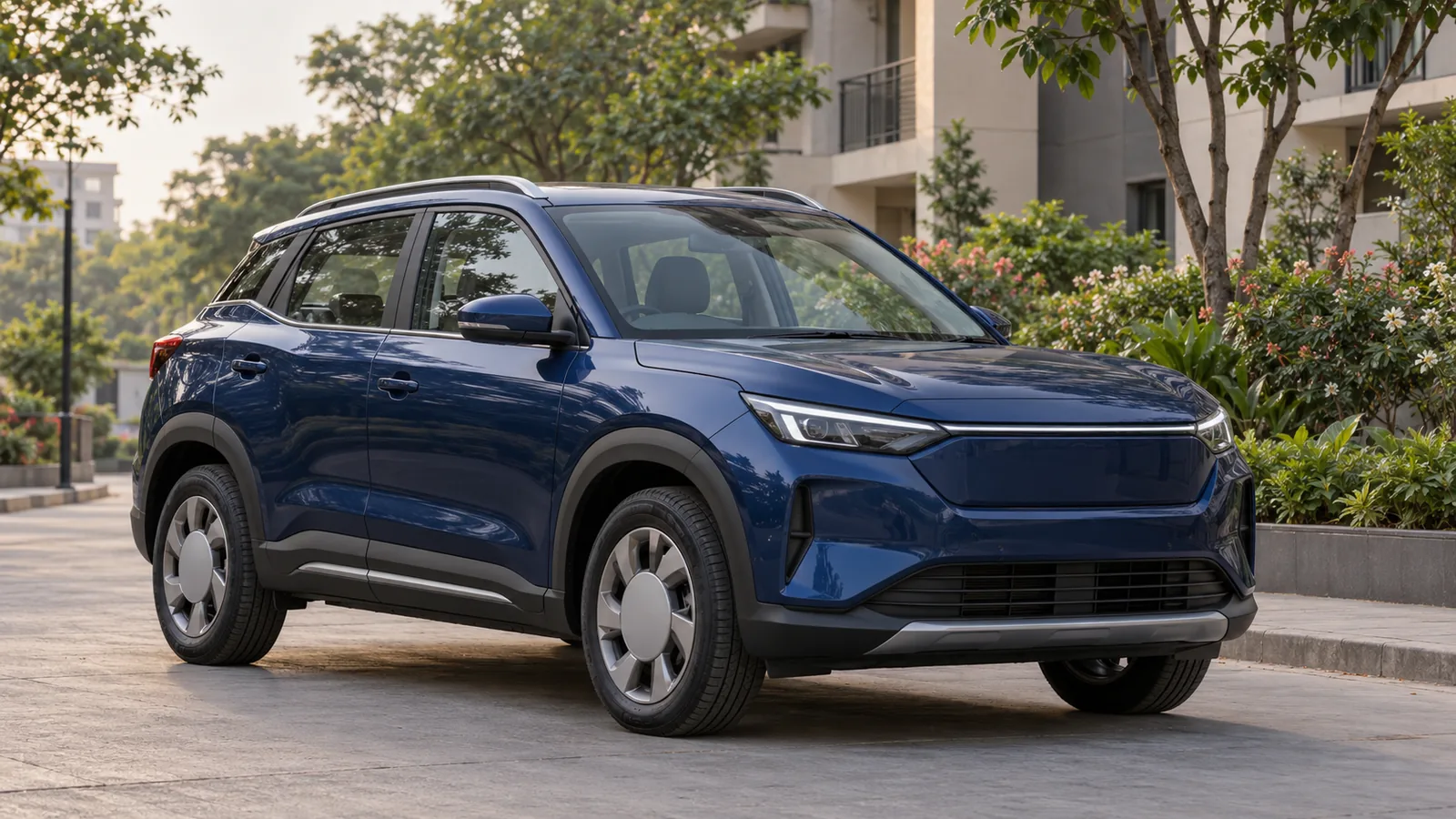
Cover illustration: an AI-generated generic unbranded electric crossover in an Indian residential setting. It does not depict the actual e VITARA or its official design.
e VITARA Zeta vs Alpha: which features change?
The following differences are listed in the official India brochure, PDF pages 23–24.
| Equipment | Zeta | Alpha |
|---|---|---|
| Adaptive cruise control and lane keep assist | Absent | Included |
| Car-to-car automatic emergency braking | Absent | Included |
| Blind spot monitoring and rear cross traffic alert | Absent | Included |
| 360-view camera | Absent | Included |
| Front-seat ventilation and 10-way powered driver seat | Absent | Included |
| Fixed-glass sunroof | Absent | Included |
The same brochure lists a 61.1 kWh battery, 128 kW motor output and 193 Nm torque for both. The Alpha upgrade therefore does not buy a larger battery or a higher quoted motor output than Zeta.
Evaluate ADAS on the roads you actually use
Ask the dealership to explain the assistance controls, warnings and operating limits before the test drive. If your regular journeys involve open highways, evaluate whether you understand the displayed system status and can comfortably take over. If your commute is mostly dense city traffic, put equal attention into visibility and your confidence at junctions.
Maruti's brochure says ADAS supports the driver and does not replace attentive driving. Read the owner's manual before using these functions. Do not deliberately create a collision risk to test emergency braking.
Treat this as a usability assessment, rather than a promise that assistance will handle every road situation. If you find the controls distracting or the warnings unclear during a supervised demonstration, resolve those questions before deciding that the equipment justifies the upgrade.
Check comfort and parking equipment in person
For the cabin assessment, wear your usual commuting clothes, find a comfortable driving position and spend time checking the seat controls. For parking, ask for a safe demonstration in a space comparable to your own. Look at whether the screen is easy to interpret while also checking your surroundings directly.
Bring the people who will regularly travel with you. Their comfort preferences can be more useful than choosing from brochure photographs alone. Try the car after it has been parked outdoors, and consider whether the equipment you are paying extra for solves a problem you actually experience.
Which variant should you shortlist?
Zeta already includes seven airbags, electronic stability control, front and rear parking sensors, automatic air conditioning and a wireless charger, according to the same official specification table. Compare Alpha's additional equipment against that baseline.
Our buying view: shortlist Zeta if its equipment meets your needs and preserving budget is the priority. Consider Alpha if you specifically want the listed assistance, parking and seat upgrades, understand their limits and can comfortably afford the difference. Obtain itemised quotations for both, including insurance and any proposed charging installation work; confirm the exact vehicle's equipment before paying.
Before your dealer visit, check your indicative eligible amount and estimated EMI with AutoCred to set a practical shortlisting budget. Results are indicative; final eligibility, rate, tenure and approval depend on the lender.