GM Q3 2026: Profit Growth, Product Renewals and Software Strategy
General Motors' latest results show why car-market performance deserves a wider lens than vehicle volumes alone. In its 20 October 2026 update, GM reported faster growth in adjusted earnings than in revenue, while setting out further product renewals and a larger role for paid technology and services.
The useful question is how those elements fit together: an attractive vehicle portfolio brings customers in, while quality, operating discipline and services influence the value of the relationship after delivery.
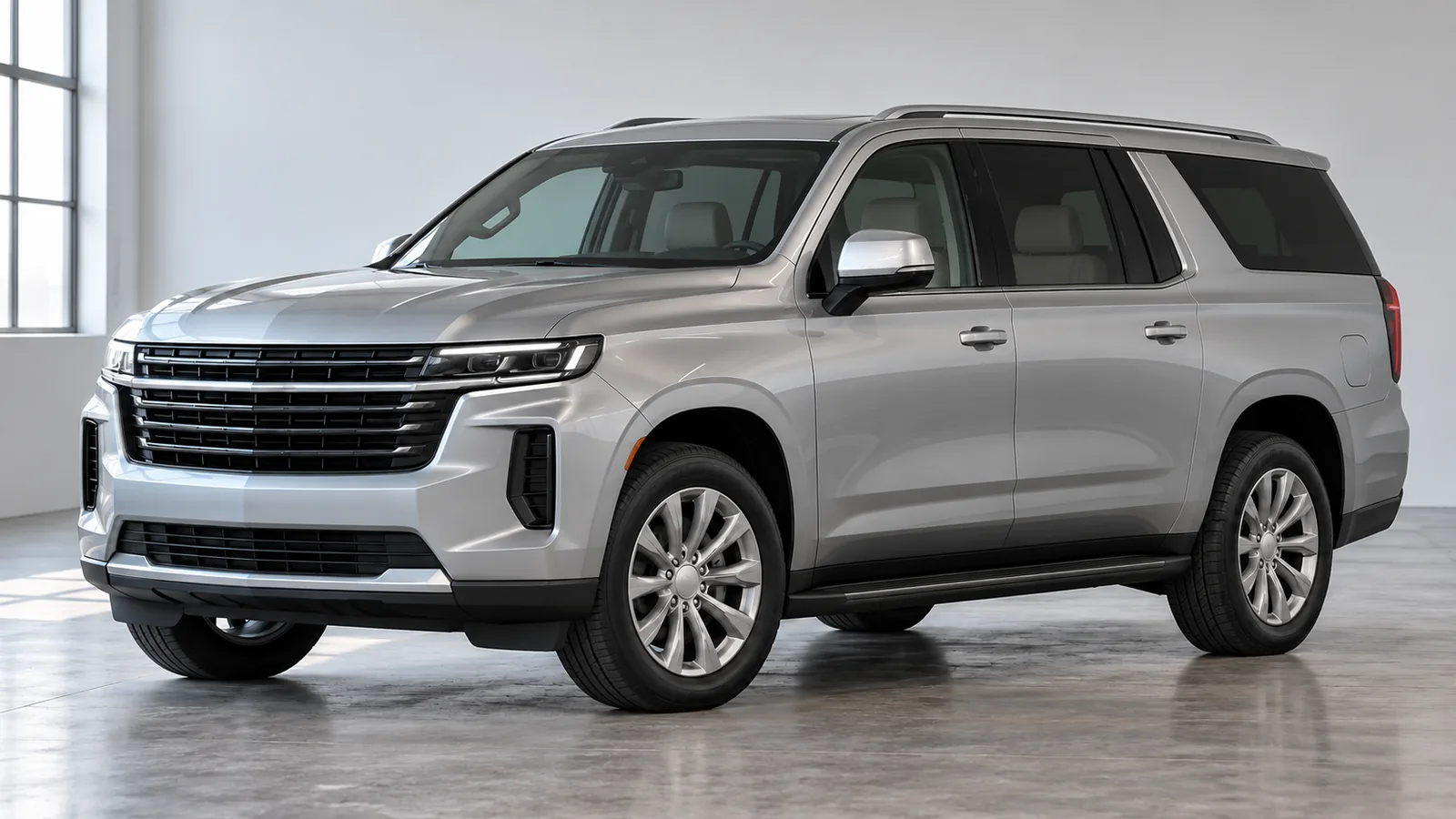
Cover illustration: an AI-generated generic unbranded SUV in a photography studio. It does not depict an actual GM model or an announced vehicle design.
GM Q3 2026 results: profit grew faster than revenue
The official results and financial highlights, pages 1–2, report the following for the three months ended 30 September. Amounts below are in US dollars.
| GM measure | Q3 2026 | Q3 2025 |
|---|---|---|
| Revenue | $50.015 billion | $48.591 billion |
| Net income attributable to stockholders | $3.335 billion | $1.327 billion |
| EBIT-adjusted | $4.106 billion | $3.376 billion |
| EBIT-adjusted margin | 8.2% | 6.9% |
GM reports revenue growth of 2.9% and EBIT-adjusted growth of 21.6%. EBIT-adjusted is an adjusted earnings measure; the net-income row is a separate measure. Comparing their labels matters as much as comparing their direction.
Our interpretation is that the quarter warrants attention to earnings quality alongside sales momentum. The summary figures alone cannot establish how much improvement came from a particular model, pricing decision or operating action. Assigning the entire increase to software would go beyond this evidence.
Product renewals remain central to the strategy
In her 20 October shareholder letter, CEO Mary Barra describes investment in new products and services, quality and operating efficiency. The pipeline includes the all-new 2027 Chevrolet Silverado and GMC Sierra light-duty pickups, followed by next-generation heavy-duty pickups, full-size SUVs and new Cadillac sedans and crossovers.
The market implication is a portfolio strategy: keep desirable vehicles coming while improving the business around them. Successful execution should be judged against deliveries, customer experience and subsequent results. A product pipeline, by itself, does not establish the eventual sales contribution of each vehicle.
Software expands the business beyond the initial sale
The same letter says GM is on track to approach $7.5 billion in software-and-services deferred revenue for full-year 2026. It expects Super Cruise penetration in its truck portfolio to grow four to five times in 2027, with the technology standard on high-end Silverado and Sierra trims and optional on most others.
Those are management expectations. The deferred-revenue figure should not be presented as profit already earned. For buyers, the practical lesson is to ask what is included at handover, what requires a subscription and what happens after any introductory access ends.
What Indian car buyers can take from the update
Use the strategy as a framework for evaluating ownership costs. Ask for the India-specific equipment list and written terms for any connected services on your shortlist. Confirm which features remain available without renewing a paid package, and assess the car's usefulness under that scenario.
GM also narrowed its full-year EBIT-adjusted guidance to $14.5–15.5 billion from $14–16 billion in the official results. This remains a forecast. Future results will provide a clearer test of whether product renewal, services and operating discipline sustain the improvement.
For your own purchase, check an indicative eligible amount and estimated EMI with AutoCred before shortlisting or visiting a dealer, then allow room for ongoing ownership costs. Results are indicative; final eligibility, rate, tenure and approval depend on the lender.