Nissan Tekton T160 vs T280: Manual and DCT Buyer Guide
The Nissan Tekton's engine choice also determines which gearboxes you can consider. The T160 is a manual proposition, while the T280 offers both manual and automatic options. That makes your driving routine a useful starting point before comparing equipment grades.
Nissan introduced the Tekton in India on 9 July 2026. This buying guide uses the brand's current India specifications, checked on 19 October, to explain the powertrain choices and the questions worth taking to a test drive.
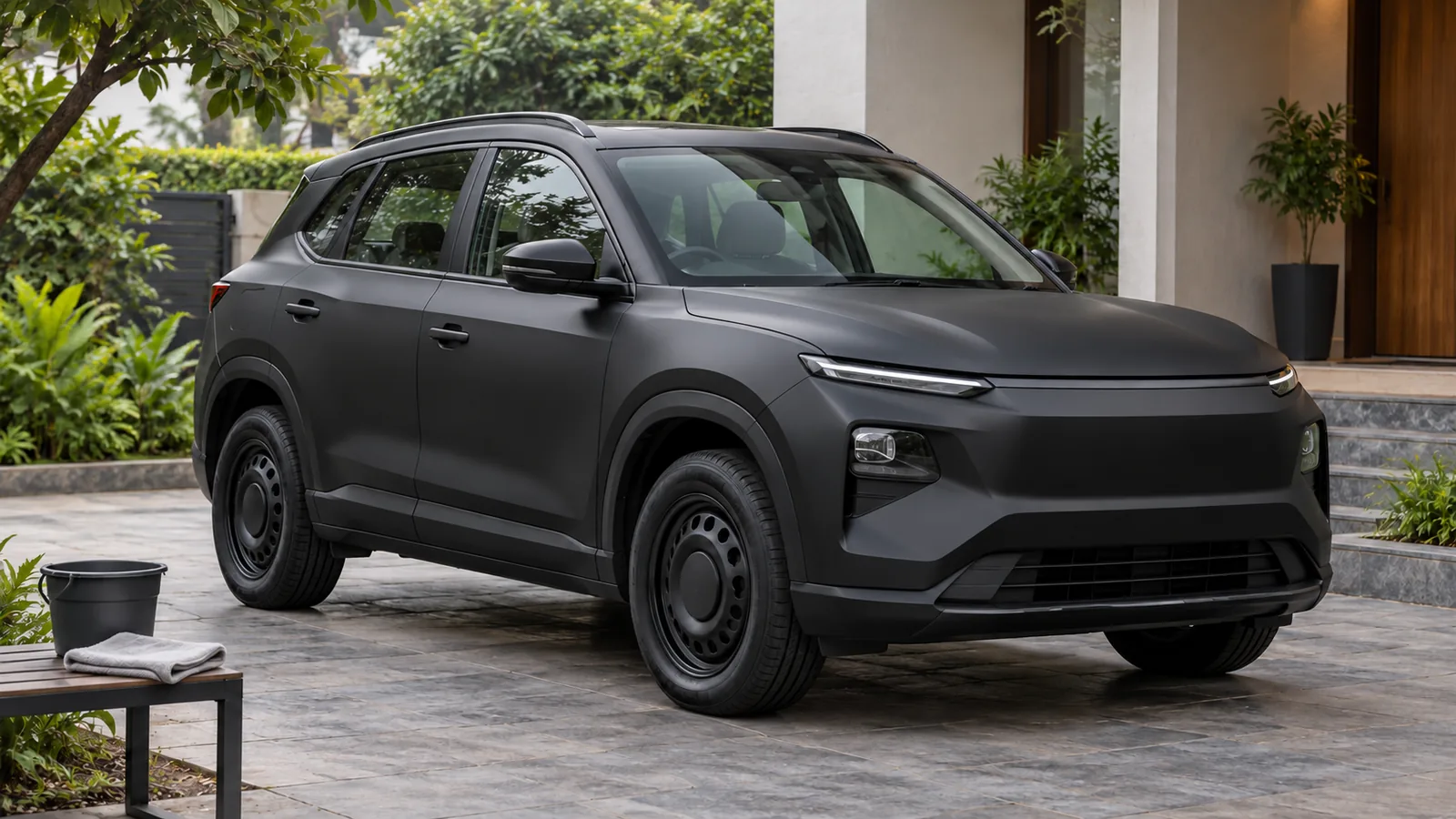
Cover: AI-generated illustration of a generic unbranded crossover on an Indian residential street.
Nissan Tekton T160 and T280 specifications compared
Nissan's India model page lists these turbo-petrol combinations:
| Powertrain | Engine | Maximum power | Maximum torque | Gearbox |
|---|---|---|---|---|
| T160 manual | 1.0-litre, three-cylinder | 100 PS | 166 Nm | 6-speed manual |
| T280 manual | 1.3-litre, four-cylinder | 163 PS | 280 Nm | 6-speed manual |
| T280 automatic | 1.3-litre, four-cylinder | 163 PS | 280 Nm | 6-speed wet-clutch DCT |
The T280's higher quoted output gives you a different specification to assess, but the figures do not replace a drive with your usual passenger load. The T160 badge also should not be read as an exact torque figure: the published maximum is 166 Nm.
When does the T160 manual deserve a test drive?
Start here if you are comfortable operating a clutch and want to establish whether the lower-output engine meets your needs. Ask to drive through the junctions, inclines and traffic conditions that resemble your regular use.
Check how easily you can move away, select gears and maintain progress with the air conditioning running. If the car will often carry family and luggage, discuss a representative demonstration with the dealer. These checks are more useful than assuming the smaller engine will either feel inadequate or suit everyone.
Should you choose the T280 manual or DCT?
Both T280 versions have the same published peak power and torque. Your preference for clutch operation, shifting and low-speed control therefore becomes central to the comparison.
Try the manual if you prefer choosing gears yourself. In the DCT, spend time on parking manoeuvres, moving away after a stop and gently changing speed in traffic. Ask the dealer to explain the recommended operating procedure from the owner's manual, including use on inclines.
Nissan identifies the automatic as a wet-clutch DCT with an electronic shifter and paddle shifters. Those descriptions identify the hardware and controls; they do not establish how comfortable you will find the car or predict long-term repair costs.
Compare the upgrade with your budget. Use AutoCred's eligibility checker to check an indicative eligible amount and estimated EMI before shortlisting or visiting a dealer. Results are indicative; final eligibility, rate, tenure and approval depend on the lender.
Compare the same equipment before comparing quotations
Ask for the exact engine, gearbox and equipment grade on each quotation. Moving from a manual to an automatic may also change the grade you are considering, so identify which part of the price difference pays for the transmission and which part pays for added equipment.
Check the current variant specification for the features you actually need, then request an itemised on-road quotation. Include insurance, registration, selected accessories and any maintenance or warranty package in the comparison. Obtain the package terms rather than treating an optional product as standard coverage.
A useful shortlist is the combination you find comfortable to drive, with equipment you will use and a complete cost you can assess. Keep the signed variant specification and delivery quotation alongside your test-drive notes before booking.
Plan the financing before the dealer visit. Check an indicative eligible amount and estimated EMI with AutoCred before finalising your shortlist or visiting a dealer. Results are indicative; final eligibility, rate, tenure and approval depend on the lender.