Maruti Suzuki’s Green Manufacturing Push: Hydrogen, Rail and Exports
Maruti Suzuki is expanding its manufacturing strategy beyond production volume. During September 2026, the company announced a green-hydrogen pilot at Manesar, a major rail-logistics milestone and more than one lakh cumulative exports of three India-made models to Japan. Read together, these developments show how India’s largest carmaker is working on energy use, dispatch efficiency and export scale at the same time.
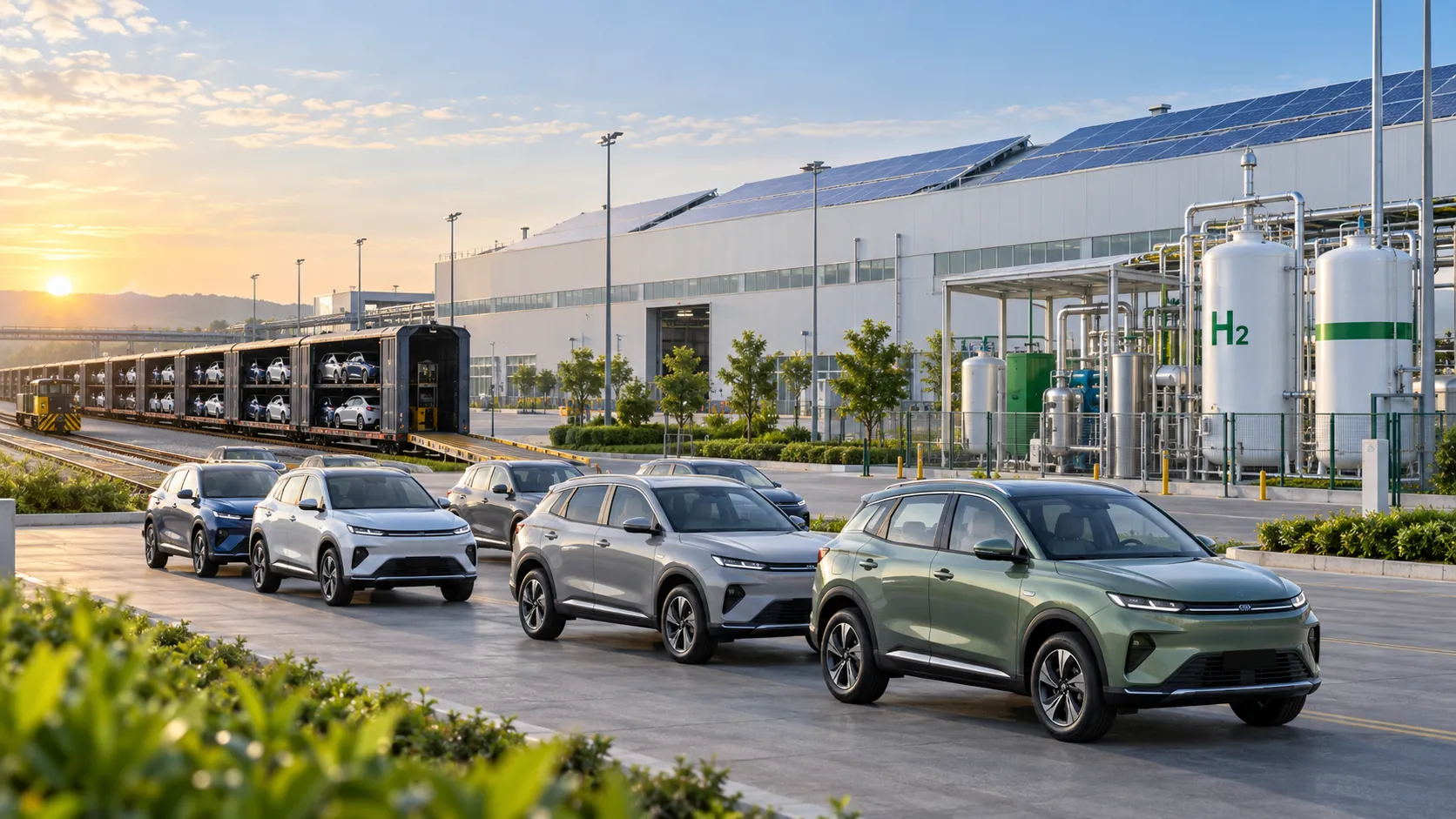
The newest step is a 300 kW green-hydrogen electrolyser commissioned as a pilot at the Manesar plant. Maruti Suzuki says the hydrogen will be blended with natural gas and used as process fuel in manufacturing. The company’s official 24 September 2026 announcement explains that surplus solar energy generated during holidays can produce hydrogen for storage and later use.
Why the 300 kW hydrogen pilot matters
This is a manufacturing trial rather than a hydrogen-powered passenger-car announcement. The immediate purpose is to test how green hydrogen can replace part of the natural gas used in plant processes. Maruti Suzuki says it will use the Manesar pilot to learn before considering wider adoption across its facilities in Haryana and Gujarat.
The company has set an aspiration to reduce manufacturing carbon emissions from 615,000 tonnes to 266,000 tonnes in FY 2030-31. Its green-hydrogen release also lists a 1 MWh battery energy-storage system already commissioned at Kharkhoda and a 10-tonne-per-day biogas plant planned there within FY 2026-27. These projects indicate a multi-technology approach: solar, storage, hydrogen and biogas each address a different part of plant energy demand.
Rail dispatch is becoming a larger part of the logistics network
Cleaner production is only one part of the operating model. Maruti Suzuki has also reported one million cumulative vehicle dispatches through its in-plant railway sidings at Hansalpur and Manesar. The official rail-logistics update attributes about 7.9 lakh vehicles to the Gujarat siding and around 2.1 lakh to Manesar.
The Gujarat siding began operating in March 2023 and the Manesar facility in June 2025. According to the company, these two in-plant terminals handled 70% of its rail-based dispatches in FY 2026-27 up to the announcement, while total rail dispatches crossed three lakh vehicles by 31 August. Loading vehicles inside the plant reduces the need to move them by truck to an external railway terminal, which can simplify handling as well as reduce road movement.
Maruti Suzuki says the share of vehicles dispatched by rail increased from 5% in FY 2014-15 to 26.5% in FY 2025-26. Its stated mid-term goal is 35% by FY 2030-31, supported by further rail infrastructure including an in-plant siding at Kharkhoda. That target is forward-looking, but the one-million-vehicle milestone shows that rail is already material to the company’s distribution system.
Exports add another reason to strengthen manufacturing
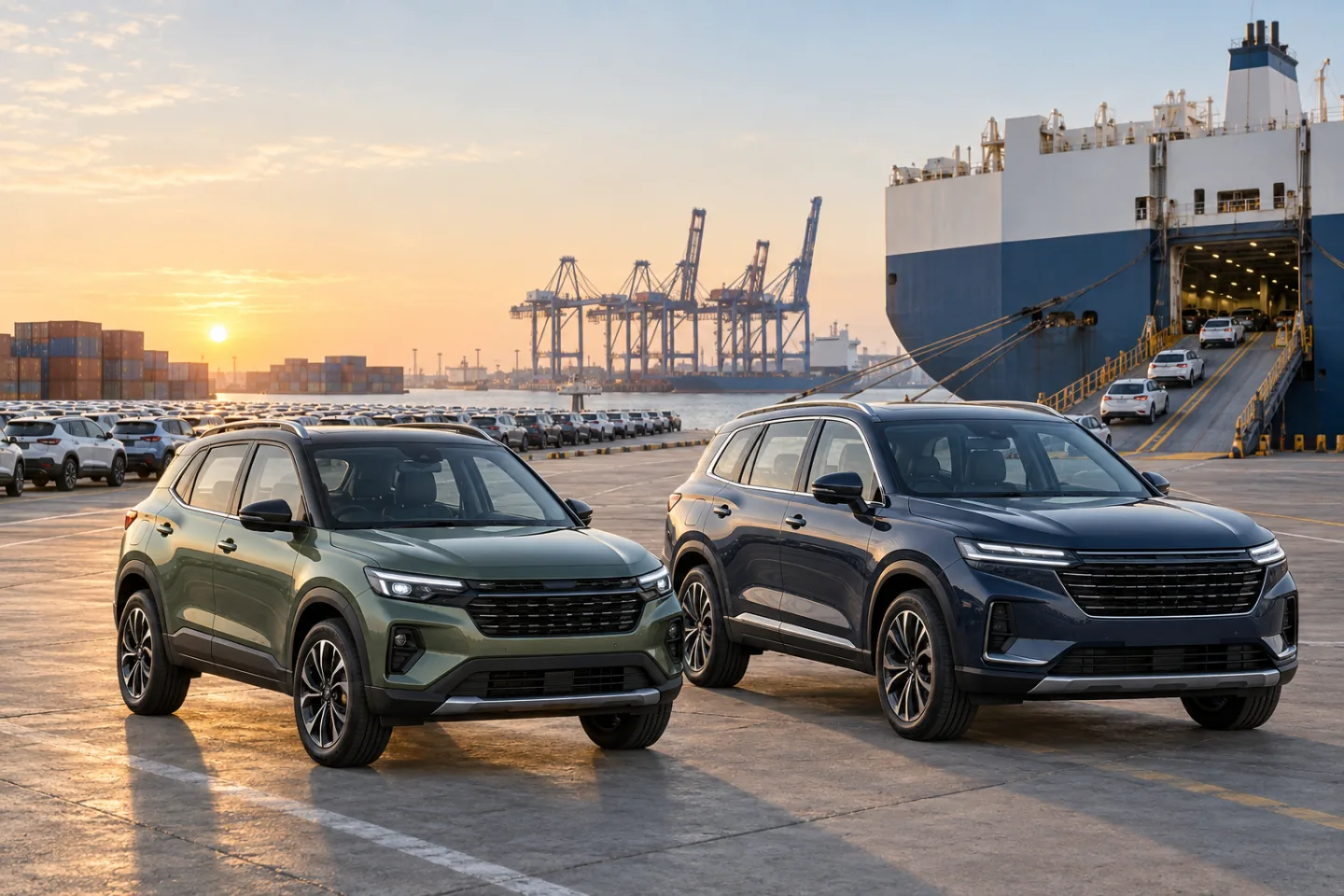
Maruti Suzuki’s September export update says combined shipments of the India-made Jimny 5-door, FRONX and e VITARA to Japan have crossed one lakh units. FRONX exports to Japan started in August 2024, followed by the Jimny 5-door in December 2024 and the e VITARA in September 2025. The company states that the Jimny 5-door and e VITARA are manufactured exclusively in India.
Japan was Maruti Suzuki’s second-largest export market by volume in FY 2025-26 and retained that position during April-August FY 2026-27. In the same period, the company exported more than 1.8 lakh vehicles across its international markets. Maruti Suzuki’s official export milestone announcement also cites SIAM data for a share of more than 50% of India’s passenger-vehicle exports during April-July FY 2026-27.
What this strategy means for Indian car buyers
Factory-energy and logistics investments do not automatically translate into lower showroom prices. Pricing still depends on input costs, product positioning, taxes, demand and company decisions. Their practical value for buyers is more indirect: a manufacturer with flexible energy sources, efficient dispatch infrastructure and a broad export base may be better equipped to manage production scale and move vehicles across markets.
Export acceptance can also provide a useful quality signal, but it does not mean that every export specification is available in India. Buyers should compare the exact Indian variant, safety equipment, warranty, delivery estimate and on-road price. The product on a dealer quotation—not the export model described in a corporate announcement—is the relevant basis for a purchase decision.
A practical way to use company-performance news
- Separate operational milestones from product announcements; the hydrogen plant does not introduce a new hydrogen car.
- Use export and logistics data to understand company direction, not to predict a guaranteed delivery date.
- Ask the dealer for an itemised on-road quotation and a written variant specification.
- Compare the down payment, EMI and total repayment before booking.
- Keep insurance, maintenance and registration costs outside the advertised ex-showroom price.
Check indicative eligibility before the dealer visit
If a new Maruti Suzuki model or another vehicle fits your shortlist, check your indicative eligible loan amount and estimated EMI with AutoCred before paying a booking amount. The result can help you set a practical vehicle budget and compare variants with a clearer monthly-cost estimate. Final eligibility, interest rate, tenure, documentation and approval remain subject to the lender’s verification and policy.
Primary sources: Maruti Suzuki green-hydrogen plant announcement; Maruti Suzuki rail-dispatch milestone; and Maruti Suzuki Japan export milestone. Accessed 28 September 2026.