Honda City ZX+ Petrol vs Hybrid: Boot and Brake Differences
Choosing between the Honda City ZX+ petrol CVT and ZX+ e:HEV involves more than comparing fuel-economy figures. Honda's current India brochure identifies differences in luggage presentation, rear brakes and parking controls that deserve attention during a showroom visit.
For a household using the car for both commuting and holidays, those details can be more useful than a long list of shared features. Start with the bags you carry and the controls you expect to use every day, then compare the complete purchase proposal.
Does the City's 506-litre boot figure apply to the hybrid?
Honda labels the petrol model's boot at 506 litres. On the same brochure page, it illustrates the e:HEV boot separately without assigning that figure to it. Do not carry the petrol capacity claim across to the hybrid.
Bring your usual cabin cases, a larger suitcase or a folded stroller to the showroom. Check whether the items pass through the opening and whether the lid closes without pressing on them. Try the combination you actually travel with; a promotional photograph is not a packing plan.
Also assess the loading lip and the effort needed to lift a heavy bag. Leave space for items you may need during a journey. Comparing the cars with identical luggage is more informative than guessing a hybrid capacity from an unrelated specification sheet.
ZX+ petrol CVT versus e:HEV: brake equipment
| Item | ZX+ petrol CVT | ZX+ e:HEV |
|---|---|---|
| Rear brakes | Drums | Discs |
| Parking brake | Mechanical operation | Electric parking brake |
| Automatic brake hold | Not listed | Listed |
These are equipment differences, not evidence of a measured stopping-distance advantage. Ask for a demonstration of the specific car's parking-brake and brake-hold operation, and read its owner's manual before relying on either feature. A familiar trim badge does not mean identical controls.
Before shortlisting either version or visiting a dealer, check your indicative eligible amount and estimated EMI. Results are indicative; final eligibility, rate, tenure and approval depend on the lender. Use that starting budget alongside the written vehicle quotation and expected ownership costs.
What should you compare on the test drive?
Honda also lists deceleration-selector paddles for battery regeneration on the e:HEV. Ask the demonstrator to explain their function rather than assuming every steering-wheel paddle serves the same purpose.
On a normal supervised drive, assess low-speed pedal feel, ease of positioning and how comfortably you can operate the controls. Have another regular driver repeat the exercise. Record your impressions separately from the equipment list: personal preference cannot be settled by a brochure tick.
Request quotations identifying the exact ZX+ powertrain and the equipment fitted to the offered car. Compare the full amount payable, insurance, accessories and lender terms. Without agreed purchase prices and realistic usage assumptions, a promised hybrid payback period would be speculation.
Once the luggage and driving checks are complete, review your indicative eligible amount and estimated EMI with AutoCred before final shortlisting or a dealer visit. Results are indicative; final eligibility, rate, tenure and approval depend on the lender.
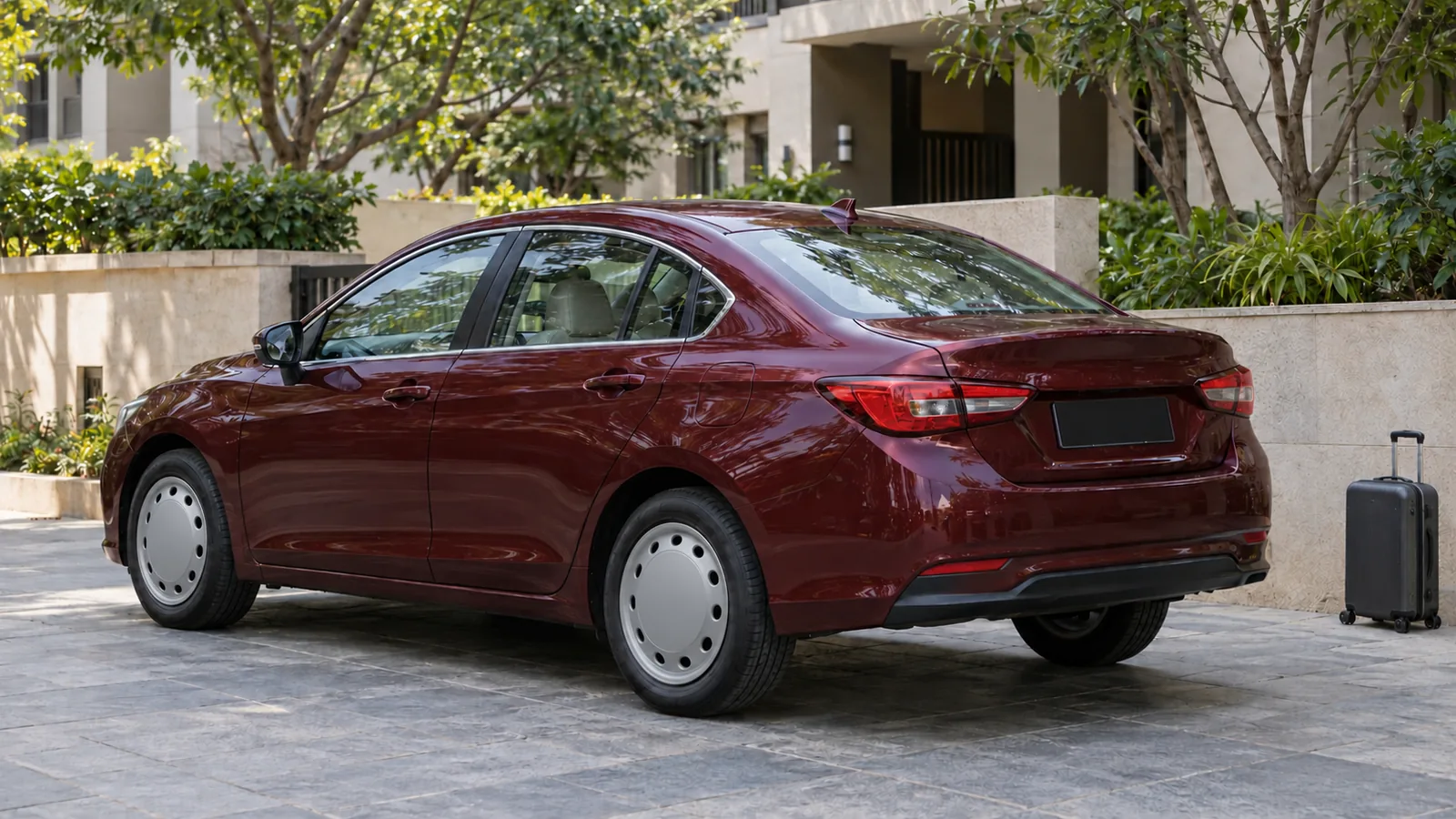
Cover: AI-generated illustration of a generic unbranded sedan and luggage in an Indian driveway; not an actual Honda City or an official vehicle design.