Tata Power Kanpur EV Charging: Why Highway and Hotel Sites Matter
The usefulness of an EV charging network depends on where drivers can stop and what they can do while the car charges. Tata Power's latest Kanpur installations offer a concrete example of a location-led expansion: a highway food court and a hotel. For the charging business, the opportunity is to serve different travel patterns. For prospective EV buyers, it is another reason to examine charging options along their own routes.
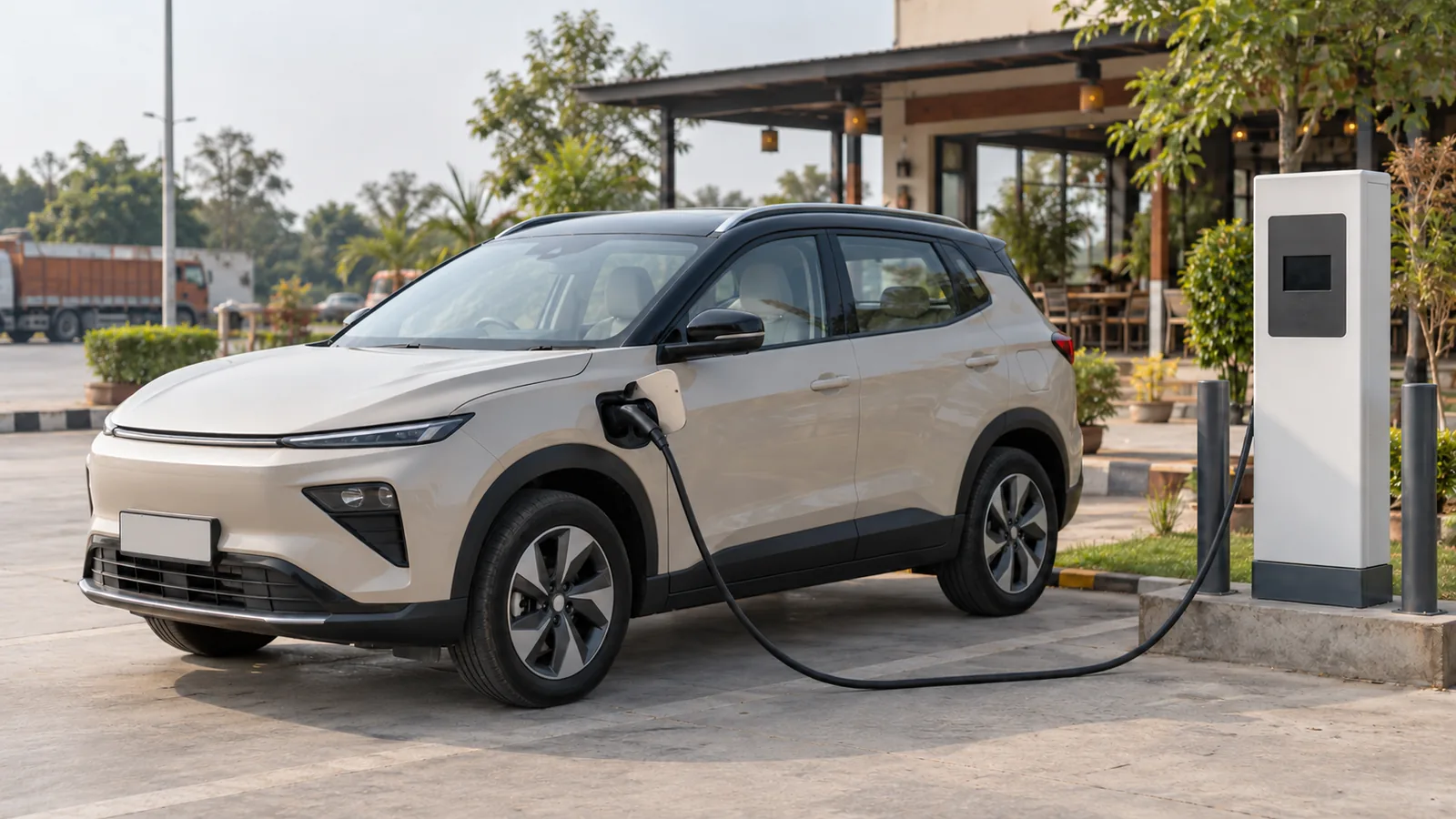
Cover image: AI-generated illustration of an unbranded EV at a generic roadside charging forecourt. It does not depict a Tata Power installation or an official vehicle model.
What Tata Power has added in Kanpur
In its 12 October 2026 announcement, Tata Power EV Charging Solutions confirms new charging facilities at Deepu Chauhan Food Court on NH 19 and Eternity, Kanpur – IHCL SeleQtions.
| Kanpur location | Announced installation |
|---|---|
| Deepu Chauhan Food Court, NH 19 | Two 60 kW EV chargers |
| Eternity, Kanpur – IHCL SeleQtions | One 60 kW EV charger |
The official release identifies NH 19 as a Delhi–Varanasi corridor and describes the installations as serving local users and intercity travellers.
Why the two types of destination serve different needs
AutoCred analysis: a highway food stop can combine a charging break with an activity travellers already intend to undertake. Food, restrooms and a suitable place to wait can influence whether drivers consider a stop practical. Access from the intended direction of travel also matters when deciding whether to use it.
A hotel can serve a different pattern: guests or visitors may already plan to spend time at the property. Charging can become an additional service attached to that visit. The practical benefit still depends on who may enter, when the charger is accessible and whether parking conditions suit the customer.
For the operator and its location partners, these are different demand opportunities. Their value should be assessed through actual usage and customer experience, rather than assuming that every installed charger will attract the same level of demand.
Measure commercial performance beyond the installation count
Useful operating measures would include energy delivered, completed charging sessions, successful starts and availability when customers arrive. The length and predictability of queues would also help explain whether the site is meeting demand comfortably.
Location partners could examine whether charging customers use the property's other services and whether the parking arrangement causes conflicts. These are measures to track as the facilities operate; the installation announcement itself does not establish a measured increase in car sales or customer spending.
How an EV buyer can assess the new stops
Check the operator's current station information before making a journey. Confirm connector compatibility with your car, operating hours, entry conditions, payment arrangements and the applicable tariff. A hotel's access rules may differ from those of a roadside food court, so clarify the arrangement rather than assuming both work identically.
Plan an alternative stop and a comfortable energy reserve. Ask the dealer to explain how your shortlisted car charges and which conditions affect its charging behaviour. Do not turn the charger's advertised power rating into a promised stop duration without vehicle-specific information.
For a purchase decision, map a normal working week and the longer trips you expect to make. Consider home or workplace charging separately from occasional highway stops. The goal is a workable ownership routine that fits your actual travel, supported by clear vehicle and charging costs.
Bring the ownership plan into your finance comparison. Check your indicative eligible amount and estimated EMI with AutoCred before shortlisting or visiting a dealer. Results are indicative; final eligibility, rate, tenure and approval depend on the lender. Compare the estimate with the final on-road quotation and the lender's written offer.