Stellantis India Targets 160% Output Growth at Thiruvallur Plant
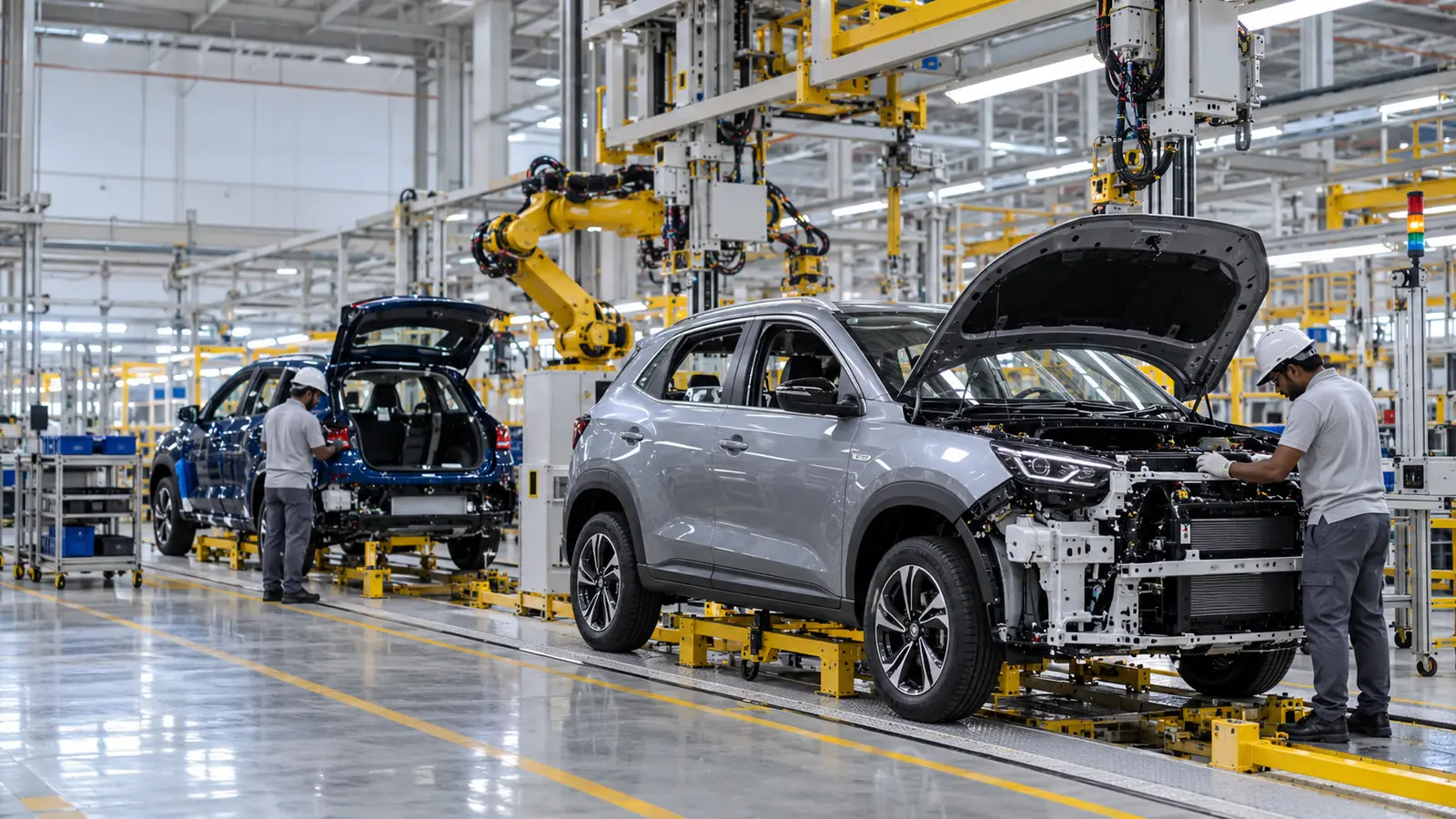
Stellantis has taken full ownership of its vehicle manufacturing operation in Thiruvallur, Tamil Nadu, and has set a clear production target for the plant. The company plans to increase annual output from 16,000 vehicles in 2026 to more than 43,000 by 2028, an expansion it describes as exceeding 160%.
The change follows Stellantis India’s acquisition of the remaining stake in Stellantis Automobiles India Private Limited from Hindustan Motor Finance Corporation, a CK Birla Group company. According to the official announcement dated 21 September 2026, the transaction was funded through foreign direct investment and gives Stellantis full control of the Thiruvallur company and manufacturing operations.
What full ownership changes for Stellantis India
Stellantis says a fully owned structure will allow deeper operational integration, faster decision-making and greater flexibility. The company and CK Birla Group first entered the manufacturing partnership in 2017, while vehicle assembly at Thiruvallur began in 2021. The latest transaction simplifies that structure as Stellantis prepares to scale production and exports.
For the business, this can shorten the path between product planning, investment decisions, supplier coordination and factory execution. It does not automatically guarantee new launches, lower vehicle prices or shorter waiting periods. Those customer outcomes will depend on how quickly the planned investment and production ramp translate into model allocation, components, dealer supply and demand.
Production is planned to rise from 16,000 to over 43,000 units
The most concrete measure of the plan is annual output. Stellantis is targeting more than 43,000 vehicles in 2028, compared with 16,000 in 2026. The company release characterises this as an increase of more than 160% over two years.
That target implies a substantial increase in utilisation and manufacturing activity, but it is a forward-looking plan rather than a completed sales result. Production can support domestic dispatches, exports or both, and the mix may change with market demand. Future performance should therefore be assessed through actual plant output, wholesale data, exports and retail availability rather than the target alone.
Which cars are built at the Thiruvallur plant?
The Thiruvallur facility currently manufactures the Citroën C3, ë-C3, C3 Aircross and Basalt. Stellantis reports localisation of more than 95% at the plant. These model and localisation details are included in the full-ownership announcement.
High localisation can support supply continuity, parts availability and cost control because more of the vehicle’s value chain sits close to production. Buyers should still compare the actual on-road price, warranty, service reach and spare-parts quotations for a specific model. A localisation percentage by itself does not confirm the final ownership cost or resale value.
India’s role extends beyond domestic production
Stellantis says Thiruvallur currently serves eight export markets across four continents. An earlier official plant update from 23 April 2026 linked vehicles produced on the Smart Car platform with markets in Latin America, the Middle East and Africa, and marked the rollout of the plant’s 50,000th vehicle.
Exports matter because they can spread the fixed cost of tooling, engineering and supplier development over more vehicles. A factory serving several regions can also become more important within a global production network. At the same time, export demand can compete with domestic allocation, so the buyer-facing measure will be whether Indian dealers receive enough of the variants customers actually want.
Investment and workforce expansion
Stellantis states that it has invested more than €1 billion in India across manufacturing, product development, localisation and capability building. In the same announcement, the company’s India leadership described investment as close to ₹11,000 crore. These figures cover the wider India ecosystem and should not be read as an amount committed solely to the Thiruvallur plant.
The direct workforce at Thiruvallur is projected to more than double from 610 employees in 2026 as output expands, according to the September release. Stellantis also expects additional indirect employment across suppliers and logistics. Delivery against this projection can be monitored through future company disclosures and local hiring rather than assumed in advance.
How the plan could improve market performance
Stellantis identifies four priorities for the next phase: new-product investment, greater manufacturing capacity, stronger export competitiveness and deeper localisation. Together, these actions address several challenges faced by a smaller automotive player in India. A broader product pipeline can attract more customer segments, while higher production and exports can improve scale.
Deeper localisation may also make it easier to respond to market changes and source components closer to the factory. Faster decision-making under full ownership could help the company align model configurations and production schedules with demand. The result will still depend on product relevance, pricing, dealer reach, after-sales support and the pace at which announced plans reach showrooms.
What this could mean for Citroën customers
For customers, the most useful potential benefits are steadier availability, a wider choice of locally produced variants and improved parts supply. None of these is promised as an immediate consequence of the ownership change, so buyers should check current waiting periods and service support directly with authorised dealers.
The plant already builds petrol and electric models across different body styles. If production grows as planned, Stellantis will have more room to balance domestic demand and export commitments. Buyers should watch for official model announcements, capacity milestones and dealer-stock trends rather than relying on unofficial product rumours.
What the announcement does not confirm
The official release does not announce a new model, an India launch date, additional factory capacity in units beyond the 2028 output target, or any price reduction. It also does not provide a domestic-versus-export split for the planned 43,000-plus vehicles. Those details may become clearer as Stellantis publishes future product and operating updates.
It is also important to distinguish production from retail sales. A vehicle can be assembled for export, dealer inventory or later delivery. The strongest evidence of improved Indian market performance will therefore combine production data with registrations, dealer expansion, after-sales indicators and customer demand.
Key indicators to watch through 2028
- Annual output at Thiruvallur compared with the stated 16,000-to-43,000-plus target.
- The share of production allocated to India and the eight existing export markets.
- New locally produced models or variants officially assigned to the plant.
- Changes in dealer stock, waiting periods, parts availability and service coverage.
- Workforce growth from the 610 direct employees reported for 2026.
- Further localisation and supplier investments around Tamil Nadu.
Why the Thiruvallur plan matters
The ownership transaction gives Stellantis a simpler operating structure at a time when it wants India to play a larger role in manufacturing, engineering and exports. A planned increase of more than 160% in annual output is a material target for the facility, and the existing export footprint gives the plant more than one route to scale.
Execution will determine the impact. Buyers and market observers should look for evidence in production, product availability and service support over the next two years. If the company turns capacity and localisation into competitive vehicles with dependable ownership support, Thiruvallur can become a stronger base for both domestic growth and exports.
Check indicative eligibility before selecting a car
When comparing a Citroën or any other new car, check your indicative eligible loan amount and estimated EMI with AutoCred before choosing a variant or paying a booking amount. This can help keep the on-road price, down payment and monthly commitments aligned. Results are indicative; final eligibility, interest rate, tenure, documentation and approval remain subject to the lender’s verification and policy.
Primary sources: Stellantis India — full ownership of Thiruvallur manufacturing operation, 21 September 2026; Stellantis India — 50,000th Smart Car platform vehicle, 23 April 2026. Accessed 30 September 2026.