SIAM Q2 FY2027: UVs Take 68% Share as Passenger Cars Also Grow
Utility vehicles dominate India's passenger-vehicle mix, but the latest SIAM release also shows growth in passenger cars. For a buyer, the useful takeaway is to distinguish what the market prefers from what a household needs. A popular body style does not automatically offer the best combination of access, luggage space, parking convenience and ownership cost.
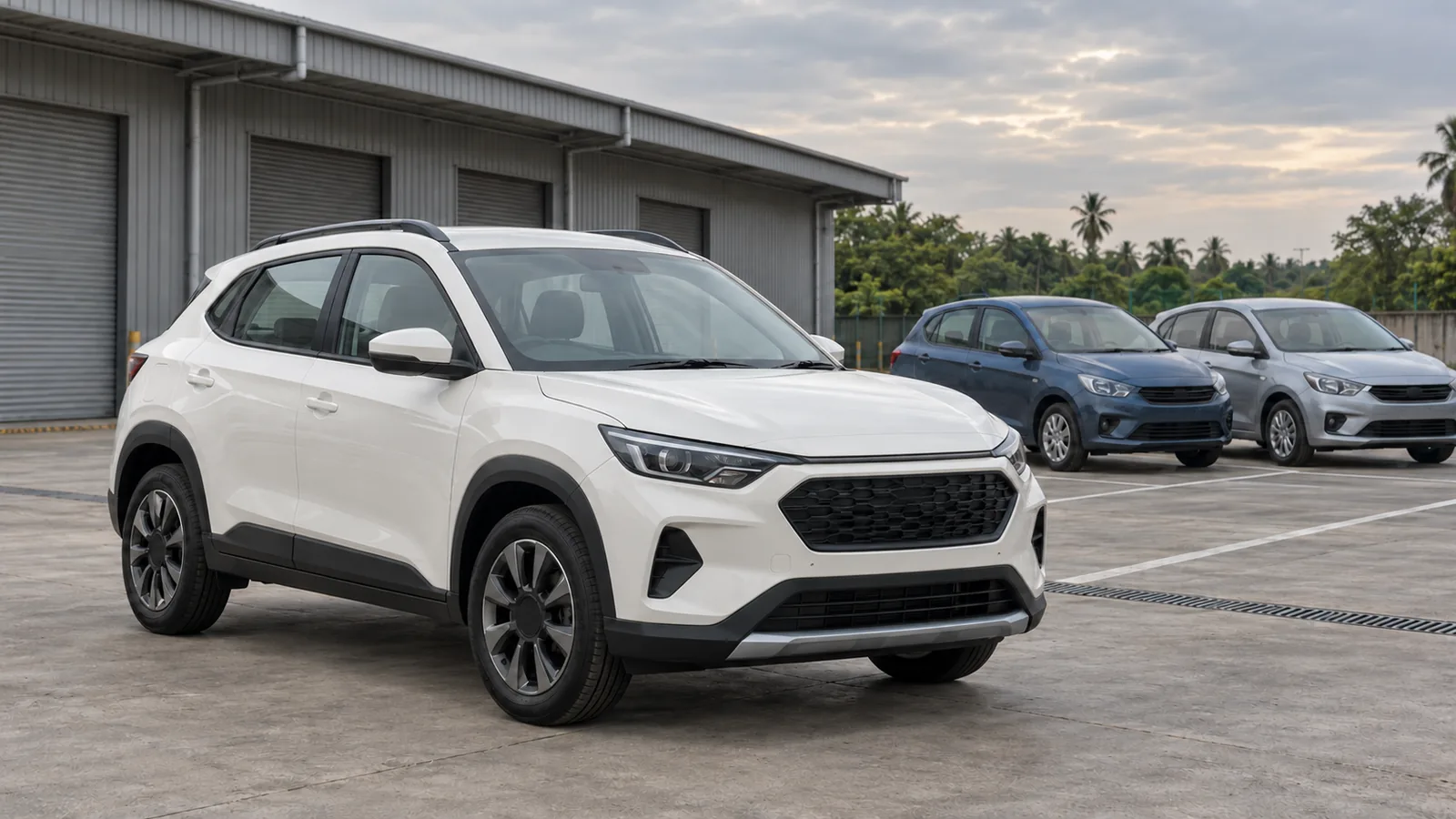
Cover image: AI-generated illustration of generic unbranded vehicles in a dispatch setting. It does not show a specific manufacturer, dealership or SIAM facility.
What SIAM's latest quarterly figures show
In its 15 October 2026 Q2 FY2027 release, SIAM reported domestic passenger-vehicle sales of 13,60,687 units for July–September 2026, up 30.7% year on year. Utility vehicles accounted for 68% of the passenger-vehicle mix. UV sales increased 34.2%, while the passenger-car sub-segment grew 24.9%.
The same SIAM release and its coverage notes reported quarterly passenger-vehicle exports of 2.29 lakh units, down 5.2%. It states that BMW, Mercedes, JLR and Volvo Auto data were unavailable for the quarterly passenger-vehicle series. Keep that coverage limitation alongside the headline figures when comparing other datasets.
Growth in UVs does not make passenger cars irrelevant
The contrast between market share and growth is the central point. A category can account for a smaller portion of sales while still attracting more buyers than it did in the comparison period. Reading only the leading category's share can hide that distinction.
For manufacturers, a large UV mix makes product positioning and the availability of the right configurations important commercial questions. However, this release cannot establish which individual model is profitable, which variant has the strongest order book or which factory needs more capacity. Those conclusions require separate company evidence.
Why wholesale sales and a dealer's availability differ
Read SIAM's manufacturer sales series separately from individual customer registrations and dealer stock. Vehicles moving through the distribution chain and vehicles being delivered to households describe different stages of the market. A national sales total cannot tell you whether your preferred colour, engine and transmission are available in your city.
Ask dealers for a written delivery estimate tied to the exact configuration. If an immediately available vehicle differs from your original choice, compare its equipment and complete quotation before accepting it. Strong industry sales are not a reason to skip the checks you would make in a quieter market.
Use the body style as a starting point, not the decision
Begin with the parking space, passengers and luggage the car must accommodate. During a test drive, assess visibility, getting into the seats and how confidently you can place the vehicle in narrow streets. Try the luggage you actually use instead of judging practicality from the exterior shape.
Compare complete ownership proposals across the shortlisted cars. Separate the vehicle price, insurance, registration, accessories and any service package. Then review the proposed finance tenure, monthly payment and total repayment together. A persuasive sales trend does not resolve those household-level trade-offs.
What to watch after this strong quarter
A useful follow-up is whether future manufacturer releases report sustained demand across product lines and whether dealers can fulfil the configurations customers want. Export performance should be assessed separately from domestic sales, because strength in one channel does not automatically offset weakness in another. Neither series alone predicts a particular car's resale value.
Build a manageable shortlist. Check car-loan eligibility with AutoCred to see an indicative eligible amount and estimated EMI before shortlisting or visiting a dealer. Results are indicative; final eligibility, rate, tenure and approval depend on the lender.