Renault India Engineering Strategy: What IIT Kanpur Testing Adds
Renault's India strategy includes a less visible step than a showroom launch: giving its engineers access to specialised local testing. Its partnership with IIT Kanpur offers a concrete way to assess vehicle aerodynamics and wind noise, two areas that matter when a car moves from a presentation to everyday use.
The partnership is an earlier announced engineering initiative, revisited here alongside the latest available domestic sales report. It should be judged as a development capability, rather than presented as proof of a measured improvement in every Renault now on sale.
What Renault's IIT Kanpur agreement covers
Renault's 10 July 2026 official announcement says it will use IIT Kanpur's National Wind Tunnel Facility for aerodynamic and wind-noise testing of passenger vehicles. The collaboration is intended to validate vehicle characteristics against engineering targets and support product development. It also establishes a framework for commercial engagement, intellectual property and confidentiality.
In its September sales release, dated 1 October 2026, Renault reports 3,399 domestic wholesales for the month and 35,378 for January–September, with the latter up 36.6% year on year. These dispatch figures provide business context; they do not demonstrate that the testing partnership caused the increase.
Why local engineering access is a concrete strategy action
The important point is the defined testing activity. Access to a specialised facility gives an engineering team a way to investigate particular characteristics instead of relying only on broad product-positioning language. The agreement identifies what will be tested, but does not publish a model-by-model result.
Our interpretation is that this strengthens Renault's development toolkit in India. Whether it improves a specific future vehicle depends on the work performed, the engineering decisions that follow and the product ultimately delivered. That remains a separate question from signing the agreement.
Wind-noise testing is not a cabin-comfort guarantee
A controlled assessment examines a defined condition. A buyer experiences the complete vehicle on a particular road, with tyres, traffic, weather and a chosen seating position all part of the journey. Do not turn the existence of a wind tunnel into an unsupported claim that a car is silent or more efficient than a rival.
During a test drive, listen from the seat you will normally use. Try familiar routes and compare cars under similar conditions where possible. Assess whether conversations are comfortable and whether the sounds you hear become tiring. Your own experience answers a different question from a development announcement.
Keep the engineering comparison connected to the purchase budget: AutoCred's eligibility checker helps you check an indicative eligible amount and estimated EMI before shortlisting or visiting a dealer. Results are indicative; final eligibility, rate, tenure and approval depend on the lender. Use the quoted grade and full on-road amount when planning the finance.
Read capability and commercial performance separately
The sales report records vehicles dispatched; the partnership describes a capability Renault intends to use. They belong in the same broader strategy discussion, but should not be treated as a proven cause-and-effect relationship.
Useful evidence of an engineering outcome would include a defined result for an identified model, with its testing conditions and comparison explained. Until such evidence is published, the partnership supports a discussion of process and intent rather than a numerical fuel-saving or noise-reduction claim.
What a buyer should take away
Renault's agreement is worth noticing because it links the company's India plans to a specific engineering resource. For a purchase, however, shortlist the actual model and grade, review the specification, assess comfort and confirm ownership support.
Ask for the relevant warranty and service documents alongside the itemised quotation. A strong development story is useful context, while the right vehicle still has to meet your practical needs and fit the complete budget.
Before the showroom visit, check your indicative eligible amount and estimated EMI with AutoCred. Results are indicative; final eligibility, rate, tenure and approval depend on the lender.
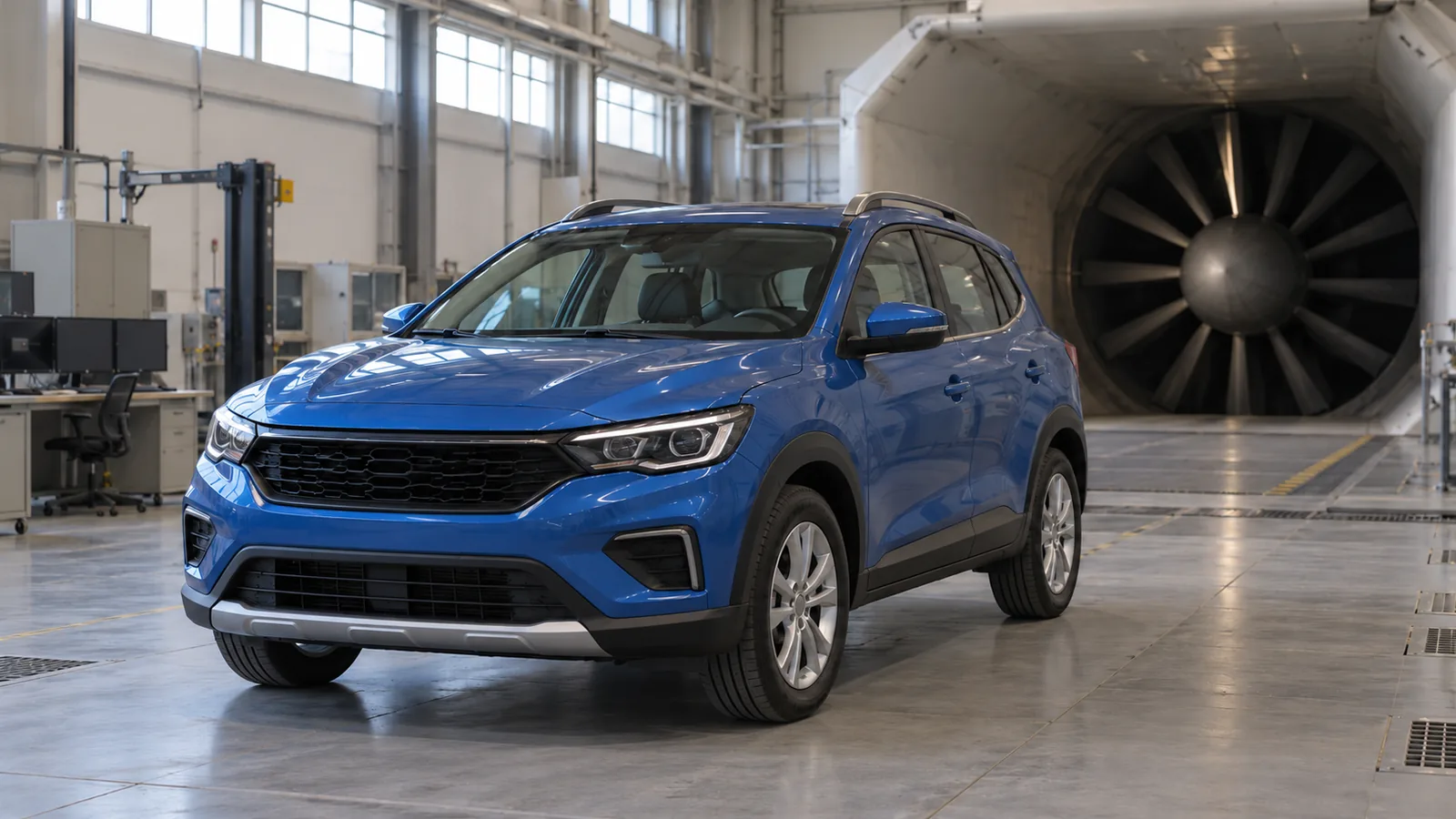
Cover image: AI-generated illustration of a generic unbranded crossover in an automotive research workshop. It does not depict Renault's facilities or IIT Kanpur's actual wind tunnel.