Maruti Suzuki September 2026 Sales: SUVs Jump 62%, Exports Rise
Maruti Suzuki sold 2,36,013 vehicles in September 2026, compared with 1,89,665 in the same month of 2025. That is an increase of about 24.4%, calculated from the manufacturer's published figures. The result was supported by stronger domestic passenger-vehicle volume, a sharp rise in utility vehicles and a new monthly export total of 44,219 units.
The numbers come from Maruti Suzuki's official September 2026 sales release and its detailed category table, both dated 1 October 2026. These are company-reported sales or dispatch figures, not retail-registration data, so they should be used to understand supply and business mix rather than as a direct measure of customer registrations.
Maruti Suzuki September 2026 sales at a glance
| Category | September 2026 | September 2025 | Calculated change |
|---|---|---|---|
| Passenger cars | 91,887 | 74,090 | About +24.0% |
| Utility vehicles | 78,911 | 48,695 | About +62.1% |
| Vans | 11,040 | 10,035 | About +10.0% |
| Total domestic passenger vehicles | 1,81,838 | 1,32,820 | About +36.9% |
| Exports | 44,219 | 42,204 | About +4.8% |
| Total sales | 2,36,013 | 1,89,665 | About +24.4% |
The percentage changes above are AutoCred calculations from the raw volumes in Maruti Suzuki's release. The company itself reports the category totals without publishing percentage changes in the table.
Utility vehicles produced the largest volume gain
Utility-vehicle sales rose by 30,216 units year on year, from 48,695 to 78,911. This category includes the Brezza, Ertiga, e VITARA, Fronx, Grand Vitara, Invicto, Jimny, Victoris and XL6 in the official table. The category's approximately 62.1% growth was the strongest among Maruti's three domestic passenger-vehicle groups.
The result signals a substantial shift in Maruti Suzuki's mix toward SUVs, MPVs and crossover-style vehicles. It does not reveal model-wise contribution, so the data cannot show how much of the increase came from a single nameplate or whether every listed model grew. Registration data and model-level disclosures would be required for that conclusion.
Passenger cars also grew despite the SUV shift
The passenger-car group rose from 74,090 units to 91,887, an increase of 17,797 units or about 24%. Maruti places the Alto, Baleno, Celerio, Ciaz, Dzire, Ignis, S-Presso, Swift and WagonR in this combined mini, compact and mid-size category.
This matters because the September increase was not exclusively an SUV story. Passenger cars still contributed the largest single category total in the month. However, the combined classification hides differences between entry hatchbacks, premium hatchbacks and the sedan models, so it should not be used to claim that every small-car subsegment expanded equally.
Domestic passenger-vehicle volume rose by nearly 37%
Combining passenger cars, utility vehicles and the Eeco van, Maruti Suzuki reported 1,81,838 domestic passenger vehicles in September 2026, up from 1,32,820 a year earlier. The 49,018-unit increase translates to approximately 36.9% growth.
For buyers, a higher national supply figure can mean more vehicles moving into the dealer network, but availability remains model-, variant-, colour- and city-specific. A strong dispatch month does not guarantee that the configuration you want is in local stock. Request the manufacturing month, vehicle identification number and delivery commitment in writing before paying the full amount.
Exports reached 44,219 units
Maruti Suzuki exported 44,219 vehicles during September, compared with 42,204 in the year-earlier month, an increase of about 4.8%. Exports represented roughly 18.7% of the company's total September volume, based on the published totals.
The export contribution shows that Maruti's production system serves markets beyond India, which can support factory scale and model programmes. It can also affect production allocation, but the release does not disclose destination markets or model-wise export volume. Domestic availability should therefore be checked directly rather than inferred from the export figure.
Sales to other manufacturers declined
Sales to other original-equipment manufacturers were 6,542 units, down from 11,750 in September 2025. That is a reduction of 5,208 units, or approximately 44.3%. Because Maruti does not identify the models or partners in this table, the number should be treated as a separate supply channel rather than added to retail demand.
The decline was more than offset by the rise in Maruti's own domestic passenger vehicles and exports, allowing total volume to increase. It also shows why the headline 24.4% growth needs a category breakdown: different parts of the business moved in different directions.
April-to-September figures show the trend is broader than one month
Total sales for April through September FY2026-27 reached 13,79,378 units, compared with 10,78,735 in the corresponding period of FY2025-26. That is an increase of 3,00,643 units, or approximately 27.9%.
Domestic passenger vehicles rose from 7,95,446 to 10,80,240 over the same period. Within that total, utility vehicles increased from 3,17,379 to 4,55,692, while passenger cars rose from 4,11,801 to 5,51,094. Exports increased from 2,07,459 to 2,32,855. Each figure comes from the official April-to-September comparison.
The six-month view reduces the risk of over-reading a single festive-period month. It indicates that the higher run rate was sustained across domestic passenger vehicles and exports, although it still does not show dealer inventory, retail registrations or profitability.
What the changing mix means for Maruti Suzuki
The September figures show a company benefiting from both its traditional passenger-car base and a larger utility-vehicle portfolio. Passenger cars delivered 91,887 units, but utility vehicles closed much of the gap at 78,911 after growing far faster year on year. That mix can help Maruti participate more fully in India's preference for SUVs and MPVs without abandoning high-volume hatchbacks and sedans.
The company also retained a meaningful export channel and grew domestic light-commercial-vehicle sales. Super Carry volume rose from 2,891 to 3,414 units, while the Eeco van increased from 10,035 to 11,040. These smaller businesses broaden the operating base even though passenger vehicles dominate the total.
What Indian car buyers should check now
- Confirm actual dealer stock for the exact variant, transmission and colour.
- Ask whether a quoted vehicle is newly produced or older inventory.
- Compare written on-road prices rather than advertised ex-showroom starting prices.
- Separate factory-fitted features from dealer accessories and optional packs.
- Verify the waiting period and cancellation terms on the booking form.
- Do not treat company dispatch numbers as proof of a discount or immediate delivery.
- Check insurance, warranty, service-plan and finance costs for the exact model.
Maruti Suzuki September 2026 sales: the takeaway
Maruti Suzuki's September performance was broad-based. Total sales rose about 24.4%, domestic passenger vehicles increased nearly 37%, utility vehicles climbed approximately 62%, and exports edged higher to 44,219 units. The six-month data confirms that the higher volumes extend beyond one month.
For customers, the most practical implication is potentially stronger channel supply across a wide portfolio, but local stock and transaction prices still require direct verification. Before shortlisting a Maruti Suzuki or a competing car, check an indicative eligible loan amount and estimated EMI with AutoCred. Results are indicative; final eligibility, interest rate, tenure, documentation and approval remain subject to the lender's verification and policy.
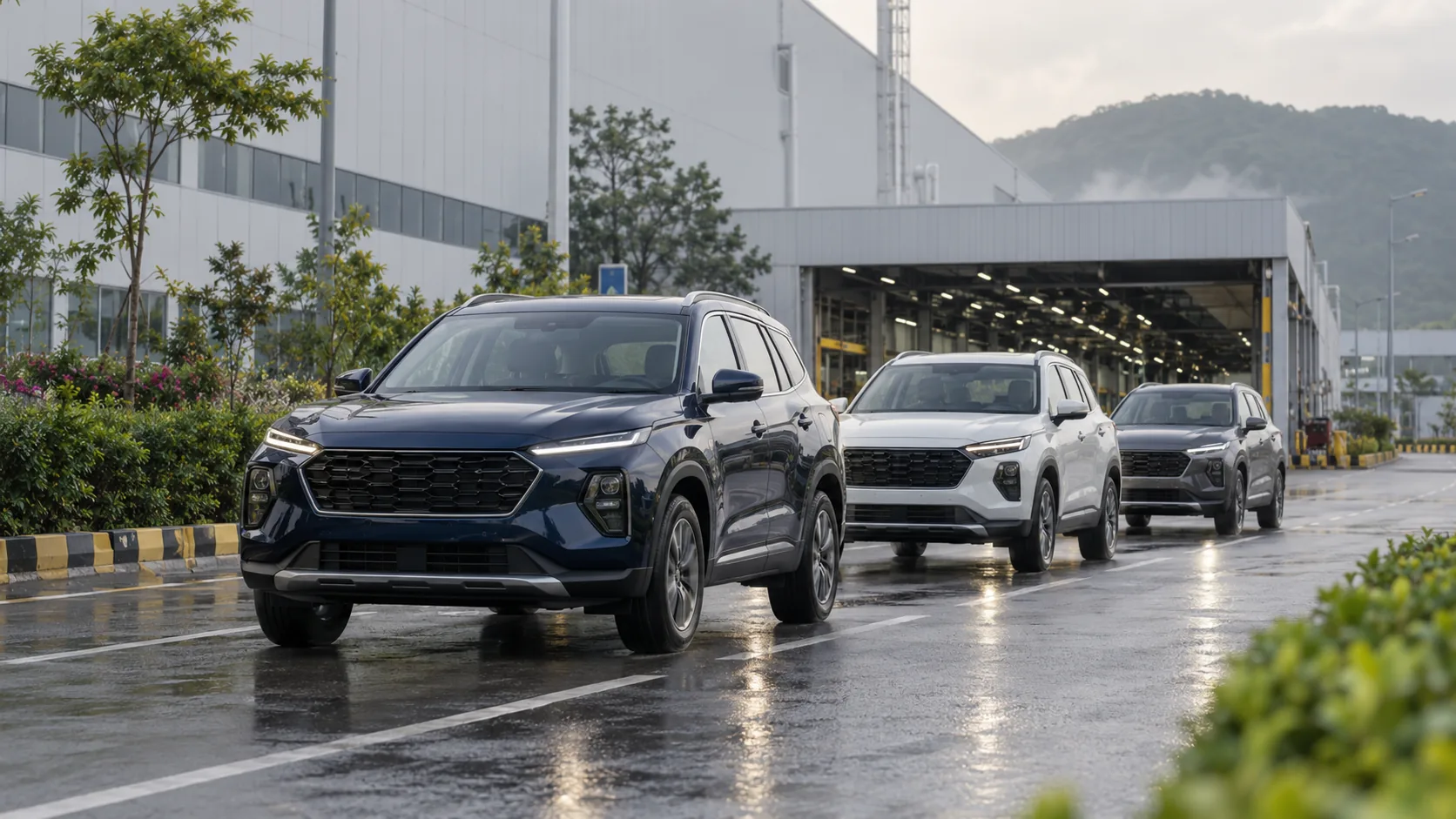
Primary sources: Maruti Suzuki India — September 2026 sales release; Maruti Suzuki India — detailed September and April-to-September 2026 sales table. Published 1 October 2026 and accessed 2 October 2026. Calculated percentages are derived from the manufacturer-published raw figures. The cover image is an illustrative depiction of generic unbranded vehicles and does not show official Maruti Suzuki models.