Landmark Cars’ Q2 Call: EV Mix and Aftersales Shape Dealer Growth
Landmark Cars’ earnings-call transcript, filed with the exchanges on November 20, puts two parts of dealer economics in focus: new-energy vehicle sales and after-sales service. Management said new-energy vehicles made up nearly 29% of vehicles it sold in Q2 FY2026–27, and that after-sales revenue per service crossed ₹30,000 during the quarter. These are company-reported figures, not an industry-wide benchmark. Read the exchange-filed transcript of Landmark Cars’ Q2 FY27 call.
What Landmark said about its sales mix
On the call, the company’s chairman said its new-energy vehicle share was nearly three times the industry average. The transcript does not define the comparison methodology in that passage, so the figure is best read as Landmark management’s description of its own sales mix—not as a comparable market-share statistic. The company also said new brands, including BYD, MG and Mahindra, had become meaningful contributors to passenger-vehicle revenue.
That mix matters to a dealership because newer powertrains can change the showroom conversation, staff training and service requirements. It does not, by itself, show that every outlet can repair every electric vehicle or that all brands’ service capacity has expanded equally. Buyers should check the authorized service locations for their exact model and ask how warranty work, parts and high-voltage repairs are handled.
Aftersales is a second measure of dealer performance
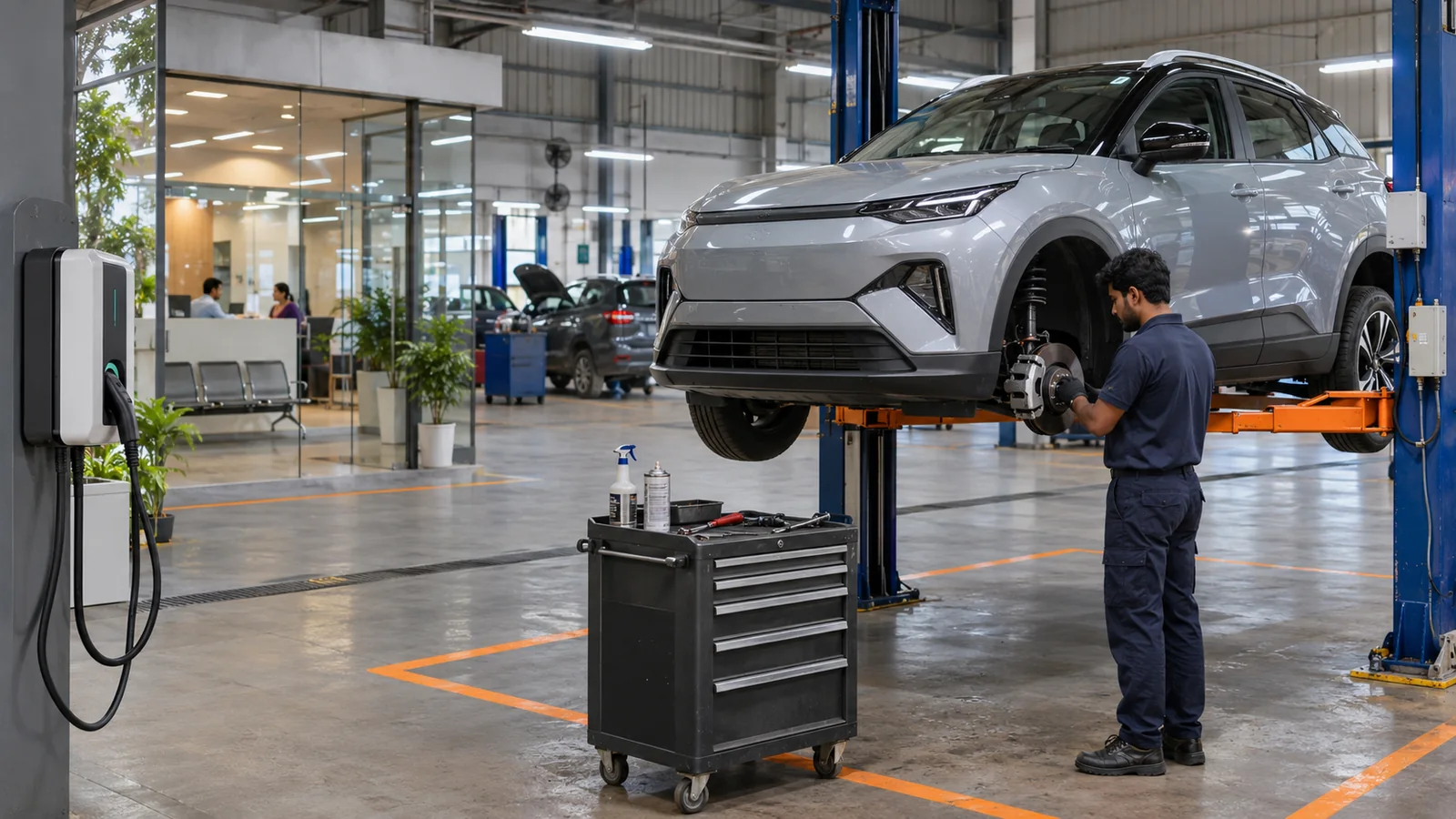
Landmark management described after-sales as a recurring part of the business and said revenue per service had reached a record level above ₹30,000 in the quarter. It also said the company had combined three smaller Mumbai workshops into a larger multi-brand workshop at Jogeshwari, expecting operating leverage. The call does not quantify the resulting savings or demonstrate how the new facility will perform over time, so those remain management’s expectations rather than measured outcomes. The same transcript contains the workshop and service comments.
For a car owner, the practical takeaway is to compare the service experience as carefully as the vehicle specification. Ask where routine work will be done, whether the chosen outlet is authorized for the powertrain, how appointments are booked, and what is included in a service plan. For an EV, confirm the location’s ability to diagnose the battery and high-voltage system, and ask which repairs require referral to another facility.
Before shortlisting a model or visiting a dealer, AutoCred’s loan eligibility check can provide an indicative eligible amount and estimated EMI to help set a budget. The result is indicative; final eligibility, rate, tenure and approval depend on the lender.
What to watch in the next update
The next useful signal is whether the reported EV mix and service revenue can be sustained while the retailer expands its brand and workshop operations. The transcript reports one quarter’s performance and management’s view; it does not promise future results, a change to vehicle prices, or a particular service standard for every outlet. Landmark’s investor-relations page hosts its disclosures and materials for later reporting periods.
Use the AutoCred loan eligibility check to estimate an indicative eligible amount and EMI before you shortlist a car or make a dealer visit. Results are indicative, and final eligibility, rate, tenure and approval depend on the lender. For the underlying comments, refer to the exchange-filed Q2 FY27 transcript and the company’s investor-relations disclosures.