Kia India Q3 2026 Growth: Beyond a Record September
Kia India's record September makes an attention-grabbing headline, but the more useful market question is whether growth extends beyond that month. Its 1 October 2026 sales release provides quarterly and year-to-date comparisons that help answer it. Reading those periods together offers a clearer view of the company's performance than treating a monthly record as the whole story.
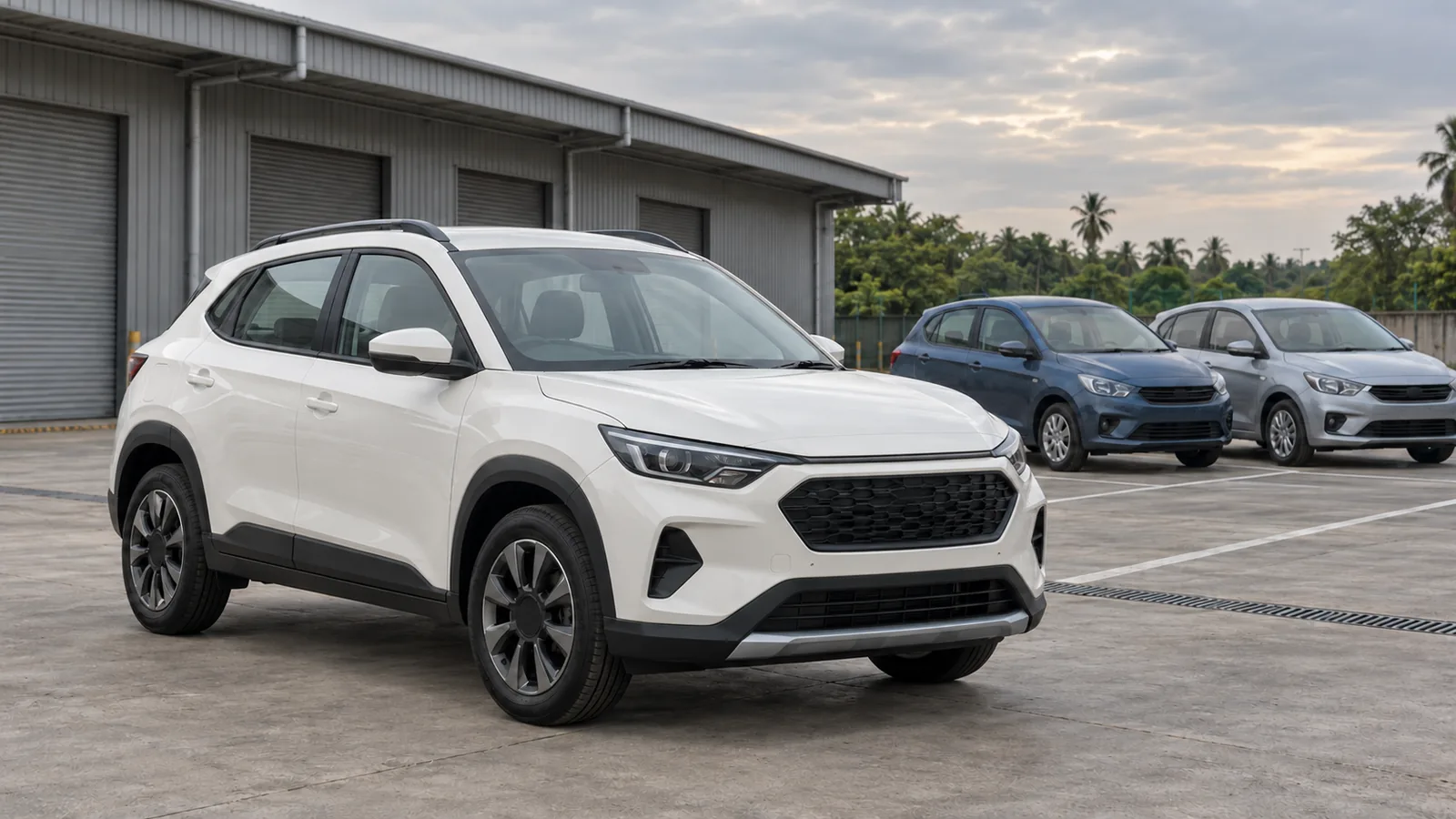
Cover illustration: an AI-generated photograph-style scene of generic unbranded SUVs at a dealer forecourt. It does not depict Kia models or an official Kia dealership.
What do Kia India's Q3 2026 figures show?
Kia reported 89,259 units for Q3 2026 against 64,443 a year earlier, an increase of 38.5%. September wholesale volumes were 32,017 against 22,700, up 41%. January–September sales reached 253,008 against 206,582, rising 22.5%. Source: Kia India's official sales release.
The comparisons answer different questions. The monthly result describes the latest reported burst of activity; the quarter tests whether the performance is broader; the cumulative period adds a longer perspective. The quarter's faster growth than the year-to-date figure indicates an improvement in the reported growth pace, without establishing what will happen next.
Was the quarter driven only by September?
Subtracting September from the quarterly totals gives combined July–August volumes of 57,242 units in 2026 and 41,743 in 2025. That represents approximately 37.1% growth. These are AutoCred calculations using the same official quarter and month figures, rather than a separately disclosed monthly breakdown.
This supports a limited but useful conclusion: the quarter's improvement was not confined to its final month. It does not tell us how growth was split between July and August, nor identify the contribution of each model. Keeping those limits visible makes the result more informative than assuming every nameplate shared the same momentum.
Which products does Kia identify as growth drivers?
The company names Seltos and Sonet as key contributors, describes demand momentum for Syros EV and reports a strong customer response to Sorento. Source: Kia's portfolio commentary. That provides direction for understanding its broader product strategy, but it is not a model-by-model sales table.
Our reading is that Kia is presenting a strategy built around established products alongside expansion into additional vehicle and powertrain choices. Assessing how well that strategy works requires more than one combined volume figure. Product mix, consistent demand and subsequent performance would help test whether the expanded range sustains the momentum.
What can a buyer infer about supply and waiting periods?
Use this release as a manufacturer-sales update. It does not provide customer-registration evidence for a specific city or a delivery promise for your selected variant. An increase in overall reported volume cannot settle either question.
Ask the dealer for the status of the exact colour, powertrain and trim you want, together with a written delivery estimate. Compare that commitment with your purchase timeline. A national sales record should prompt useful availability questions; it should not replace an actual stock or allocation check.
What should you watch after the quarterly result?
Look for consistent definitions in the next release and compare like periods before drawing conclusions about demand. For your own decision, retain the dated quotation, chosen equipment specification and delivery commitment so that changes remain easy to assess.
Make the shortlist affordable: check an indicative eligible amount and estimated EMI with AutoCred before your dealer visit. Results are indicative; final eligibility, rate, tenure and approval depend on the lender.