BMW Gen6 Batteries in Shenyang: Why Local Production Matters
BMW is taking another step in the industrial rollout of its next-generation electric-vehicle technology. Its 16 October 2026 Shenyang announcement confirms the start of Gen6 high-voltage battery production for locally built Neue Klasse models. The market significance lies in turning a technology programme into a dependable supply system for vehicle manufacturing.
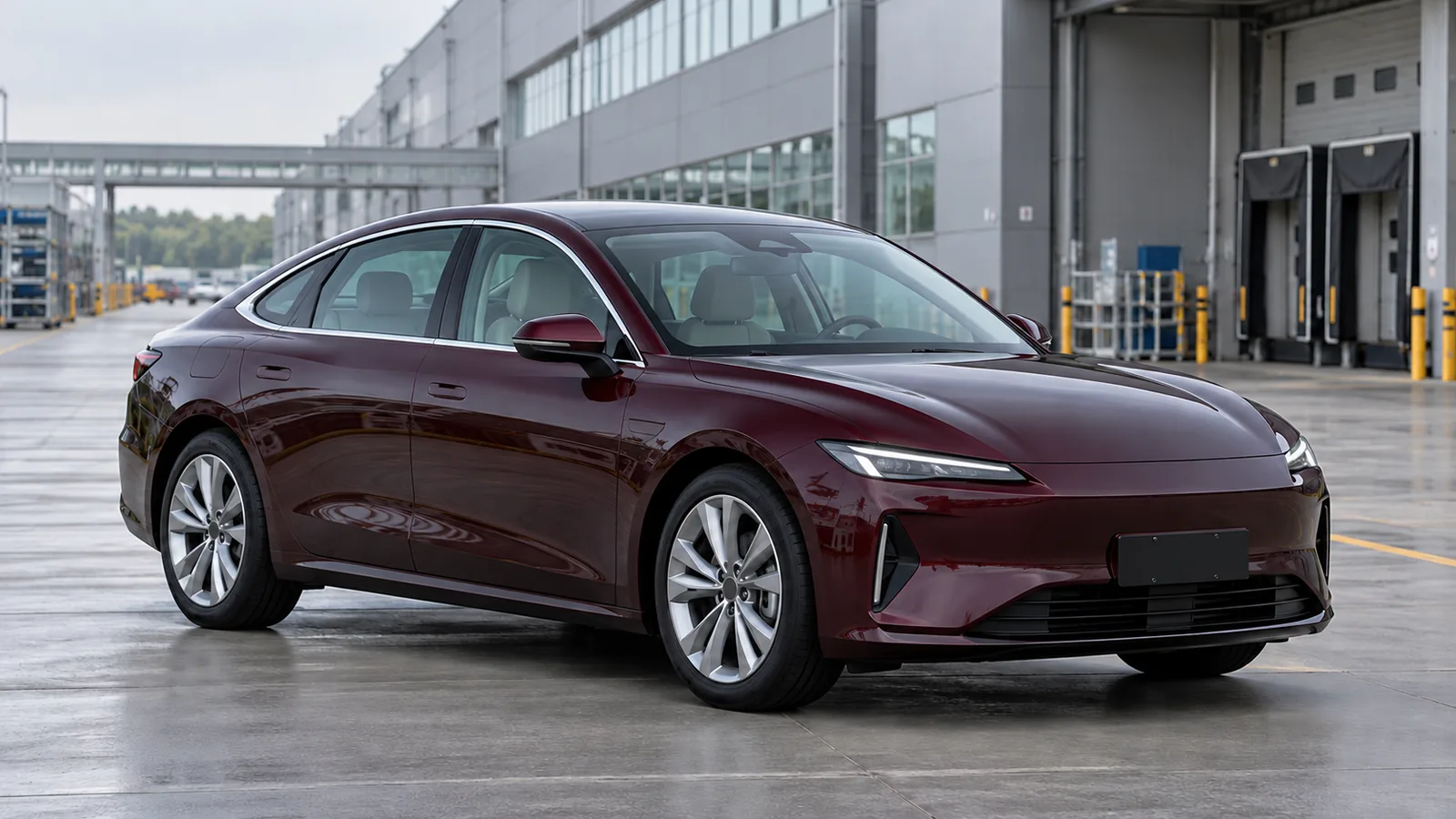
Cover illustration: an AI-generated photograph-style scene of a generic unbranded electric sedan at a factory dispatch bay. It does not depict a BMW model, Gen6 battery equipment or the actual Shenyang plant.
Where does Shenyang fit in BMW's battery network?
BMW's global release identifies Shenyang as the third Gen6 high-voltage battery production location, following Debrecen in Hungary and Irlbach-Straßkirchen in Germany. The batteries are intended for future China-built Neue Klasse models. Source: BMW's 15 October production update.
This is a regional manufacturing decision within a wider technology rollout. Our interpretation is that BMW is organising a critical component around the vehicle programmes it is meant to supply. The useful measure of success will be how consistently battery output supports those programmes as they develop.
Why manufacture batteries near the vehicle plants?
BMW says its approach is designed to shorten transport routes, support stable supply and strengthen production-network resilience, while applying common standards across locations. Source: the manufacturer's network strategy.
For market analysis, that makes coordination an important part of the story. A vehicle programme needs component supply, manufacturing readiness and customer demand to work together. Starting a battery line addresses part of that challenge; subsequent output and vehicle availability will show how effectively the pieces connect.
The announcement is therefore a concrete operational milestone. It is a useful basis for following BMW's expansion, while forecasts of future sales still require evidence of customer orders and deliveries.
What does the production process tell us?
BMW's China release describes new production lines, incoming-cell inspections, welding checks during assembly and testing of every completed battery. It also describes collaboration between local research, purchasing and production teams. Source: Shenyang manufacturing details.
These details help explain what industrialisation involves: repeating a process reliably, identifying deviations and tracing problems to their source. Buyers and market watchers should assess claims about manufacturing quality alongside subsequent product performance and the ownership support available for the actual vehicle.
How should buyers read the Gen6 technology claims?
BMW quotes more than 20% higher cell energy density than the previous generation, with charging speed and range improvements of up to 30%. It describes a cell-to-pack arrangement that integrates cylindrical cells directly into the housing. Source: BMW's generational technology comparison.
These are manufacturer technology claims. For a purchase decision, use the specifications and charging conditions for the exact model and market you are considering. A relative improvement at technology level cannot establish the journey range, charging-stop duration or price of an individual car.
What should an Indian EV buyer take from this?
The release concerns production supporting vehicles built in China. For an India purchase, confirm the applicable product specification, local availability, battery warranty and delivery commitment with the retailer. Assess charging access on your regular routes and obtain a home-installation assessment where relevant.
Prepare for that discussion: check an indicative eligible amount and estimated EMI with AutoCred before your dealer visit. Results are indicative; final eligibility, rate, tenure and approval depend on the lender.