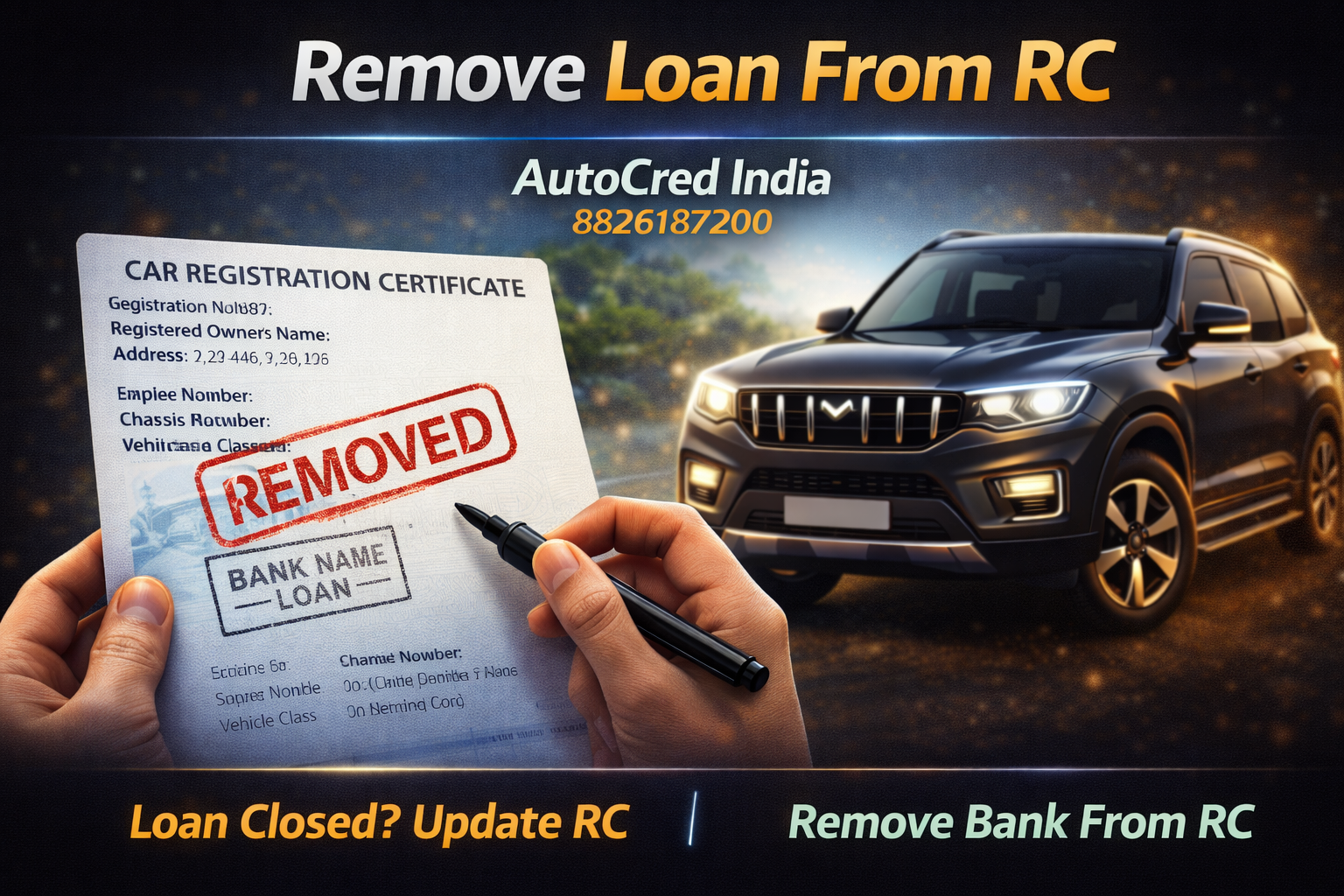
What Is Car Loan Hypothecation and How to Remove It After Loan Closure?
Many car buyers in India take a loan to purchase their vehicle. When a car loan is active, the bank or lender keeps a legal claim on the vehicle known as hypothecation. This means the lender technically has rights to the car until the loan is fully repaid.
Once the loan is closed, the vehicle owner must remove the hypothecation from the Registration Certificate (RC) through the RTO. Many people are unaware of this step and face problems when selling or transferring their car.
In this guide, we explain what car loan hypothecation means, how it works, and the step-by-step process to remove hypothecation from your RC after loan closure. If you are planning to buy a car with easy financing, AutoCred India helps buyers across India find the right loan options smoothly.
What Is Car Loan Hypothecation and How to Remove It After Loan Closure?
When you take a car loan in India, the bank or lender places a legal claim on the vehicle until the loan is fully repaid. This legal arrangement is called hypothecation.
Many car owners do not pay attention to this detail while taking the loan, but it becomes important once the loan is closed. Removing hypothecation from the Registration Certificate (RC) is necessary to become the complete owner of the vehicle.
In this guide, we explain what hypothecation means and how you can remove it after closing your car loan.
What Is Car Loan Hypothecation?
Hypothecation means the vehicle is financed by a bank or lender and the lender has financial rights over it until the loan is repaid.
In your vehicle RC, you will see something like:
“Hypothecated to Bank / NBFC Name”
This means the lender has the right to repossess the vehicle if the borrower fails to repay the loan.
Why Hypothecation Is Added to RC
Banks add hypothecation to the RC to protect their financial interest.
Key reasons include:
• Ensuring loan repayment security
• Preventing vehicle sale without lender approval
• Maintaining legal ownership rights until the loan is cleared
Once the loan is fully repaid, the lender issues documents that allow removal of hypothecation.
Documents Required for Hypothecation Removal
After closing your loan, the bank will provide certain documents required for RTO processing.
Common documents include:
• Loan Closure Letter
• Bank NOC (No Objection Certificate)
• Form 35 signed by bank and borrower
• Original RC
• Copy of insurance
• ID proof of vehicle owner
These documents are required by the RTO to remove the lender's name from the vehicle registration.
Step-by-Step Process to Remove Hypothecation
The process is usually simple and can be completed through the RTO.
Step 1: Close the Car Loan
First, ensure that the entire loan amount including any pending charges is fully paid.
Step 2: Collect NOC from the Bank
After loan closure, the lender will provide:
• Loan closure letter
• Bank NOC
• Form 35
These documents confirm that the lender no longer has a claim on the vehicle.
Step 3: Submit Documents at RTO
Submit the required documents at the Regional Transport Office where the vehicle is registered.
In many states, this process can also be done online through the Parivahan portal.
Step 4: RC Update
Once the RTO verifies the documents, the hypothecation entry will be removed and a new RC without lender name will be issued.
Quick Checklist
Before applying for hypothecation removal, ensure:
• Car loan is fully repaid
• Bank NOC is collected
• Form 35 is signed
• Original RC is available
• Insurance copy is ready
• Correct RTO is selected for application
Mid Article CTA
Planning to buy a new or used car with financing?
AutoCred India helps car buyers across India find easy car loan options with guidance on documentation and lender comparison.
Call / WhatsApp: 8826187200
Email: info@autocred.in
Car pasand karo, finance ka tension hum sambhal lenge.
Why Hypothecation Removal Is Important
Many people ignore this step after loan closure, which can create problems later.
Common issues include:
• Difficulty selling the vehicle
• Problems during RC transfer
• Issues with insurance claims
• Legal complications in ownership transfer
Removing hypothecation ensures you become the complete legal owner of the vehicle.
How AutoCred India Helps Car Buyers
Taking a car loan involves several financial and documentation steps. Understanding the process can help avoid problems later.
AutoCred India assists buyers by:
• Helping compare loan options
• Explaining loan documentation clearly
• Guiding buyers through financing steps
• Supporting buyers across India with car loan assistance
Conclusion
Car loan hypothecation is a normal part of vehicle financing in India. It ensures that lenders have legal security until the loan is repaid.
However, once the loan is fully paid, it is important to remove hypothecation from the RC through the RTO. This step confirms that the vehicle is fully owned by you and free from lender claims.
Understanding this process can help car owners avoid legal and ownership issues in the future.
Final CTA
Need help getting a smooth and easy car loan for your next car purchase?
AutoCred India helps buyers across India with car loan guidance and lender comparison.
Call / WhatsApp: 8826187200
Email: info@autocred.in
Car pasand karo, finance ka tension hum sambhal lenge.
5) FAQs
What does hypothecation mean in a car loan?
Hypothecation means the lender has a financial claim on the vehicle until the car loan is fully repaid.
How can I remove hypothecation from RC?
You must submit the bank NOC, Form 35, and RC to the RTO after loan closure.
Is hypothecation removal mandatory?
Yes. Removing hypothecation ensures the vehicle is fully owned by the borrower and free from lender claims.