Government Subsidy on Electric Cars in India 2026 – Complete Guide & Latest Updates
Electric vehicles (EVs) are becoming more affordable in India due to government subsidies and incentives. In 2026, both central and state governments are supporting EV adoption through schemes, tax benefits, and reduced costs.
Major automakers like Tata Motors, Mahindra & Mahindra, and Hyundai Motor Company are benefiting from this push.
In this guide, AutoCred India explains all government subsidies on electric cars in India (2026) with real facts.
Government Subsidy on Electric Cars in India 2026 – Complete Guide
The Indian government is actively promoting electric vehicles to reduce pollution and fuel dependency. In 2026, EV buyers benefit from multiple schemes, tax reductions, and incentives.
However, it’s important to understand that direct subsidies on electric cars are limited compared to two-wheelers, and most benefits come from tax savings and state policies.
🇮🇳 Central Government EV Subsidies (2026)
1. PM E-DRIVE Scheme (Latest Active Scheme)
The current active scheme is the PM Electric Drive Revolution in Innovative Vehicle Enhancement (PM E-DRIVE).
Key Facts
• Total budget: ₹10,900 crore
• Focus: EV adoption + charging infrastructure
• Covers: e-2W, e-3W, e-buses, and infrastructure
Important:
This scheme mainly supports two-wheelers, three-wheelers, and public transport, not private electric cars.
2. FAME-II Scheme (Now Closed)
The earlier FAME-II (Faster Adoption and Manufacturing of EVs) scheme:
• Ran from 2019 to March 2024
• Supported over 16 lakh EVs
• Included limited support for electric cars (mainly fleet vehicles)
In 2026, FAME-II is no longer active for new buyers.
3. GST Benefit on Electric Cars
One of the biggest benefits for EV buyers:
• GST on EVs = 5% only
• Petrol/diesel cars = up to 28% GST
This directly reduces the car price significantly.
4. Income Tax Benefit (Section 80EEB)
If you take a loan for an EV:
• Tax deduction up to ₹1.5 lakh on interest
Helps reduce overall loan cost.
State Government Subsidies (Very Important)
State policies play a major role in reducing EV prices.
Common State Benefits
• Road tax exemption
• Registration fee waiver
• Direct subsidy (in some states)
• Scrappage incentives
Example benefits (vary by state):
• Delhi – Up to ₹30,000 + tax exemption
• Maharashtra – Up to ₹25,000 + tax benefits
• Gujarat – Up to ₹20,000 subsidy
👉 These benefits apply on top of central incentives.
Important Reality (2026 Buyers Must Know)
• No major direct subsidy on private electric cars from central government
• Maximum benefits come from GST + state policies
• Luxury EVs usually don’t qualify for subsidies
How Much Can You Actually Save?
Typical savings in 2026:
• GST benefit: ₹1–3 lakh (approx)
• State subsidy: ₹20,000–₹1 lakh
• Tax benefit (loan): up to ₹1.5 lakh
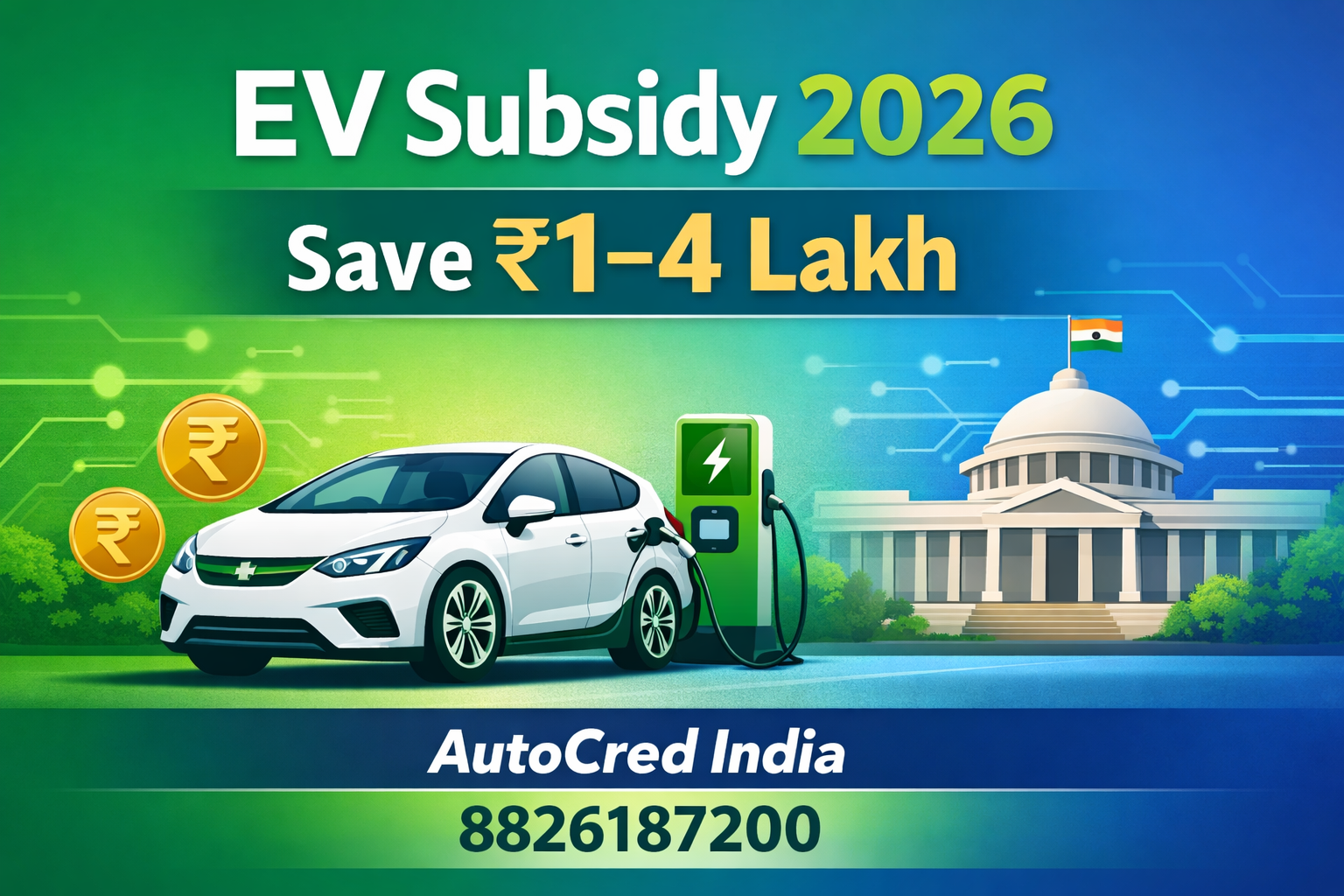
👉 Total possible benefit: ₹1–4 lakh (approx depending on car & state)
Why Government Is Promoting EVs
• Reduce pollution
• Lower oil imports
• Promote clean energy
• Build EV infrastructure
Future of EV Subsidies
• Focus shifting to infrastructure & public transport
• State subsidies will continue
• EV prices expected to reduce gradually
Quick Summary
• FAME-II is discontinued
• PM E-DRIVE is active but limited for cars
• Biggest benefit = 5% GST
• State subsidies are most important
• Total savings can go up to ₹4 lakh
Final Thoughts
In 2026, buying an electric car in India is more affordable than before—but mainly due to tax benefits and state incentives, not direct subsidies.
Brands like Tata Motors and Mahindra & Mahindra are leading EV adoption in India.
If you are planning to buy an EV, understanding these subsidies can help you save a significant amount.
For expert advice on EV loans and best deals, connect with AutoCred India.
FAQs
Is there subsidy on electric cars in India 2026?
No major direct subsidy, but tax and state benefits are available.
What is PM E-DRIVE scheme?
A government scheme promoting EV adoption and infrastructure.
How much can I save on EV purchase?
Up to ₹1–4 lakh depending on benefits.