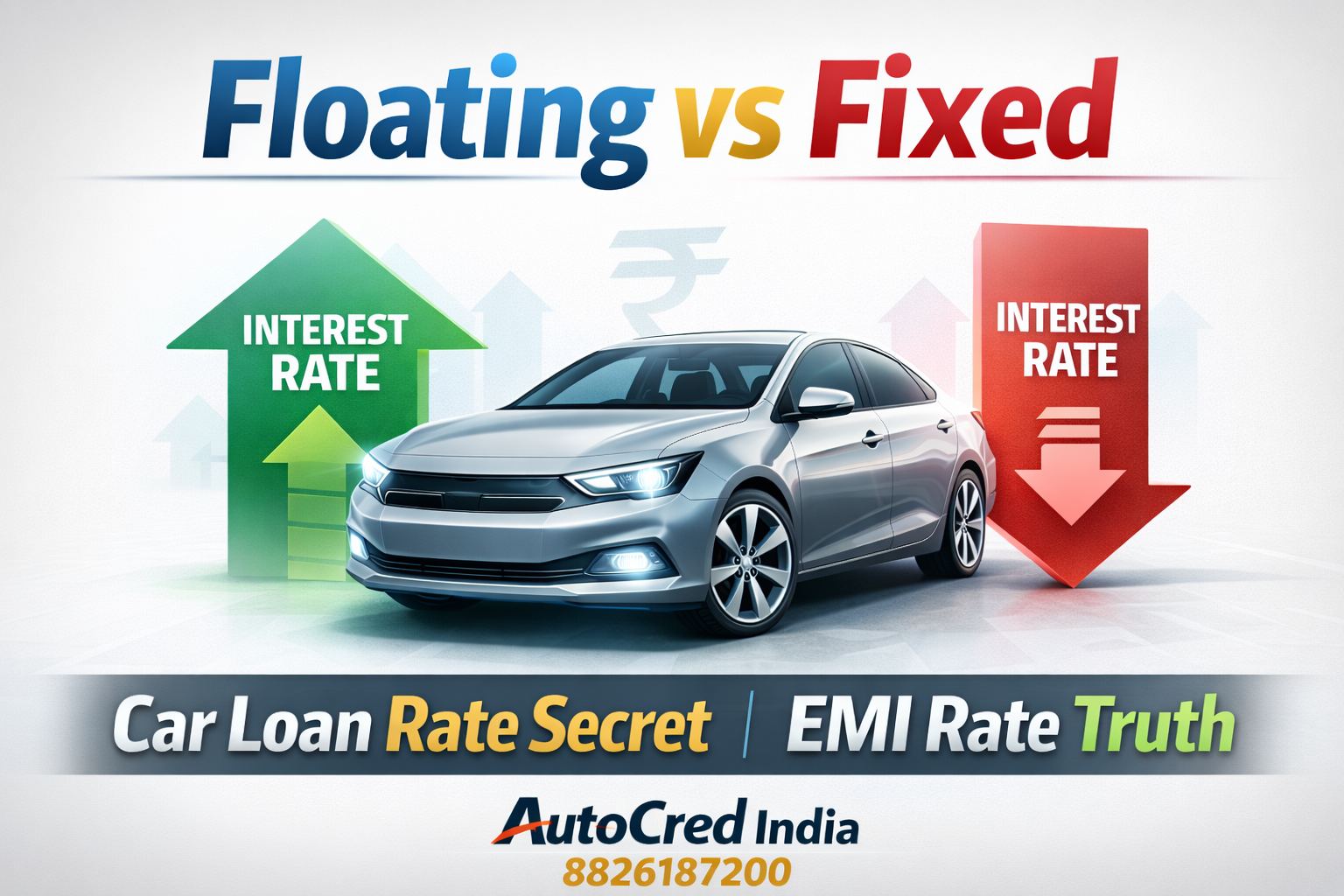
Floating vs Fixed Car Loan Interest Rate – Which One Is Better in 2026?
When taking a car loan in India, borrowers often face an important decision: choosing between a fixed interest rate and a floating interest rate. This choice can directly affect your monthly EMI and the total cost of your car loan. A fixed interest rate keeps your EMI stable throughout the loan tenure, while a floating interest rate can change depending on market conditions and bank policies.
In 2026, many banks and NBFCs offer both options for new and used car loans. While fixed rates provide financial stability, floating rates may start lower but carry the risk of future increases. Understanding the difference between these two types of interest rates helps borrowers make a smarter decision.
In this guide by AutoCred India, we explain how both interest types work, their advantages, and how to choose the right option for your car loan.
Floating vs Fixed Car Loan Interest Rate – Which One Is Better in India?
When planning to buy a car using a loan, one important factor many borrowers ignore is the type of interest rate. In India, most banks and NBFCs provide two options for car loans:
Fixed interest rate
Floating interest rate
Your decision between these two can affect your monthly EMI, total interest paid, and financial stability. Understanding how each option works can help you choose the best loan structure for your needs.
What is a Fixed Interest Rate in a Car Loan?
A fixed interest rate means the interest rate stays the same throughout the entire loan tenure. Your EMI remains constant from the first month until the last payment.
This type of loan is preferred by borrowers who want predictable financial planning.
Example:
If you take a car loan at 9% fixed interest for 5 years, your EMI will remain the same for the entire loan period regardless of market changes.
Benefits of Fixed Car Loan Interest Rate
• EMI remains stable for the entire loan tenure
• Easier financial planning
• No impact from market interest rate changes
• Suitable for borrowers who prefer stability
Limitations of Fixed Interest Rate
• Interest rate may be slightly higher compared to floating rates
• Borrowers cannot benefit if market interest rates decrease
What is a Floating Interest Rate in a Car Loan?
A floating interest rate changes depending on market conditions and benchmark lending rates set by banks or financial institutions.
This means your EMI or loan tenure may change if the interest rate changes.
Example:
If the loan starts with 8.5% floating interest, it may increase or decrease in the future depending on the market.
Benefits of Floating Car Loan Interest Rate
• Lower starting interest rate in many cases
• Borrowers benefit when market rates decrease
• Potentially lower total interest cost if rates fall
Risks of Floating Interest Rate
• EMI may increase if interest rates rise
• Difficult to predict future payments
• Loan tenure may increase if interest rates go up
Quick Checklist: Fixed vs Floating Car Loan
Before choosing your car loan interest structure, consider these points:
• Choose fixed interest rate if you want stable EMIs
• Choose floating rate if you expect interest rates to fall
• Fixed rate is often better for long-term financial planning
• Floating rate may reduce cost if market rates decline
• If EMI stability is your priority, fixed rate is safer
Which Option is Better for New Car Loans in India?
There is no single answer because the right option depends on your financial situation.
Fixed rate may be better when:
• You want predictable EMIs
• Interest rates are expected to increase
• You prefer financial security
Floating rate may be better when:
• Current interest rates are high
• You expect future rate cuts
• You want slightly lower starting EMIs
Many borrowers in India choose floating rates to start with lower interest, but fixed rates are still popular among people who want long-term stability.
Need Help Choosing the Right Car Loan?
Selecting the right interest rate can save a significant amount of money during your loan tenure. If you are unsure which option is better for your situation, expert advice can help.
Contact AutoCred India today
Call / WhatsApp: 8826187200
Email: info@autocred.in
Car pasand karo, finance ka tension hum sambhal lenge.
Fixed vs Floating Car Loan – EMI Example
Let’s understand with a simple example.
Suppose you take a ₹8 lakh car loan for 5 years.
Fixed interest rate: 9%
Floating interest rate: starting from 8.5%
Initially, the floating rate loan may have a lower EMI. However, if interest rates increase after a few years, the EMI may increase.
This is why many borrowers compare both options carefully before choosing a loan structure.
How AutoCred India Helps You Get the Right Car Loan
Getting a car loan is not only about the interest rate. Banks also consider several factors before approving a loan.
Important factors include:
• Credit score
• Income stability
• Job profile or business income
• Loan tenure
• Car value and model
AutoCred India helps borrowers compare multiple banks and NBFCs to find the most suitable car loan option.
Whether you are buying a new car or a used car, our team helps you understand the loan process and documentation requirements.
Need expert guidance for your car loan?
Call / WhatsApp: 8826187200
Email: info@autocred.in
Car pasand karo, finance ka tension hum sambhal lenge.
FAQs
Which interest rate is cheaper for a car loan?
Floating rates usually start lower than fixed rates, but they can increase if market interest rates rise.
Can I change my car loan interest rate type later?
Some banks allow switching between fixed and floating rates, but it may involve processing charges or loan restructuring.
Which interest rate is better for long car loan tenures?
For longer tenures like 5–7 years, many borrowers prefer fixed interest rates because they provide stable EMIs.