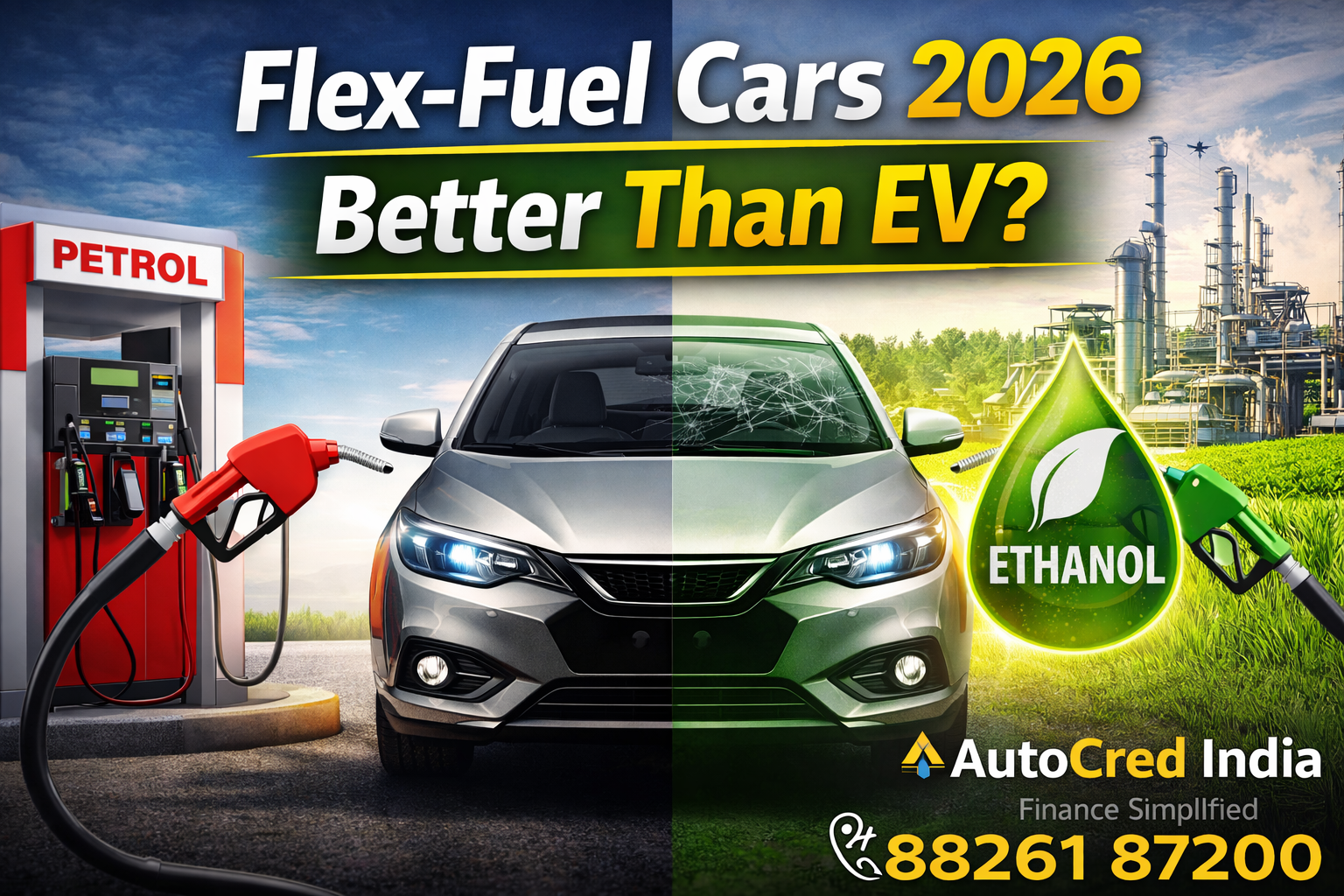
Flex-Fuel Cars in India 2026 – Is Ethanol the Next Big Shift After EVs?
While electric vehicles dominate headlines, flex-fuel cars are quietly emerging as a major alternative in India. With the government pushing ethanol blending and fuel diversification, automakers are preparing engines that can run on petrol mixed with higher ethanol content like E20 and E85. But what exactly are flex-fuel vehicles? Are they better than EVs? Will they reduce fuel costs? In this 2026 car update, we break down how flex-fuel technology works, which brands are preparing to launch them, expected pricing impact, and whether Indian buyers should consider waiting for this shift before purchasing their next car.
FLEX-FUEL CARS IN INDIA 2026 – IS ETHANOL THE NEXT BIG SHIFT AFTER EVs?
Everyone is talking about electric vehicles.
But 2026 might actually belong to something different — flex-fuel cars.
With India aggressively pushing ethanol blending, flex-fuel technology is slowly entering the spotlight.
Let’s understand why this update is important.
WHAT ARE FLEX-FUEL CARS?
Flex-fuel vehicles (FFVs) can run on:
-
Regular petrol
-
Petrol blended with ethanol (E20)
-
Higher ethanol blends like E85
The engine automatically adjusts fuel-air mixture depending on the blend.
No manual switching required.
WHY INDIA IS PUSHING ETHANOL
India imports a large portion of crude oil.
The government aims to:
-
Reduce fuel imports
-
Support farmers through ethanol production
-
Lower carbon emissions
-
Promote energy independence
E20 petrol is already being introduced in many cities.
HOW FLEX-FUEL IS DIFFERENT FROM NORMAL PETROL CARS
Most current petrol cars can handle limited ethanol blending (up to 20%).
Flex-fuel cars are specially designed with:
✔ Modified fuel injectors
✔ Ethanol-resistant materials
✔ Smart ECU tuning
✔ Higher compression ratios
This ensures long-term engine durability.
WHICH COMPANIES ARE PREPARING FLEX-FUEL CARS?
Several manufacturers have shown interest:
-
Toyota Kirloskar Motor showcased flex-fuel prototype models
-
Maruti Suzuki India is testing ethanol-ready engines
-
Tata Motors exploring alternate fuel strategies
Flex-fuel adoption may expand from 2026 onwards.
WILL FLEX-FUEL CARS BE CHEAPER TO RUN?
This depends on ethanol pricing.
Ethanol-based fuel:
-
May cost less than petrol
-
Produces slightly lower mileage
-
Has cleaner emissions
If ethanol remains cheaper, running cost can reduce.
But final impact depends on government pricing policy.
FLEX-FUEL VS EV – WHAT’S BETTER?
| Factor | Flex-Fuel | Electric |
|---|---|---|
| Refuelling Time | Fast (like petrol) | Charging time required |
| Infrastructure | Existing petrol pumps | Charging network growing |
| Initial Cost | Similar to petrol | Higher upfront cost |
| Range Anxiety | No | Possible |
| Emissions | Lower than petrol | Zero tailpipe emissions |
Flex-fuel may act as a bridge between petrol and EVs.
SHOULD YOU WAIT FOR FLEX-FUEL CAR?
Consider waiting if:
-
You are planning to buy in late 2026
-
You want fuel flexibility
-
You prefer traditional engine feel
-
You are unsure about EV charging
If buying immediately, ensure your car supports E20 fuel compatibility.
WHAT THIS MEANS FOR INDIAN BUYERS
2026 is not just about EVs.
It’s about diversification.
We may see:
-
Petrol
-
CNG
-
Hybrid
-
Electric
-
Flex-fuel
Buyers will have more choices than ever.
FINAL THOUGHT
Flex-fuel cars may not replace EVs.
But they could become a strong middle-ground solution for India.
Lower emissions, better fuel security, and familiar driving experience make them an interesting option to watch in 2026.
Before booking your next car, understand fuel compatibility and long-term running cost.
Smart car buying in 2026 is about choosing the right fuel strategy.